Here are the studies this week that got dumped, went high, shrank in size, and got the blues.
asserted
that → dump → blues
First, you’ve heard of getting a feather in your cap, but what about a feather in some crap?
asserted
you → hear → crap
That’s the upshot of a new study about rare bird remains found in dino doodoo.
asserted
That → ’ → doodoo
Birds of a feather are pooped out together
Some 66 million years ago, a bird ate a fish, and then a dinosaur—perhaps a T. rex—ate that bird.
asserted
dinosaur → poope → bird
Subsequent to these events, the dinosaur took a dump.
asserted
dinosaur → take → dump
Time passed.
asserted
Time → pass → ?
The poop fossilized.
asserted
poop → fossilize → ?
A space rock hit Earth and wiped out most life.
asserted
rock → hit → life
Fast forward to 2016, when the dino dookie was unearthed at the Hell Creek Formation in Montana, complete with exquisitely-preserved feathers from the bird, and fish scales from its last meal.
asserted
dookie → fast → meal
This incredible story is reported by scientists who have spent years studying the fossilized feces, known as a coprolite, with advanced imaging techniques.
asserted
who → report → techniques
By sheer luck, this fossil contains extremely rare feathers from the Late Cretaceous, including “arguably the best-preserved feather ever recovered from Mesozoic lithic deposits,” according to the study.
uncertain
fossil → contain → study
“Here we report on an exceptionally preserved three-dimensional pennaceous feather preserved in a medium-sized theropod dinosaur coprolite,” said researchers led by Jingmai O’Connor of the Field Museum of Natural History in Chicago.
asserted
researchers → report → Chicago
The specimen “begins to fill in a critical gap in our understanding of feather morphology in the Late Cretaceous.”
asserted
specimen → begin → Cretaceous
The fossil record contains some feathers from extinct birds, pterosaurs, and dinosaurs, which can be found etched into stone or encased in amber.
asserted
which → contain → amber
But hardly any feathers from the final days of the age of dinosaurs, the Late Cretaceous, have survived.
asserted
feathers → survive → dinosaurs
This gap in the record has stymied efforts to explain why only one family of birds, the Neornithes, survived the Cretaceous-Paleogene (K-Pg) extinction event to become the ancestors of all modern birds.
asserted
family → stymie → birds
Sometimes the answer to profound existential questions is hidden in unexpected places, like a very old piece of poop.
asserted
answer → hide → poop
O’Connor and her colleagues determined that the coprolite contains the first known feathers from a family of aquatic birds known as hesperornithiformes, which did not survive the asteroid impact.
asserted
which → determine → impact
The team speculate that the birds’ plumage might have been less efficient at insulating the birds compared to Neornithean feathers, dooming the former lineage to death.
uncertain
plumage → speculate → death
“These primitive plumaceous morphotypes may have been less effective for trapping air, resulting in extinction during the asteroid-induced impact winter largely responsible for the K-Pg mass extinction,” the researchers said.
uncertain
researchers → trap → extinction
The whole sequence of events reminds me of an infamous scene in Jurassic World in which a woman is captured by a pterosaur that is then swallowed by a giant mosasaur.
asserted
that → remind → mosasaur
I shudder to imagine what that coprolite would look like.
asserted
coprolite → shudder → what
In other news…
If you want to make a titanosaur omelette…
What a treat—there is even more breaking news from the Late Cretaceous!
asserted
you → want → Cretaceous
Paleontologists have discovered a clutch of fossilized titanosaur eggs at the Chorrillo Formation of Patagonia, shedding new light on the breeding behaviors of the largest animals ever to walk on land.
asserted
Paleontologists → discover → land
The biggest titanosaurs tipped the scales at 70 metric tonnes—as heavy as the Space Shuttle, or ten African elephants in a trenchcoat—and they exceeded 120 feet in length.
asserted
they → tip → length
(If you ever visit the American Museum of Natural History in New York City, I recommend checking out the scale model of a titanosaur to behold the sheer spectacle of these extinct behemoths.
asserted
I → visit → behemoths
But even heavyweights start small; titanosaur hatchlings weighed in at six to eight pounds, on par with human newborns.
asserted
hatchlings → start → newborns
Most of their eggshells have been discovered at low latitudes, suggesting that the animals preferred to lay their young in warm regions with maximum sunlight to aid incubation.
asserted
animals → discover → incubation
But the new specimens were laid in a cool climate at unprecedented latitudes, around 55 to 60°S, and were likely buried under vegetation and warmed by microbial activity above them.
asserted
specimens → lay → them
“These eggshells provide, to our knowledge, the first indication that titanosaurs nested at relatively high latitudes,” said researchers led by Kohei Tanaka of the University of Tsukuba
“The eggs…would have been incubated in nests buried by nesting materials and would have used the heat generated by decaying vegetation” in order to nest in habitats “where sufficient heat from solar radiation was probably unavailable.”
asserted
heat → provide → radiation
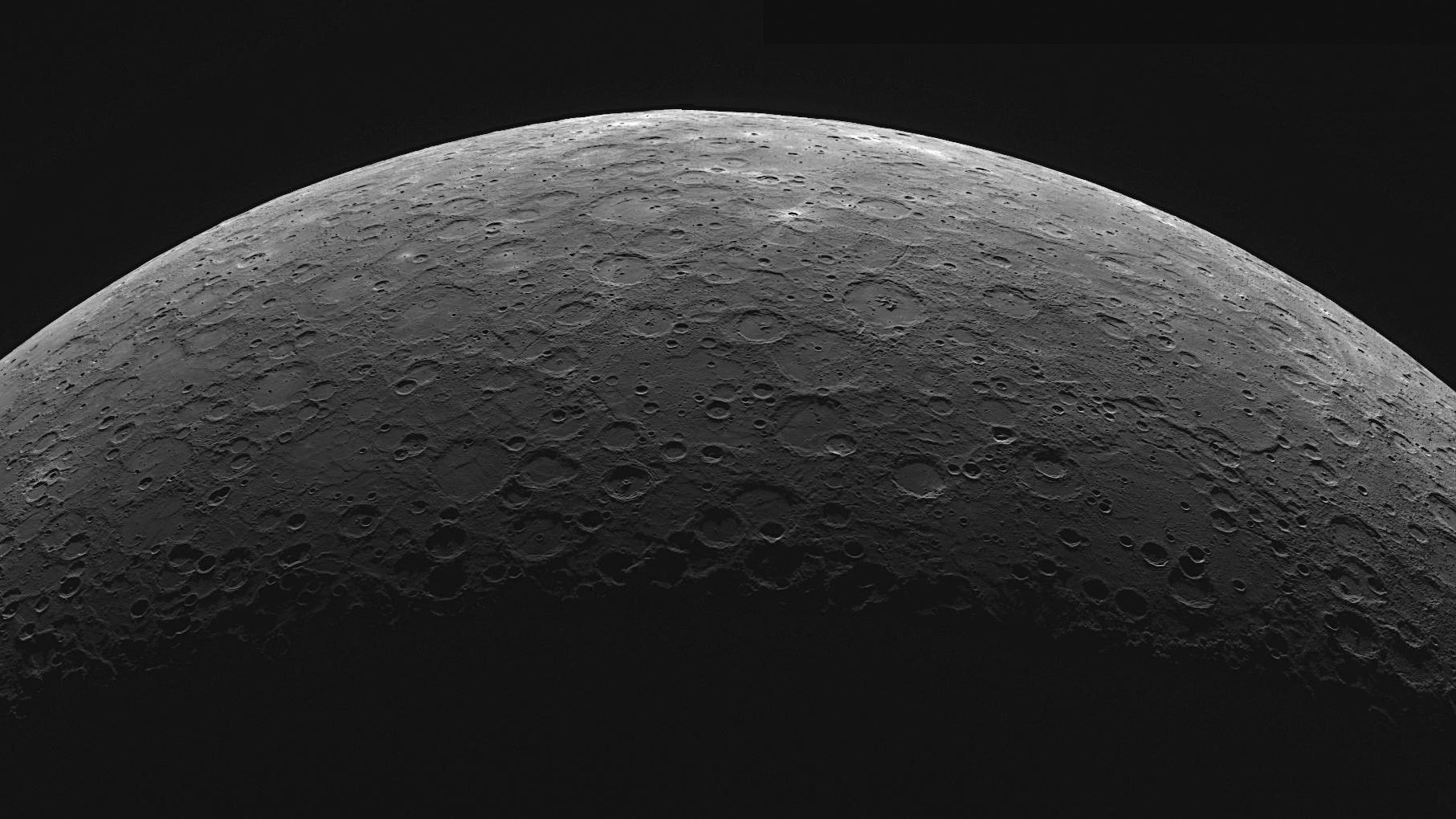
But scientists have discovered that the planet was much bigger at its birth, with a radius that may have been anywhere from four to six miles longer than it is today.
uncertain
it → discover → radius
While it has long been known that Mercury has shrunk as it cooled over time, the extent of this “planetary contraction” may have been “underestimated by 10–30 percent,” according to a new study.
uncertain
extent → know → study
By examining updated maps of the planet’s surface, scientists noticed that the rocky wrinkles left by its contraction, known as “shortening structures,” are not evenly distributed across its terrain, as predicted by models.
asserted
wrinkles → examine → models
The team realized that the messy fallout left over from impacts on the planet, known as “ejecta,” is obscuring a lot of these shortening structures, leading to previous underestimates of its shrinkage.
asserted
fallout → realize → shrinkage
“Our correction for Mercury’s radial contraction provides new insights into the planet’s thermal evolution” and “has a wide range of implications for the interior structure of the planet,” said researchers led by Gaku Nishiyama of the German Aerospace Center.
asserted
researchers → provide → Center
Fortunately, the mercurial nature of this world will be explored in more detail by BepiColombo, a European-Japanese space mission that is currently on track to scooch into orbit around the planet this November.
asserted
that → explore → planet
Though this is the only planet in the solar system to be outranked by mere moons—Jupiter’s Ganymede and Saturn’s Titan are both bigger than Mercury—it still has plenty of big secrets left to spill.
asserted
it → outrank → secrets
Out of the Egyptian blue
To close, let’s step back in time 2,000 years to visit a luxury villa decorated with ostentatious displays of wealth, including a captivating painting of a fishpond.
asserted
’s → close → fishpond
This colorful artwork once adorned the wall of the “Torre di Pordenone,” a resplendent home near Friuli-Venezia-Giulia in northeast Italy, and which now survives only as puzzle-piece remnants.
asserted
which → adorn → remnants
Scientists have now discovered that the painting included the famous pigment “Egyptian blue,” which is considered the world’s oldest synthetic hue, dating back at least 5,000 years.
asserted
which → discover → pigment
…and 5 more, not listed.
 The Aporia