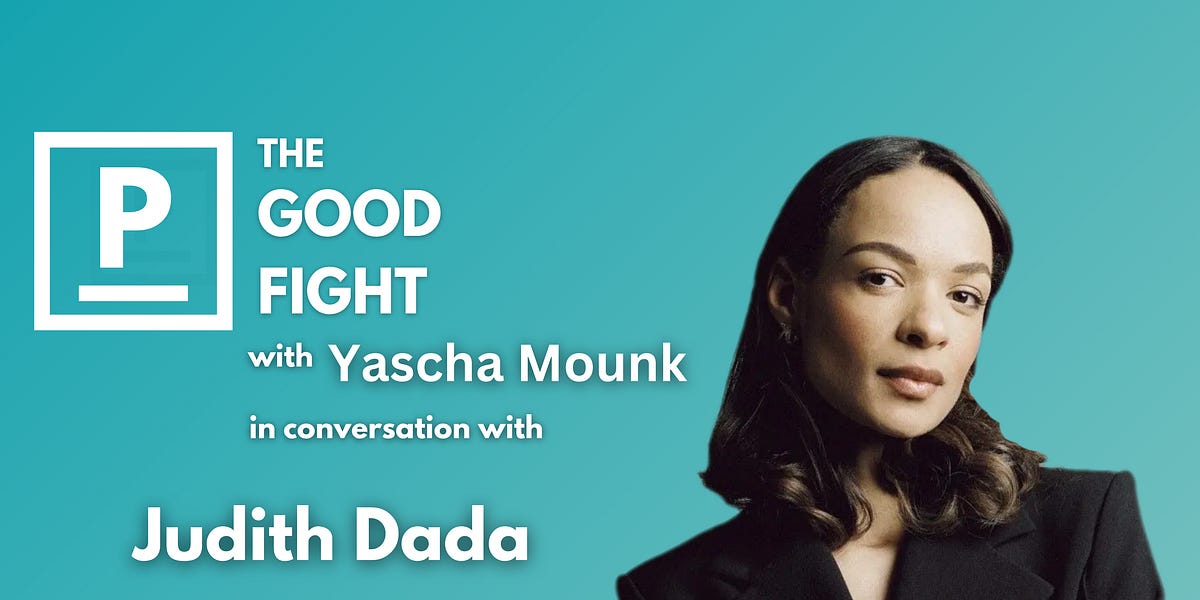
Judith Dada is Co-CEO of Langdock, a leading European AI company, Senior Partner at Visionaries Club, an early-stage European venture capital fund, and is co-author of Europe 2031.
asserted
Dada → lead → Europe
In this week’s conversation, Yascha Mounk and Judith Dada discuss what the decline of German industry and infrastructure reveals about the broader crisis of the German model, why the European tech sector is so far behind China and the United States, and what Europe needs to change to become competitive.
asserted
Europe → discuss → what
This transcript has been condensed and lightly edited for quality.
asserted
transcript → condense → quality
You live in a state, Mecklenburg-Vorpommern, where the AfD is polling particularly strongly.
asserted
AfD → live → state
What do you think explains the rise and rise of this party and this movement more broadly in Germany?
asserted
you → think → Germany
I think it’s the question that all of us are grappling with at the moment.
asserted
all → think → moment
I think the most interesting piece is that this is very much not a German problem.
asserted
this → think → ?
This is a problem, let’s call it a Western problem.
asserted
’s → let → it
We see the same tendencies in the United States, we see the same tendencies in France, we see them in the Netherlands, we see them in the UK.
asserted
we → see → UK
People feel left behind.
asserted
People → leave → ?
I think they feel like tomorrow is not going to be better than their life today or their life yesterday.
asserted
tomorrow → think → life
There’s a kind of melancholy, I think, that people feel for the good old days, for a world that was maybe slower, where the worth that they had relative to their environment was a little bit clearer than in the world today.
asserted
they → ’ → world
So I do think it’s a multifaceted problem, but it’s by no means a German problem.
asserted
it → think → means
I do think that the AfD is maybe the ugliest expression of this problem, because looking at all the far-right parties across Europe, it is one of the most extreme parties.
asserted
it → think → parties
Some of the politicians who are still in the ranks of this party—it just baffles me that this party has not found ways to exclude these people or to more clearly draw a line in the sand.
asserted
party → baffle → sand
This very much, unfortunately, in certain aspects, has unfortunate parallels to Nazism and to Germany’s dark past.
asserted
This → have → past
I think that is just a tragedy.
asserted
that → think → ?
But at the same time, there’s a much deeper problem here, and one that is very much understandable, because otherwise more than forty percent of the German population in Saxony-Anhalt wouldn’t be voting for this party.
asserted
percent → ’ → party
There is a problem that is societal, and that is not just a fringe right-wing problem.
asserted
that → be → ?
I’m thinking about this every day, and I do think at the end of the day, what it requires is both a change—an actual drastic change in politics—but then also a message and a vision for the country and for the West, that is able to look into the future in a way that carries people with them and doesn’t give people the feeling that, yes, by and large the world is moving forward, but “I’m stuck in place.”
asserted
I → think → place
Thereby the only way that I can progress is by finding scapegoats and giving an outlet to all this negative feeling, because it feels like now it’s just a matter of taking something away from someone else so that I can have more.
asserted
I → progress → more
We need to give people the feeling again that the pie is growing for everyone.
asserted
pie → need → everyone
One of the striking things about the AfD is that I think it’s more ideologically radical than other far-right populist parties.
asserted
it → think → parties
It’s also just less professionalized.
asserted
It → ’ → ?
This is obviously a problem and a challenge that newcomer parties always face—that’s true in certain ways of the Green Party in the 1980s when it rose to positions of political power.
asserted
it → face → power
But in part because of a firewall, and the way in which the AfD has continued to operate as this kind of outlaw within the German party system, and in part because they’ve taken it as a matter of pride, the level of unprofessionalism is quite extreme.
asserted
level → continue → unprofessionalism
Among the people who were elected in Saxony-Anhalt, or who are currently candidates in some other states for election, there are actual former neo-Nazis.
asserted
who → elect → election
I think there are two of the roughly thirty-odd state legislators we now have who have been somehow involved in the porn industry earlier.
asserted
who → think → industry
There’s somebody—I forget whether it’s in Mecklenburg-Vorpommern or somewhere else—who’s actually been sentenced by a criminal court for being a bank robber.
asserted
who → ’ → court
That sort of goes beyond ideology and makes it quite extreme.
asserted
it → go → ideology
In terms of your experience of living in Germany, which I no longer do, and living in a part of the country where the AfD does have particular support, you must speak to people who are voting for the AfD all the time.
asserted
who → live → AfD
You visibly have—this is my least favorite German phrase—a “background of migration,” Migrationshintergrund.
asserted
this → have → migration
It’s a very weird German bureaucratic term.
asserted
It → ’ → ?
Do you find that a lot of the people who vote for the AfD are, in person, perfectly pleasant and charming neighbors, and it’s hard to square that with how they’re voting?
asserted
they → find → that
Do you find in your daily life there to be a lot of disappointment and anger?
asserted
you → find → disappointment
One of the strange things about East Germany is that, for all of the economic challenges, especially over more rural parts of East Germany, it’s also a part of the world that is vastly more affluent today than it was thirty or thirty-five years ago at the end of communism.
asserted
it → ’ → communism
I would definitely say I live on the island of Rügen in Mecklenburg-Vorpommern, and I spend a lot of time here in Stralsund and the surrounding cities.
asserted
I → say → Stralsund
My day-to-day experiences are not ones of xenophobia or of people showing any signs of mistrust or anything like that.
asserted
experiences → show → that
I have lovely neighbors.
asserted
I → have → neighbors
I live in a lovely village with lots of people who’ve lived here for generations, and they have been nothing but welcoming and really kind to my husband, myself, my children, my father, who’s a Nigerian immigrant, who has much darker skin than I do.
asserted
I → live → skin
…and 301 more, not listed.
 The Aporia