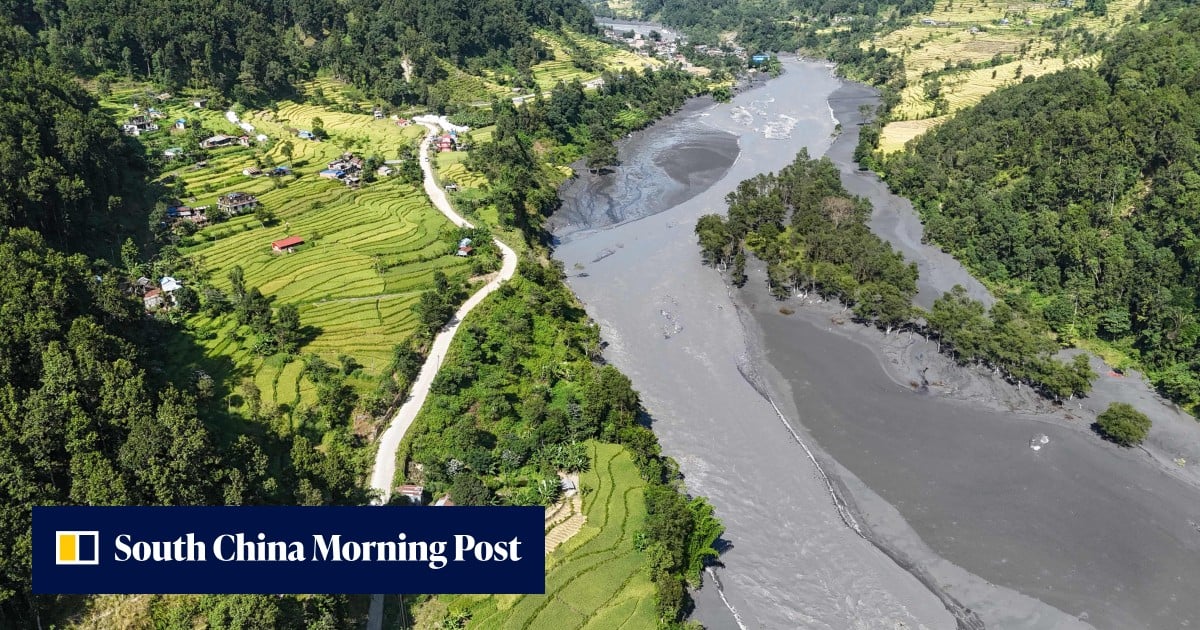
Inside Nepal’s unending cycle of avalanches, floods and landslides

Read the original at South China Morning Post ↗
Cite

Bhandari, B. (2026, October 15). Inside Nepal’s unending cycle of avalanches, floods and landslides. South China Morning Post. https://www.scmp.com/week-asia/health-environment/article/3370977/inside-nepals-unending-cycle-avalanches-floods-and-landslides?utm_source=rss_feed

Dated from the outlet's own feed. Check the original for its byline.

South China Morning Post · collected 2026-10-15 · by Bibek Bhandari

Quick Summary

Nepal has recently experienced a series of devastating natural disasters including avalanches, floods, and landslides. In August, an avalanche near the Nepal-Tibet border led to more than 1,450 deaths and nearly 6,000 missing people after flooding rivers in the Bhotekoshi and Trishuli regions. This was followed by a landslide in September that collapsed part of a mountain into a river in Mustang, and another avalanche on Sunday that flooded the Budhi Gandaki River without causing casualties but severely damaging infrastructure. Experts warn that these events could become annual occurrences due to climate change affecting frozen ground and glacier melt, destabilizing high mountains and creating conditions for such disasters.
Written locally by qwen2.5:14b on 2026-10-15, using this article's own text rather than the other coverage of the same event (that is the story summary below).

AI analysis runs on qwen2.5:14b, locally

Story summary

In August 2026, a rock-ice avalanche near the Nepal-Tibet border led to massive flooding in the Bhotekoshi and Trishuli rivers, resulting in over 1,450 deaths and nearly 6,000 people missing. This was followed by another landslide in Nepal’s Mustang region in late September. On Sunday, a similar rock-ice avalanche occurred in central Nepal’s Gorkha district, flooding the Budhi Gandaki River but causing no reported casualties. John Pomeroy, director of the Centre for Hydrology at Canada's University of Saskatchewan, noted that these events are unprecedented and linked to climate change factors such as thawing frozen ground and glacier melt, which destabilize mountains and create conditions favorable for disasters. Experts warn that such occurrences could become an "annual occurrence" and urge Nepal’s government to reconsider its development model.

Written for “Nepal Natural Disasters Cycle” on 2026-10-15, grounded in this article and the 0 other(s) covering the same event.
Why this leaning score
The model judged this article politically coded and scored it -0.35, but all 1 of its quote(s) are attributed speech - words the article quotes from someone, not the article's own narration, so the score is not published.
Written under an earlier scoring contract, which gave a paragraph rather than checkable quotes. Re-analysing this article replaces it.
Leaning score withheld for article 81490: attributed speech only · logged 2026-10-15

Story

📰 Nepal Natural Disasters Cycle
Environment · 1 article(s) covering the same event.

Compared with similar articles

This article reads unscored and hedges 20% of its claims. Each row says how that neighbour differs.
Al Jazeera
⚖️ leaning not scored 🔴 0% hedged 0 of 3 📰 publisher trust 60
“Article A describes a specific bridge being washed away by floods on October 12, while Article B discusses multiple flood and landslide events over several months including one on the Budhi Gandaki River but not specifying the same event as Article A.”
ABC News (US)
⚖️ leaning not scored 🔴 0% hedged 0 of 15 📰 publisher trust 59
“Article A describes a specific flash flood incident along the Budhi Gandaki River on October 11th with five missing persons, while Article B discusses broader patterns and multiple past disasters including an avalanche that flooded the Budhi Gandaki River but does not specify details matching the October event.”
ABC News (AU)
⚖️ leaning not scored 🔴 0% hedged 0 of 3 📰 publisher trust 72
“Article A describes a specific evacuation triggered by a landslide blocking the Budhi Gandaki River on October 11, while Article B mentions multiple events including an August avalanche and a September landslide before referring to another recent rock-ice avalanche that flooded the Budhi Gandaki River. The articles do not describe the same exact incident.”
Al Jazeera
⚖️ leaning not scored 🔴 19% hedged 3 of 16 📰 publisher trust 60
“The articles describe different flooding events occurring at different times and locations within Nepal.”
Al Jazeera
⚖️ leaning not scored 🔴 0% hedged 0 of 2 📰 publisher trust 60
“Article A reports a specific flash flood event in Gorkha district that occurred on Sunday, while Article B describes a broader cycle of natural disasters including landslides and floods over several months.”
Toronto Star
⚖️ leaning not scored 🔴 0% hedged 0 of 2 📰 publisher trust 63
“Article B discusses a broader pattern of disasters in Nepal and only mentions the flash flood on Sunday as part of this larger context, not focusing on it specifically.”
CBC News
⚖️ leaning not scored 🔴 0% hedged 0 of 12 📰 publisher trust 60
“Article A describes a specific flash flood event on October 11, while Article B is a broader overview mentioning multiple events including one involving the Budhi Gandaki River, but not specifically referring to the same incident dated and detailed in Article A.”
Times of India
⚖️ leaning not scored 🔴 18% hedged 4 of 22 📰 publisher trust 59
“Article A describes a specific flash flood along the Budhi Gandaki River that occurred on Sunday, while Article B refers to multiple events including an avalanche in August and another rock-ice avalanche on Sunday that flooded the Budhi Gandaki River, but focuses more broadly on the cycle of disasters in Nepal.”
BBC News
⚖️ leaning not scored 🔴 20% hedged 3 of 15 📰 publisher trust 72
“Article A describes a specific flood incident occurring on October 11th that swept away homes and bridges, while Article B discusses a series of disasters including an avalanche in August and another rock-ice avalanche on Sunday, which could be any day prior to the publication date.”
New York Post
⚖️ leaning not scored 🔴 0% hedged 0 of 8 📰 publisher trust 67
“The articles describe different events: one is about a bridge being destroyed by flash floods in Gorkha district, while the other discusses multiple geological disasters including an avalanche and landslide that caused flooding but are not specifically linked to the same bridge incident.”
How this article was measured signals, leaning charts, publisher record, byline, topics and claims

Signals How these are calculated →

Claims extracted
5
sentences that state something as happening or true
Uncertain
20%
1 of 5 hedged ("reportedly", "may", "according to")
Leaning
withheld
no quote in the article backed the model's score
Publisher signals
67/100
South China Morning Post's corrections and hedging, across everything collected from it. Not a measure of accuracy.
Outlets on this story
1
Environment
Same framing elsewhere
1
articles that frame the event the way this one does
Analyzed 2026-10-15 · how these are computed

How this is being covered How these are calculated →

Article leaning vs. publisher reliability
Source leaning vs. consistency

Publisher

South China Morning Post · 2343 article(s) · 4 correction(s) detected
Running correction rate · 4 correction(s)

Who wrote this

Bibek Bhandari
1 article(s) here · 1 carrying a prediction
🔮 Experts warn such events could become an ‘annual occurrence’ and urge the government to rethink its development model The rock-ice avalanche near the Nepal-Tibet border that opened the floodgates in the Bhotekoshi and Trishuli rivers on August 26 killed more than 1,450 people, with nearly 6,000 others still missing.
The only article under this byline in the corpus.

Topics

Canada Gorkha Nepal University of Saskatchewan the Centre for Hydrology

Subjects

Nepal GPE · 3× Canada GPE · 1× Gorkha GPE · 1× John Pomeroy PERSON · 1× University of Saskatchewan ORG · 1× the Centre for Hydrology ORG · 1×

Narrative

“While climate change did not directly trigger these catastrophes, the thawing of frozen ground, melt of glaciers, increased lubrication of frozen materials from rapid snowmelt and rainfall all destabilised the high mountains and created the preconditions that permitted these events to form.”
framing: assertive · carried by 1 article(s) · first seen 2026-10-15
🔮 Experts warn such events could become an ‘annual occurrence’ and urge the government to rethink its development model The rock-ice avalanche near the Nepal-Tibet border that opened the floodgates in the Bhotekoshi and Trishuli rivers on August 26 killed more than 1,450 people, with nearly 6,000 others still missing.
2026-10-15 · South China Morning Post
Inside Nepal’s unending cycle of avalanches, floods and landslides · assertive framing

Claims (5 extracted, 1 hedged)

Experts warn such events could become an ‘annual occurrence’ and urge the government to rethink its development model The rock-ice avalanche near the Nepal-Tibet border that opened the floodgates in the Bhotekoshi and Trishuli rivers on August 26 killed more than 1,450 people, with nearly 6,000 others still missing. uncertain
others → warn → people
It was followed by a massive landslide after parts of a mountain collapsed into a river in the Mustang region in late September. asserted
parts → follow → September
And on Sunday, another rock-ice avalanche flooded the Budhi Gandaki River – which joins the Trishuli downstream – in central Nepal’s Gorkha district, with concrete-like slush swallowing houses, bridges and trekking trails, though no casualties were reported. asserted
casualties → flood → houses
“To have two similar events, nearby and in one year, is unprecedented in Nepal,” said John Pomeroy, director of the Centre for Hydrology at Canada’s University of Saskatchewan, who has been following the events. asserted
who → say → events
“While climate change did not directly trigger these catastrophes, the thawing of frozen ground, melt of glaciers, increased lubrication of frozen materials from rapid snowmelt and rainfall all destabilised the high mountains and created the preconditions that permitted these events to form.” asserted
events → trigger → preconditions
💬Give feedback
🕘History 🎫Support