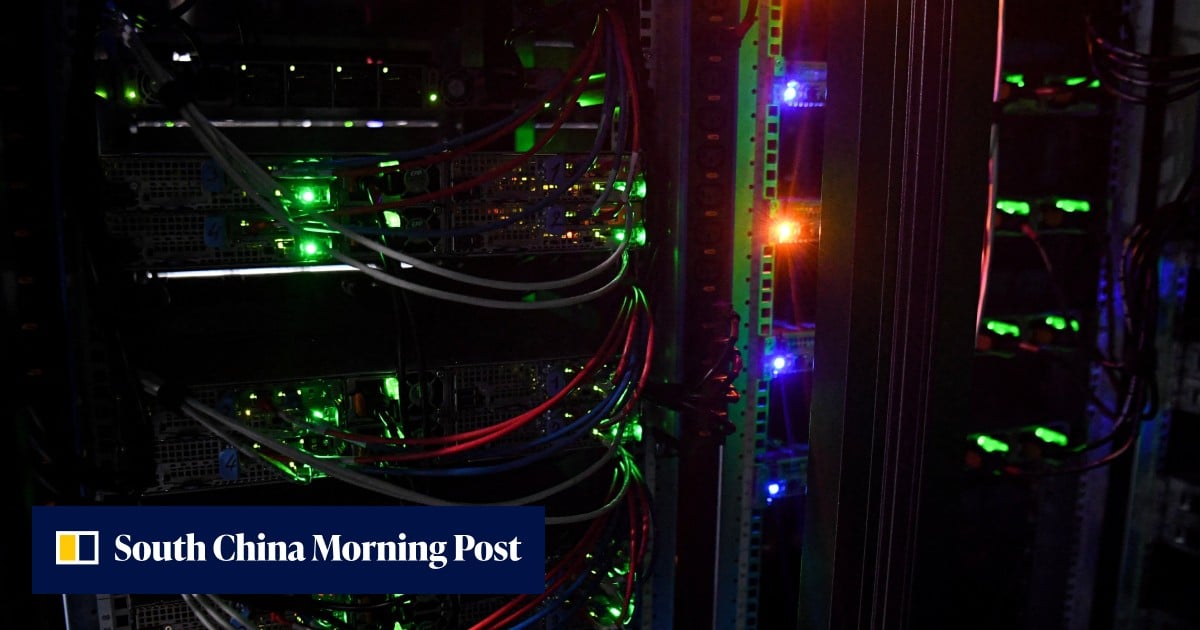
Southeast Asia starts to rethink its AI data centre boom: ‘at what cost?’

Read the original at South China Morning Post ↗
South China Morning Post · collected 2026-10-05 · by Sam Beltran

Quick Summary

Southeast Asian countries are reconsidering their rapid expansion of AI data centers due to environmental and infrastructural concerns. Thailand has paused some projects while Malaysia faces strain on its power grid. Policy researchers express doubts about the sustainability of such investments, questioning both the economic benefits and environmental impacts. Mark Manantan from La Trobe University highlights the need to balance investment attraction with practical considerations like infrastructure capacity, echoing similar sentiments from Alvin Camba, a political economist at the Atlantic Council’s Indo-Pacific Security Initiative and director of research at an AI firm in the United States.
Written locally by qwen2.5:14b on 2026-10-05, using this article's own text rather than the other coverage of the same event (that is the story summary below).

AI analysis runs on qwen2.5:14b, locally

Story summary

Southeast Asian countries like Thailand and Malaysia are reconsidering their rapid expansion of artificial intelligence (AI) data centers due to significant challenges such as power grid strain in Malaysia. Policy researcher Mark Manantan, from the Centre for Global Security at La Trobe University, highlights that while there is enthusiasm to attract investments, it raises questions about both cost and pace. Political economist Alvin Camba, a non-resident fellow at the Atlantic Council’s Indo-Pacific Security Initiative, explains that governments initially pushed hard for data center investment because these centers bring in substantial financial support and help develop cloud and AI infrastructure, with concerns over being outpaced by competitors driving their eagerness.


Written for “AI Data Centre Boom Reconsidered” on 2026-10-05, grounded in this article and the 0 other(s) covering the same event.
Why this leaning score
The model judged this article politically coded and scored it +0.15, but 1 quote(s) could not be found in the article and the other 1 are attributed speech rather than the article's own narration, so the score is not published.
Written under an earlier scoring contract, which gave a paragraph rather than checkable quotes. Re-analysing this article replaces it.
Leaning score withheld for article 56927: no verified evidence · logged 2026-10-05

Signals How these are calculated →

Claims extracted
4
claim-shaped sentences
Uncertain
0%
0 of 4 hedged
Leaning
withheld
no quote in the article backed the model's score
Correction & hedging signals
66.7
corrections and hedging in what we collected; not a measure of accuracy
Outlets on this story
1
Technology
Narrative spread
1
articles carrying this framing
Analyzed 2026-10-05 · how these are computed

Story

📰 AI Data Centre Boom Reconsidered
Technology · 1 article(s) covering the same event.

How this is being covered How these are calculated →

Article leaning vs. publisher reliability
Source leaning vs. consistency

Compared with similar articles

This article reads unscored and hedges 0% of its claims. Each row says how that neighbour differs.
Washington Examiner
⚖️ Leans right 🔴 21% hedged 4 of 19 📰 publisher trust 72
“The articles discuss different aspects of data center developments; Article A focuses on Amazon's response to President Trump's urging in the U.S., while Article B discusses Southeast Asian countries reconsidering their approach to AI data centers.”

Publisher

South China Morning Post · 1637 article(s) · 4 correction(s) detected
Running correction rate · 4 correction(s)
2026-10-04
Flight to Okinawa diverts back to Hong Kong after suspected landing gear fault
2026-10-04
Tennessee prisons chief resigning after botched execution of Christa Pike
2026-09-29
Indonesian prison chief suspended over secret VIP compound for inmates
2026-09-28
Trump ‘arms offer’ to China jolts Washington into moves to contain the fallout

Who wrote this

Sam Beltran
14 article(s) here · 0 carrying a prediction
🔮 Before, in a 16-hour shift of driving, I could take home 400 to 500 pesos [US$6.30 to US$8] – now there’s a big cut to that income,” said Manlapig, who plies a two-hour daily round route from Malolos in Bulacan, north of Manila, to San Fernando, Pampanga.
🔮 The discovery of uranium-bearing minerals in Luzon comes as the country explores integrating nuclear power into its future energy mix The discovery, which could provide uranium for the nuclear fuel cycle if further exploration confirms its viability, was made in the Larap-Paracale mining district in Camarines Norte province, where exploration began in the 1950s. Researchers from the Philippine Nuclear Research Institute (PNRI), the University of the Philippines Diliman and Akita University in Japan confirmed that surface deposits collected from the area contained uraninite as the main uranium-bearing mineral, and that the material could be processed into a product with higher uranium content.
🔮 Before, a lot of us who could go out to Scarborough Shoal used to bring home around 15,000 pesos (US$238) a week, a comfortable amount for our families,” said Marabe, a resident of Masinloc town and provincial coordinator for the national fisherfolk federation Pamalakaya.
🔮 Poland eyes deeper Philippines defence ties following Black Hawk deal Warsaw is targeting drones, air defence and artillery exports to Manila as European rearmament fuels global arms ambitions Poland’s delivery of Black Hawk helicopters to the Philippines has given Warsaw a foothold in Manila’s defence market as it seeks to expand exports from its growing defence industry, with analysts saying drones, air defence and potentially co-production could pave the way for a broader partnership.
🔮 President Ferdinand Marcos Jnr is set to be the first Philippine leader to join the Brics Summit in New Delhi this weekend – presenting him with the perfect “low-risk opportunity” to engage the grouping as Manila continues to diversify its ties, analysts say.
Also by Sam Beltran
Nothing else under this byline is closely related to this article, so these are simply their most recent.
All 14 articles by Sam Beltran →

Topics

La Trobe University Malaysia Thailand the Atlantic Council’s the Centre for Global Security

Subjects

Alvin Camba PERSON · 1× Camba PERSON · 1× Indo-Pacific Security Initiative ORG · 1× La Trobe University ORG · 1× Lyvi ORG · 1× Malaysia GPE · 1× Mark Manantan PERSON · 1× Thailand GPE · 1× the Atlantic Council’s ORG · 1× the Centre for Global Security ORG · 1×

Narrative

With Thailand pausing projects and Malaysia facing grid pressure, regulators are learning that hosting the AI boom comes with a heavy cost “There is this enthusiasm to attract investments, but now it raises the question: at what cost and at what speed?” said policy researcher Mark Manantan, a research fellow for the Centre for Global Security at La Trobe University.
framing: assertive · carried by 1 article(s) · first seen 2026-10-05
2026-10-05 · South China Morning Post
Southeast Asia starts to rethink its AI data centre boom: ‘at what cost?’ · assertive framing

Claims (4 extracted, 0 hedged)

Southeast Asia starts to rethink its AI data centre boom: ‘at what cost?’ asserted
Asia → start → cost
With Thailand pausing projects and Malaysia facing grid pressure, regulators are learning that hosting the AI boom comes with a heavy cost “There is this enthusiasm to attract investments, but now it raises the question: at what cost and at what speed?” said policy researcher Mark Manantan, a research fellow for the Centre for Global Security at La Trobe University. asserted
Manantan → pause → University
At first, governments had good reason to aggressively compete for data centre investment, said political economist Alvin Camba, a non-resident fellow at the Atlantic Council’s Indo-Pacific Security Initiative. asserted
Camba → have → Initiative
“They bring in large investments, support cloud and AI infrastructure, and governments worry about being left behind,” said Camba, who is also director of research at US-based AI firm Lyvi. asserted
who → bring → Lyvi
💬Give feedback
🕘History 🎫Support