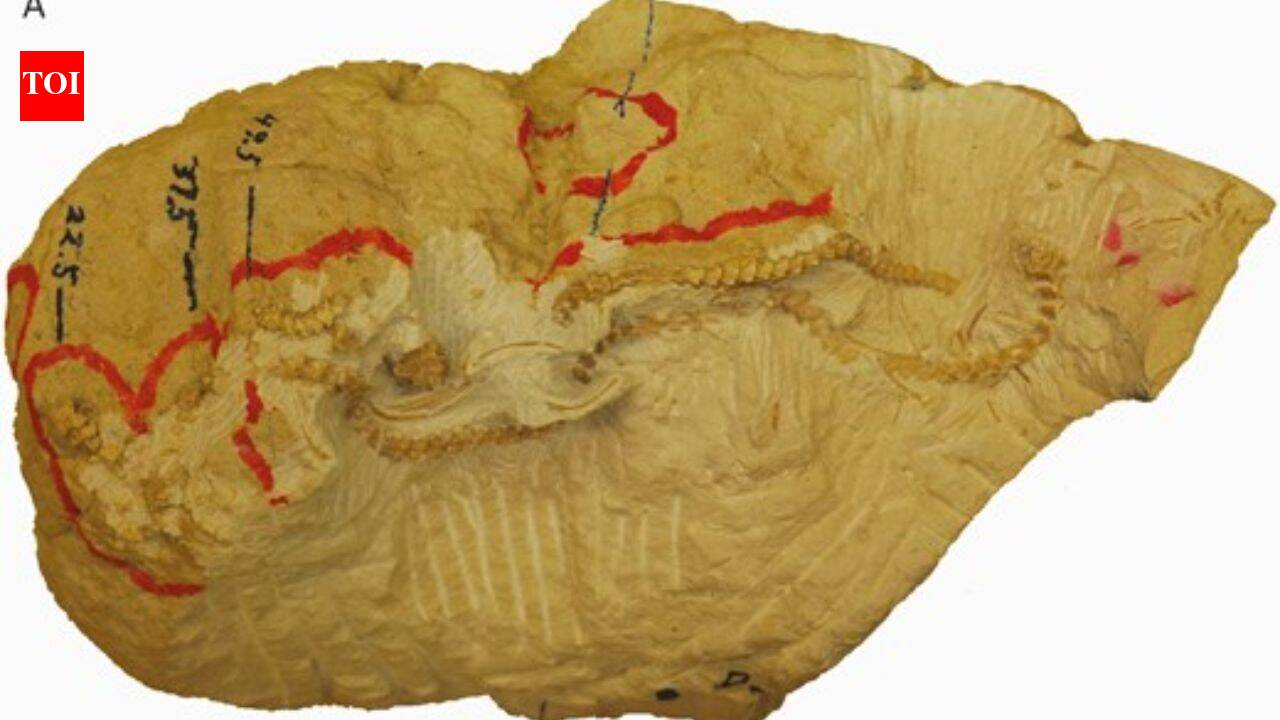
The natural world is full of animals that use mimicry to survive, but few examples are as unusual as the spider-tailed horned viper.
asserted
examples → use → viper
Native to Iran, this elusive snake has evolved a remarkable tail tip that resembles a spider, complete with a bulbous body and dangling, leg-like structures.
asserted
that → evolve → body
The snake moves the strange appendage in a way that can attract birds close enough for it to strike.
asserted
it → move → birds
What looks like an elaborate spider from the outside, however, hides a much more ordinary structure inside.
asserted
looks → look → structure
According to the Field Museum, scientists have now used X-ray computed tomography, or XCT, to examine the interior of the snake's unusual tail without damaging a scientifically important museum specimen.
uncertain
scientists → accord → specimen
Their findings, published in The Anatomical Record, revealed that despite the extraordinary appearance of the tail, the vertebrae inside are surprisingly typical of vipers.
asserted
vertebrae → publish → vipers
A tail that looks like a spider
The snake, scientifically known as Pseudocerastes urarachnoides, was formally described as a new species in 2006.
asserted
snake → look → 2006
Its common name, the spider-tailed horned viper, refers to the remarkable structure at the end of its tail.
asserted
name → refer → tail
Instead, it is a specialised external structure that creates the appearance of one.
asserted
that → create → one
When the snake moves the tail, the spider-like shape can become an attractive target for birds.
asserted
shape → move → birds
A bird approaching what appears to be potential prey may come within striking distance, allowing the viper to turn the deception into a hunting opportunity.
uncertain
viper → approach → opportunity
The species' unusual appearance was not immediately understood.
asserted
appearance → understand → ?
A specimen collected in 1968 and later brought to the Field Museum was initially thought to have some kind of deformity at the end of its tail.
asserted
specimen → collect → tail
It remained in the museum's collections for decades until another specimen with a similar tail was discovered in 2003, prompting scientists to reconsider the strange structure.
asserted
specimen → remain → structure
Scientists wanted to see what was inside
The unusual tail eventually attracted the attention of Georgios Georgalis, a paleontologist and the first author of the new study.
asserted
tail → want → study
According to Field Museum, Georgalis was particularly interested in the viper's vertebrae because snake fossils often provide scientists with only individual bones, making it difficult to determine exactly what an ancient animal looked like.
uncertain
animal → accord → what
Researchers wondered whether the spider-like tail's dramatic appearance was reflected in the snake's skeleton.
asserted
appearance → wonder → skeleton
Georgalis noted that in some other snakes, including sand boas and rubber boas, vertebrae near the end of the tail can have unusual shapes.
asserted
vertebrae → note → shapes
The team therefore wanted to know whether the spider-tailed horned viper had similarly distinctive bones.
asserted
viper → want → bones
The Field Museum's new XCT laboratory provided a way to investigate that question without opening or damaging the specimen.
asserted
laboratory → provide → specimen
XCT scanning works by collecting thousands of X-ray images and combining them to create a three-dimensional view of an object's internal structures.
asserted
scanning → work → structures
This was particularly valuable because the specimen in question is the holotype, the reference specimen used to establish the physical characteristics of the species.
asserted
specimen → use → species
The strange surprise inside the tail
When the museum's XCT laboratory began operating in late 2024, the spider-tailed horned viper was among the first specimens scanned.
asserted
viper → begin → specimens
Scientists expected the unusual exterior might be supported by equally unusual skeletal structures.
uncertain
exterior → expect → structures
Instead, the scans showed something much more ordinary.
asserted
scans → show → something
The dramatic spider-like appearance was an external feature rather than something reflected in the underlying bones.
asserted
appearance → reflect → bones
In other words, the snake's skeleton alone would not reveal that its tail could look like a spider or that the animal uses it to attract birds.
uncertain
animal → reveal → birds
The discovery also offers an important lesson for paleontologists.
asserted
discovery → offer → paleontologists
Fossilised skeletons can reveal valuable information about extinct animals, but they rarely preserve soft tissues and other external features.
asserted
they → reveal → tissues
That means an animal could have looked dramatically different from what its bones alone suggest.
uncertain
bones → mean → what
For researchers, the spider-tailed horned viper demonstrates how much information can disappear from the fossil record.
asserted
information → demonstrate → record
Its skeleton appears relatively ordinary, while its living body has evolved one of the most unusual hunting tools known among snakes.
asserted
body → appear → snakes
The study also highlights the continuing value of museum collections.
asserted
study → highlight → collections
A specimen collected decades ago and stored in a museum can become the focus of new research when technologies such as XCT scanning make it possible to examine it in ways that were previously impossible.
asserted
that → collect → ways