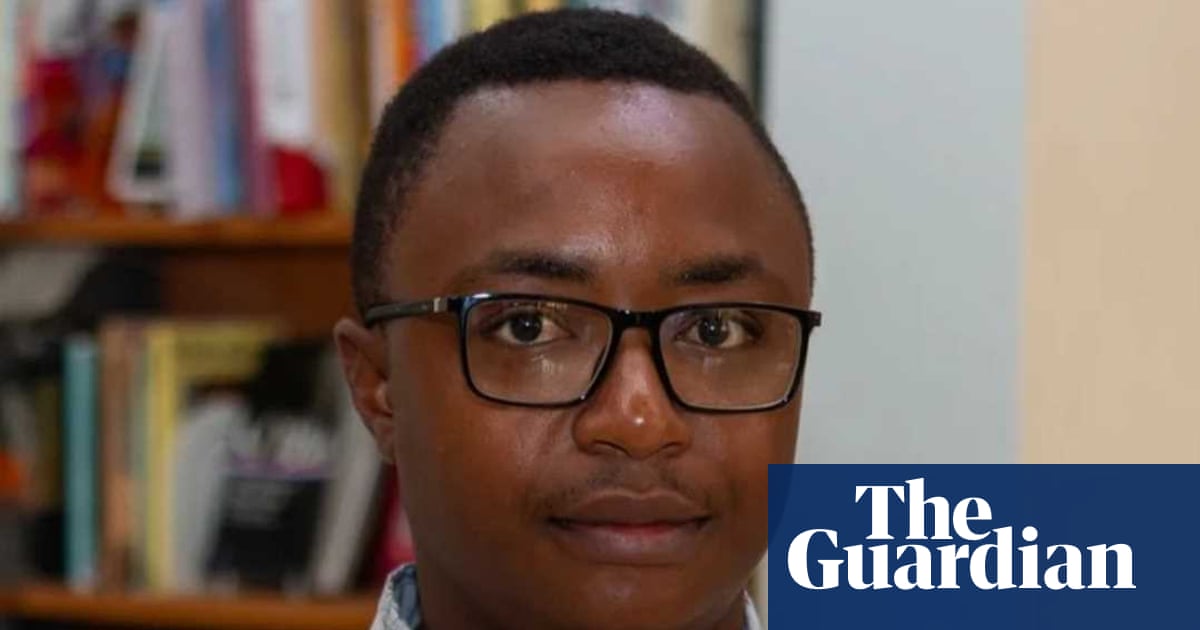
Zimbabwean author Simbarashe Kundizeza denies using AI to write prize-winning story

Read the original at The Guardian ↗
Cite

Johannesburg, R. S. i. (2026, October 14). Zimbabwean author Simbarashe Kundizeza denies using AI to write prize-winning story. The Guardian. https://www.theguardian.com/technology/2026/oct/14/zimbabwean-author-simbarashe-kundizeza-denies-ai-story

Dated from the outlet's own feed. Check the original for its byline.

The Guardian · collected 2026-10-14 · by Rachel Savage in Johannesburg

Quick Summary

Zimbabwean author Simbarashe Kundizeza has denied using AI to write his prize-winning short story "The Blue Fighter" after an article by The Atlantic suggested otherwise. The controversy arose when journalist Vauhini Vara used AI-detection software to claim the story was almost entirely generated by artificial intelligence, citing stylistic markers common in AI-produced text as evidence. Kundizeza responded on X (formerly Twitter) stating that he wrote the story entirely himself and looks forward to working with the Caine prize team. The Caine prize committee is reviewing the allegations but questions the reliability of AI-detection tools, emphasizing a human-centered approach to evaluating claims of AI involvement in literary works.
Written locally by qwen2.5:14b on 2026-10-14, using this article's own text rather than the other coverage of the same event (that is the story summary below).

AI analysis runs on qwen2.5:14b, locally

Story summary

Simbarashe Kundizeza, a Zimbabwean author, has denied using artificial intelligence (AI) to write his short story "The Blue Fighter," which won this year's Caine Prize for African Writing on October 6. The Atlantic published an article by Vauhini Vara claiming AI-detection software Pangram flagged the work as almost entirely AI-generated, except for an epigraph from a poem by South African writer Vangile Gantsho. This sparked controversy and led Kundizeza to post on X: "For the avoidance of doubt, I wrote ‘The Blue Fighter.’" The chair of the Caine Prize’s board of trustees, Ellah Wakatama, criticized The Atlantic for not conducting a thorough investigation before publishing their claims, stating she was shocked by the premature allegations.

Written for “Zimbabwean Author Denies AI Use” on 2026-10-14, grounded in this article and the 1 other(s) covering the same event.
Why this leaning score
This article does not take a side on a contested political question, so it has no leaning score. That is an answer rather than a gap: a match report or a rescue can be warmly or critically written without being left or right, and scoring it anyway is how approval of a subject gets recorded as a political position.
No political leaning scored for article 80267 · logged 2026-10-14

Story

📰 Zimbabwean Author Denies AI Use
Entertainment · 2 article(s) covering the same event. See how they differ ↓

Compared with similar articles

This article reads unscored and hedges 8% of its claims. Each row says how that neighbour differs.
BBC News · 0.95 cosine similarity
⚖️ Leans strongly left 🔴 0% hedged 0 of 40 📰 publisher trust 72
“Both articles report on Simbarashe Kundizeza denying the use of AI to write his award-winning story 'The Blue Fighter', in response to an article in The Atlantic suggesting otherwise.”
How this article was measured signals, leaning charts, publisher record, byline, topics and claims

Signals How these are calculated →

Claims extracted
24
sentences that state something as happening or true
Uncertain
8%
2 of 24 hedged ("reportedly", "may", "according to")
Leaning
not political
takes no side on a contested political question
Publisher signals
67/100
The Guardian's corrections and hedging, across everything collected from it. Not a measure of accuracy.
Outlets on this story
2
Entertainment
Same framing elsewhere
1
articles that frame the event the way this one does
Analyzed 2026-10-14 · how these are computed

How this is being covered How these are calculated →

Article leaning vs. publisher reliability
Source leaning vs. consistency

Publisher

The Guardian · 1840 article(s) · 5 correction(s) detected
Running correction rate · 5 correction(s)

Who wrote this

Rachel Savage in Johannesburg
5 article(s) here · 1 carrying a prediction
🔮 Most importantly, I will continue to write.”
🔮 Her brother told the Sun on Tuesday: “My sister has been missing for five days with no trace or call,” adding that the family could not think of a motive for her kidnapping. Police did not say whether information received in response to the offered reward had led to Osman’s rescue, adding that investigations were ongoing and more details would be shared “in due course”.
🔮 When Donald Trump announced in February 2025 that the US would accept Afrikaners from South Africa as refugees, many white South Africans who believed that they were victims of racism in their country thought that their prayers had been answered.
🔮 A surge in RSF drone strikes on El Obeid and nearby areas in June led the UN to warn that the city could face a repeat of what happened in El Fasher.
Also by Rachel Savage in Johannesburg
Nothing else under this byline is closely related to this article, so these are simply their most recent.

Topics

African Atlantic Pangram South African Zimbabwean

Subjects

Kundizeza PERSON · 4× Vara PERSON · 4× Atlantic ORG · 3× BBC ORG · 2× Pangram PERSON · 2× African NORP · 1× Simbarashe Kundizeza PERSON · 1× South African NORP · 1× Vauhini Vara PERSON · 1× Zimbabwean NORP · 1×

Narrative

Ellah Wakatama told the BBC’s Front Row radio show: “As someone who chairs a prize, I’m obviously not against AI, but what I am against is it being used as a final arbiter in this case, regardless of what the Atlantic says, because they have already proclaimed our winner to be a cheater without investigating it properly.
framing: assertive · carried by 1 article(s) · first seen 2026-10-14
🔮 Most importantly, I will continue to write.”

Claims (24 extracted, 2 hedged)

The Zimbabwean writer Simbarashe Kundizeza has denied using AI to write a prize-winning short story after an article in the Atlantic said software had flagged it as almost completely AI-generated. asserted
software → deny → it
Kundizeza’s story The Blue Fighter was announced as the winner of the prestigious Caine prize for African writers on 6 October. asserted
story → announce → October
Five days later, The Atlantic published an article by the author and journalist Vauhini Vara titled: “Yet Another Literary prize winner Seems to Be AI. asserted
winner → publish → author
” Vara said that she had run the story through the AI-detection software Pangram, which itself uses AI, and it had deemed the story to be almost completely artificially generated. asserted
story → say → AI
The exception, she said, was an epigraph from what is described as an unpublished poem by the South African writer Vangile Gantsho. asserted
what → say → writer
Vara said that when she read the story, she “was struck by the proliferation of language that is common in AI-produced writing: the not x, but y sentence constructions; the glut of metaphors; the platitudinous aphorisms”. asserted
that → say → metaphors
She said: “Taste is subjective, but trust me, this story is bad – maudlin and full of tired tropes.” asserted
story → say → tropes
Kundizeza responded in a statement on X: “For the avoidance of doubt, I wrote ‘The Blue Fighter’. asserted
I → respond → Fighter
I did not use generative AI to write it. asserted
I → use → it
“I look forward to continuing to work with the Caine prize team, and to celebrating this recognition with the people who helped bring this story into the world. asserted
who → look → world
Most importantly, I will continue to write.” asserted
I → continue → ?
Similar claims have been made recently about other literary prize winners. uncertain
claims → make → winners
In July, the Trinidadian writer Jamir Nazir won the Commonwealth Foundation’s short story prize with The Serpent in the Grove, despite critics on social media claiming it had “obvious markers” of AI writing. asserted
it → win → writing
Last month, the Canadian-Haitian writer Thélyson Orélien’s novel C’était Ça Ou Mourir (It Was That or Die) was removed from the longlist of France’s most prestigious literary prize, the Goncourt, after an anonymous online account alleged the book was “almost entirely” written by AI. asserted
book → die → AI
The Caine prize said in a statement that it was reviewing the allegations that Kundizeza had used AI. asserted
Kundizeza → say → AI
It said: “When such claims are made, it is our responsibility to look into them. uncertain
it → say → them
We aim to do this by taking a human-centred approach, ensuring that writers are supported and cared for during the process.” asserted
writers → aim → process
Its chair questioned the reliability of AI-detection software itself. asserted
chair → question → software
Ellah Wakatama told the BBC’s Front Row radio show: “As someone who chairs a prize, I’m obviously not against AI, but what I am against is it being used as a final arbiter in this case, regardless of what the Atlantic says, because they have already proclaimed our winner to be a cheater without investigating it properly. asserted
winner → tell → it
“I am not happy for the work of writers, and in this case especially black writers, to form the testing ground for something that is at best still rough and ready.” asserted
that → form → something
Vara said in her article, and repeated in an interview with Front Row, that she had read a 2021 story by Kundizeza that was tonally and stylistically different from The Blue Fighter. asserted
that → say → Fighter
In his statement, he responded: “To suggest that a writer cannot write in different styles or genres, or improve his writing substantially after five or more years fundamentally misunderstands the craft of writing.” asserted
writer → respond → writing
Vara pointed to Pangram’s own research that found that false positives were rare, including for non-native English speakers writing in English, as well as a peer-reviewed journal article that found Pangram had “strong accuracy” when assessing mock academic papers created fully, partly or with no AI. asserted
Pangram → point → AI
However, she acknowledged to the BBC that there was “relatively little third-party research” on the accuracy of AI detection software. asserted
she → acknowledge → software

💬Give feedback
🕘History 🎫Support