Prices are up 5.4% overall since President Donald Trump entered office, according to the final inflation report before the midterm elections.
uncertain
Trump → enter → elections
The September consumer price index report showed that prices rose 3.7% on an annual basis.
asserted
prices → show → basis
Trump ran on vanquishing the inflation experienced under former President Joe Biden, who presided over the worst wave of inflation in decades.
asserted
who → run → decades
But the Trump administration has been unable to return inflation back to the 2% level the Federal Reserve considers healthy.
asserted
Reserve → return → level
And, for families, what matters is not the inflation rate at any one time, but how much prices have risen cumulatively in the past few years.
asserted
prices → matter → years
Since the inflationary plague first began in March 2021, the overall price level has risen by over 26%, leaving many households struggling to maintain their standard of living and causing voters to disapprove of Trump.
“I think the overwhelming thing, the thing that’s really important, is that overall, consumers have still never really recovered from that surge in inflation in ‘21 and ‘22 …
asserted
consumers → begin → 21
ever since then, consumers have never caught up,” Dan North, a senior economist with Allianz Trade Americas, told the Washington Examiner.
asserted
North → catch → Examiner
A big chunk of the overall inflation during Trump’s second term has been driven by increased energy prices resulting from the war with Iran and higher oil prices.
asserted
chunk → drive → Iran
Groceries
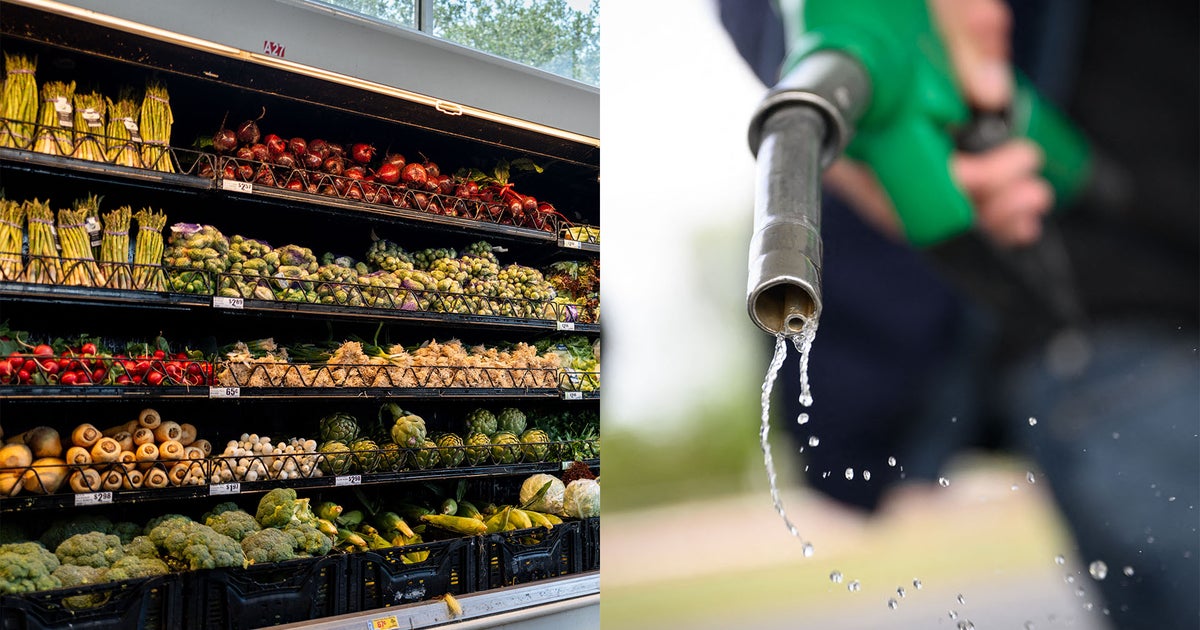
Grocery prices have risen much more modestly, up 3.3% since Trump entered office in January 2025.
asserted
Trump → rise → January
Still, shoppers have complained about the prices they pay at the grocery store, largely because of the years of cumulative growth that food prices have seen and how certain grocery items, like beef, have risen at a much greater rate.
asserted
items → complain → rate
Since January 2021, under Biden, grocery prices have spiked a shocking 27%.
asserted
prices → spike → Biden
Ricky Volpe, a professor at California Polytechnic State University’s agribusiness department and former economist with the USDA, told the Washington Examiner that 2021 and 2022 were years when consumers experienced “historic” food inflation.
asserted
consumers → tell → inflation
“They cooled off in 2024, and now in 2025 and 2026, food price inflation has overall been about normal, about what we would expect for year-over-year inflation,” Volpe said, noting that despite that, there have been “pain points” for specific food items.
asserted
Volpe → cool → items
Gas
Gasoline prices have seen perhaps the most noticeable increase for consumers during Trump’s second term.
asserted
prices → see → term
As of Wednesday, according to AAA, consumers are shelling out $4.34 for a gallon of regular gasoline.
uncertain
consumers → accord → gasoline
Looking at the consumer price index metrics for gasoline, gas prices have risen 39% since Trump began his second term, with much of that increase coming this year as a result of the war with Iran.
“That’s the one that people hate the most; they love to hate gasoline prices because they’re right in your face every time, and you have to buy it,” North said.
asserted
North → look → it
Analysts fear that it might take some time for gasoline prices to come back down, even if the war were to end immediately.
uncertain
war → fear → time
Ryan Young, senior economist at the Competitive Enterprise Institute, recently told the Washington Examiner that he thinks that oil prices will remain high at least into 2027.
asserted
prices → tell → 2027
He said that the oil and energy infrastructure destroyed during the war will take time to rebuild, which will affect oil supply coming from the region.
asserted
which → say → region
Electricity prices, on average, have risen 8.4% since January 2025.
asserted
prices → rise → January
The cost of electricity has been in the news as well, in large part due to the discourse surrounding data centers and their energy usage.
asserted
cost → surround → centers
“We’re becoming increasingly reliant on electricity, and data centers are obviously a big part of that — but connected homes are a big part of that, and the utilization of electric vehicles is part of that,” Mark Hamrick, chief economic analyst for the Hamrick Brief, told the Washington Examiner.
asserted
Hamrick → become → Examiner
Taking an even longer view, electricity prices have risen considerably since inflation first breached 2% under Biden.
asserted
inflation → take → Biden
The housing market has also been a sore spot for consumers, with many struggling to afford a home and the median age of homebuyers increasing.
Shelter costs tracked by the consumer price index are up about 5.5% since Trump entered office.
asserted
Trump → struggle → office
The real price growth when it comes to housing came during the pandemic-era housing boom.
asserted
it → come → boom
Shelter costs have risen over 30% since inflation began rising back in 2021.
asserted
inflation → rise → 2021
But the situation for homebuyers is considerably worse when the run-up in mortgage rates is taken into account.
asserted
up → take → account
As of Tuesday, the average rate on a 30-year fixed-rate mortgage has risen to 7.46%, according to Mortgage News Daily, which tracks rates daily.
uncertain
which → fix → rates
“Coming into the war with Iran, we saw a short period where we thought the average 30-year fixed might have a sustained period below 6%, and now 7% seems to be the norm,” Hamrick said.
uncertain
Hamrick → come → %
Consequently, the monthly payment on a mortgage for the typical home has more than doubled since early 2021.
asserted
payment → double → 2021
 The Aporia