The marriage of Disney+ and the Marvel Cinematic Universe seemed, at first, to be a perfect match.
asserted
marriage → seem → Disney+
WandaVision, the high-concept miniseries that placed Wanda Maximoff (Elizabeth Olsen) and her beloved synthezoid the Vision (Paul Bettany) in a succession of retro sitcoms and challenged viewers to figure out what was actually happening beyond the suburban veneer, kicked off the venture in 2021 with huge audiences and near-unanimous critical praise.
asserted
what → place → audiences
But it ended in the same predictable, digitally enhanced battle as every other MCU mediocrity.
asserted
it → end → mediocrity
With a few fun exceptions, like this year’s renewed-then-canceled Wonder Man and the witchy 2024 WandaVision sequel Agatha All Along, the returns have been diminishing ever since.
asserted
returns → renew → Man
So it’s not particularly surprising that Disney seems to be paring back its small-screen Marvel offerings.
asserted
Disney → ’ → offerings
To understand what went wrong, you need only watch the first episode of VisionQuest, the final installment of the WandaVision trilogy.
asserted
you → understand → trilogy
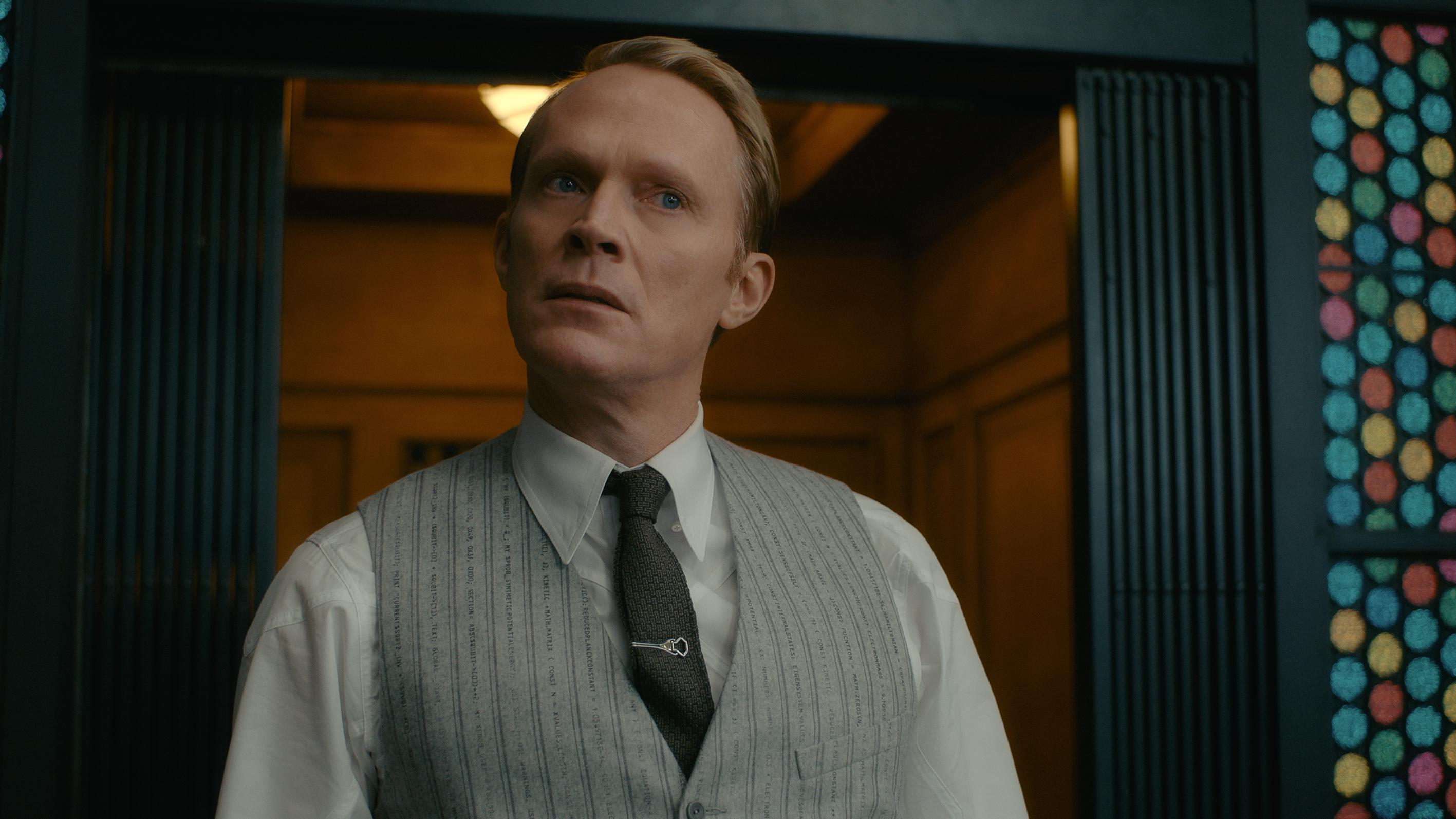
It begins with Bettany narrating a summary of Vision’s MCU storyline, from his origin as the creation of sociopathic supervillain Ultron and education in humanity at the hands of Avengers Bruce Banner and Tony Stark to his annihilation by Thanos and resurrection as a projection of Wanda’s mourning, that will only make sense to viewers who’ve followed that saga for more than a decade.
asserted
who → begin → decade
Soon, it’s introducing a bunch of anthropomorphized AIs (Orla Brady’s F.R.I.D.A.Y., Emily Hampshire’s E.D.I.T.H., James D’Arcy’s J.A.R.V.I.S.) that have their own franchise backstories.
asserted
that → introduce → backstories
Less than 15 minutes in, Vision is sitting in a cinema, within his own robotic mind, brooding over memories of Wanda.
asserted
Vision → sit → Wanda
The story is so unwieldy, at this point, it’s impossible to follow without constant reminders of what came before.
asserted
what → ’ → reminders
Yet the VisionQuest narrative is too emotionally simplistic and stylistically conventional, particularly compared to the two previous parts of the trilogy, to merit all that remembering.
asserted
narrative → compare → remembering
Annihilated for the second time with the collapse of Wanda’s grief fantasia, the Vision has been rebuilt—“same body, different mind,” he tells us, meaning that he no longer has the capacity for love that once bound him to her and the sons, Tommy and Billy, she conjured.
asserted
she → annihilate → her
In the physical world, he’s in hiding as a human barback at a Scottish pub with relevance to Wanda-Vision romance lore.
asserted
he → ’ → lore
But his more vivid existence is a life of the (artificial) mind, where he retreats to a sort of Beaux-Arts-meets-midcentury-modern country estate populated by autonomous AIs.
asserted
Arts → retreat → AIs
While J.A.R.V.I.S. and F.R.I.D.A.Y. lead the virtual household, or Mindspace, “recreational AI” E.D.I.T.H. provides comic relief, crashing through skylights with daredevil stunts.
asserted
E.D.I.T.H. → lead → stunts
Everyone seems a bit aimless now that Vision is serving beers instead of fighting to save the human race.
asserted
Vision → seem → race
It gives him time to stew on the loss of his emotions and relationships, to contemplate the extent to which he is and isn’t the same synthezoid who loved his family.
asserted
who → give → family
His ennui may also be the only plausible explanation for his potentially catastrophic choice to keep Ultron (James Spader) alive, imprisoned in an isolated tower in Vision’s memory palace.
uncertain
ennui → keep → palace
Physical reality disrupts Vision’s Tin-Man-esque, if-I-only-had-a-heart wistfulness when a fearsome bounty hunter, Paladin (Todd Stashwick), is hired to apprehend him.
asserted
hunter → disrupt → him
It also brings to his attention the existence—and Paladin-related peril—of one Thomas Shepherd (Ruaridh Mollica), a troubled young man in London whom we’re never really given a reason to doubt is a version of Tommy Maximoff.
asserted
we → bring → Maximoff
(If you want to know what became of Billy Maximoff, watch Agatha All Along, which remains an ideal Halloween-season binge.)
asserted
which → want → Agatha
Is this Vision capable of caring for the boy?
asserted
Vision → care → boy
Somehow, as the season progresses, it all escalates into yet another cataclysm that requires a superpowered champion to save humanity.
asserted
that → progress → humanity
But wait: Does humanity even want to be saved, or do we subconsciously crave our own extinction?
asserted
we → wait → extinction
“They’re relentlessly aspirational,” Ultron notes, “but at the same time they wallow in their hardship, misery, guilt.”
asserted
they → ’re → guilt
To illustrate this point, his tower contains a rendering of Hieronymous Bosch’s The Garden of Earthly Delights.
asserted
tower → illustrate → Delights
Created by Terry Matalas (Star Trek: Picard, 12 Monkeys), VisionQuest loads up on weighty themes—eternal ones like fathers and sons as well as that current ubiquity, AI.
asserted
VisionQuest → create → fathers
(I’m curious how much the story, which dates back to at least 2022, has evolved in response to an increasingly AI-dominated news cycle that has also become an obsession for Hollywood.)
asserted
that → ’m → Hollywood
Yet, in typical Marvel fashion, it spends more time crafting action spectacles and shifting settings, traversing the physical world as well as infinite MIndspace via virtual backdrops elaborate yet generic enough to resemble video-game levels, than it does developing characters or ideas.
asserted
it → spend → characters
Vision is often engaged in tortured introspection, but this is mostly redundant wheel-spinning.
asserted
this → engage → introspection
The AI handwringing is neither novel nor especially coherent; some undercooked aspects of the latter plot made me long for the next season of Pluribus.
asserted
me → make → Pluribus
Now there’s a character-driven sci-fi drama that knows when to confuse viewers about basics like where a scene is taking place and what’s happening (rarely) and when to give us fodder for more abstract contemplation (often).
asserted
what → ’ → contemplation
That’s not to say that VisionQuest is bereft of pleasures.
asserted
VisionQuest → ’ → pleasures
It makes a wonderful showcase for Bettany’s protean acting chops, though it’s hard to explain why without giving too much away.
asserted
it → make → much
Even if I don’t entirely buy that Vision would hang on to Ultron out of some sense of ersatz-filial loyalty, Bettany and Spader, a consummate cerebral villain, are great together.
asserted
Bettany → buy → loyalty
(One reason it’s hard to get invested in the question of whether these AIs can feel feelings is that the Mindspace characters are so much more vividly portrayed than the flesh-and-blood humans.)
asserted
characters → ’ → humans
And it’s always a treat to see the Marvel monolith plug precisely the right cult performer into a very specific small role.
asserted
monolith → ’ → role
In this case, that’s Diane Morgan, known to fans of British comedy as the fictional, arrogantly ignorant TV presenter Philomena Cunk, as Paladin’s sardonic assistant.
asserted
that → ’ → assistant
There are some cool visual ideas, especially in the way that production designer Will Hughes-Jones conceives of Vision’s Mindspace as a place permeable to outside interference.
asserted
Jones → be → interference
As a capstone to a stylistically innovative trilogy, though, the show even falls short aesthetically.
asserted
show → fall → trilogy
…and 7 more, not listed.
 The Aporia