’How do you explain the deletion of 130 million names?’ Why Indian voters are on the streets

Read the original at The Guardian ↗
The Guardian · collected 2026-10-14 · by Hannah Ellis-Petersen, Shaikh Azizur Rahman

Quick Summary

Shahida Fakir, an Indian citizen from West Bengal, found her name removed from the electoral roll despite providing proof of identity and residency. Since last year, approximately 130 million names have been deleted through a process called SIR, or special intensive revision, by the election commission. Critics argue that this mass removal disproportionately affects minorities and marginalized communities, leading to protests in major cities demanding the resignation of the chief election commissioner Gyanesh Kumar. Opposition parties are also challenging the legitimacy of SIR in court, alleging it disenfranchises voters to benefit the ruling BJP party.
Written locally by qwen2.5:14b on 2026-10-14, using this article's own text rather than the other coverage of the same event (that is the story summary below).

AI analysis runs on qwen2.5:14b, locally

Story summary

Shahida Fakir, a 38-year-old migrant worker from West Bengal, recently found her name removed from India's electoral roll despite presenting proof of residence and family ties dating back decades. This incident is part of a larger controversy surrounding the Special Intensive Revision (SIR) process in India, which has resulted in the deletion of 130 million voter names since last year. Critics argue that while SIR aims to clean up the electoral rolls by removing dead or duplicate entries, it has also disenfranchised millions of eligible voters, including those with legitimate documentation.

The Indian Express revealed that two election commission members raised objections to how voters were being excluded but were overruled by Kumar, a senior official. The process, initiated under the Narendra Modi government's tenure, has sparked widespread protests across India, highlighting concerns about the integrity and fairness of democratic processes in the country.

Written for “Indian Voter Data Controversy” on 2026-10-14, grounded in this article and the 0 other(s) covering the same event.
Why this leaning score
The article's own words the score was based on. Each is quoted verbatim and was checked against the article text before being stored, so you can find it in the original.
Reading Leans strongly left (beta estimate) Confidence high
Leaning: leans strongly left for article 78245 (high confidence, 4 verified quotes) · logged 2026-10-14

Story

📰 Indian Voter Data Controversy
Politics · 1 article(s) covering the same event.

Compared with similar articles

This article reads leans strongly left and hedges 5% of its claims. Each row says how that neighbour differs.
The Sydney Morning Herald
⚖️ Leans left further right than this 🔴 0% hedged 0 of 14 📰 publisher trust 61
“Article A describes the sealing off of Delhi and preparations for an upcoming protest, while Article B discusses the background and context behind the voter list deletions that sparked the protests.”
Al Jazeera
⚖️ leaning not scored 🔴 6% hedged 1 of 18 📰 publisher trust 60
“The first article describes the police and transport restrictions in Delhi for an upcoming protest, while the second article discusses voter disenfranchisement issues that likely led to the protests but does not describe the specific protest event.”
Dawn
⚖️ leaning not scored 🔴 10% hedged 2 of 20 📰 publisher trust 71
“Article A describes the police deployment and transport restrictions ahead of an opposition protest, while Article B tells individual stories of voters whose names were deleted from electoral rolls.”
The Sydney Morning Herald
⚖️ Leans left further right than this 🔴 0% hedged 0 of 30 📰 publisher trust 61
“The articles describe different individuals and issues related to voter disenfranchisement, but they do not appear to be reporting on the exact same specific incident or occurrence.”
BBC News
⚖️ Leans left further right than this 🔴 0% hedged 0 of 27 📰 publisher trust 72
“The articles describe different aspects of a broader issue but refer to distinct events: one focuses on opposition leaders marching to court, while the other discusses individual voter disenfranchisement and deletion from electoral rolls.”
A juncture and a moment different event · 95%
Dawn
⚖️ Leans strongly left 🔴 3% hedged 1 of 38 📰 publisher trust 71
“Article A discusses a broader crisis involving protests by unemployed youth and students over election corruption, while Article B focuses on the specific issue of voter deletion affecting millions.”
Dawn
⚖️ Leans left further right than this 🔴 0% hedged 0 of 20 📰 publisher trust 71
“The articles describe different aspects of political unrest in India: one focuses on protest tactics against a security crackdown, while the other discusses voter disenfranchisement due to missing names in electoral rolls.”
Dawn · 0.87 cosine similarity
⚖️ Leans left further right than this 🔴 13% hedged 5 of 38 📰 publisher trust 71
“While both articles discuss the deletion of voter registrations and its impact, Article A focuses on the broader protests and political reactions, while Article B provides a personal story about one affected individual. They do not describe the same specific incident.”
Al Jazeera
⚖️ leaning not scored 🔴 0% hedged 0 of 2 📰 publisher trust 60
“Article A describes a planned march by opposition parties to the Supreme Court regarding alleged vote fraud, while Article B discusses an individual's experience of being removed from voter rolls as part of a larger issue affecting millions.”
Toronto Star
⚖️ Leans left further right than this 🔴 3% hedged 2 of 58 📰 publisher trust 63
“While both articles describe protests related to voter purges in India, they appear to focus on different aspects and do not clearly describe the same specific incident occurring at the same time and place.”

Cite this article

Ellis-Petersen, H., & Rahman, S. A. (2026, October 14). ’How do you explain the deletion of 130 million names?’ Why Indian voters are on the streets. The Guardian. https://www.theguardian.com/world/2026/oct/14/india-protests-election-commission-gyanesh-kumar

Dated from the outlet's own feed. Check the original for its byline.

How this article was measured signals, leaning charts, publisher record, byline, topics and claims

Signals How these are calculated →

Claims extracted
62
sentences that state something as happening or true
Uncertain
5%
3 of 62 hedged ("reportedly", "may", "according to")
Leaning
Leans strongly left
of the writing, not the subject · beta estimate
Publisher signals
67/100
The Guardian's corrections and hedging, across everything collected from it. Not a measure of accuracy.
Outlets on this story
1
Politics
Same framing elsewhere
1
articles that frame the event the way this one does
Analyzed 2026-10-14 · how these are computed

How this is being covered How these are calculated →

Article leaning vs. publisher reliability
Source leaning vs. consistency

Publisher

The Guardian · 1779 article(s) · 5 correction(s) detected
Running correction rate · 5 correction(s)

Who wrote this

Hannah Ellis-Petersen
4 article(s) here · 1 carrying a prediction
🔮 The backlog of millions of voters in West Bengal challenging their exclusion means it could be years before Fakir’s case is heard.
🔮 This week, the supreme court said the five successive rape cases “starkly underlined a systematic failure” and it could not help but “draw painful parallels to the Nirbhaya incident of 2012”.
🔮 Rescue efforts have increasingly centred on these tunnels, where authorities believe workers may have survived for more than a week due to air pockets.
🔮 “After such an accident, I couldn’t just run away by myself.
Also by Hannah Ellis-Petersen
Nothing else under this byline is closely related to this article, so these are simply their most recent.
Shaikh Azizur Rahman
1 article(s) here · 1 carrying a prediction
🔮 The backlog of millions of voters in West Bengal challenging their exclusion means it could be years before Fakir’s case is heard.
The only article under this byline in the corpus.

Topics

BJP India Indian SIR West Bengal

Subjects

Indian NORP · 6× India GPE · 5× SIR ORG · 5× Bangladesh GPE · 4× BJP ORG · 3× Fakir PERSON · 3× West Bengal GPE · 3× Kumar PERSON · 2× Modi PERSON · 2× Muslims NORP · 2×

Narrative

Despite concerns over SIR rumbling on for months, it did not spark national protests until the Indian Express newspaper last month revealed that two members of the election commission had raised 14 objections to how voters were being excluded from the rolls, but they were unilaterally overruled by Kumar. “India has always been a flawed democracy but at least citizens felt they had the right to vote and that elections were regular and fair,” said Sen.
framing: assertive · carried by 1 article(s) · first seen 2026-10-14
🔮 The backlog of millions of voters in West Bengal challenging their exclusion means it could be years before Fakir’s case is heard.

Claims (62 extracted, 3 hedged)

Born into a small village in West Bengal, Shahida Fakir had always taken her vote for granted. asserted
Fakir → bear → vote
That was, until it was suddenly taken away. asserted
it → take → ?
She presented officials with her Indian birth certificate and family land documents from the village going back to 1962. asserted
She → present → 1962
Both her parents had been on the electoral roll going back decades, so she showed proof of that too. asserted
she → go → that
But when the final revised voter list came out in April, Fakir was not on it. asserted
Fakir → revise → it
The 38-year-old migrant worker, born into a poor Muslim family, was not alone. asserted
worker → bear → family
Since last year, 130 million names – more than the population of Japan – have been removed from India’s electoral roll through a process known as SIR, or special intensive revision. asserted
names → remove → SIR
In the nearly eight decades since India’s independence, never have the voter rolls shrunk by such a huge amount over such a short time. asserted
rolls → shrink → time
The Narendra Modi government has called SIR a legitimate exercise to clean up the electoral rolls. asserted
government → call → rolls
Overseen by the election commission, tens of millions of dead and duplicate names have been removed. asserted
millions → oversee → names
Yet so have the names of millions of living Indian citizens. asserted
names → have → citizens
Critics allege that the pledge to “purify” India’s voter roll of illegal immigrants has instead been used for more sinister purposes – disenfranchising tens of millions of Muslims, other minorities, and poor and lower caste communities, who are largely not BJP voters. asserted
who → allege → Muslims
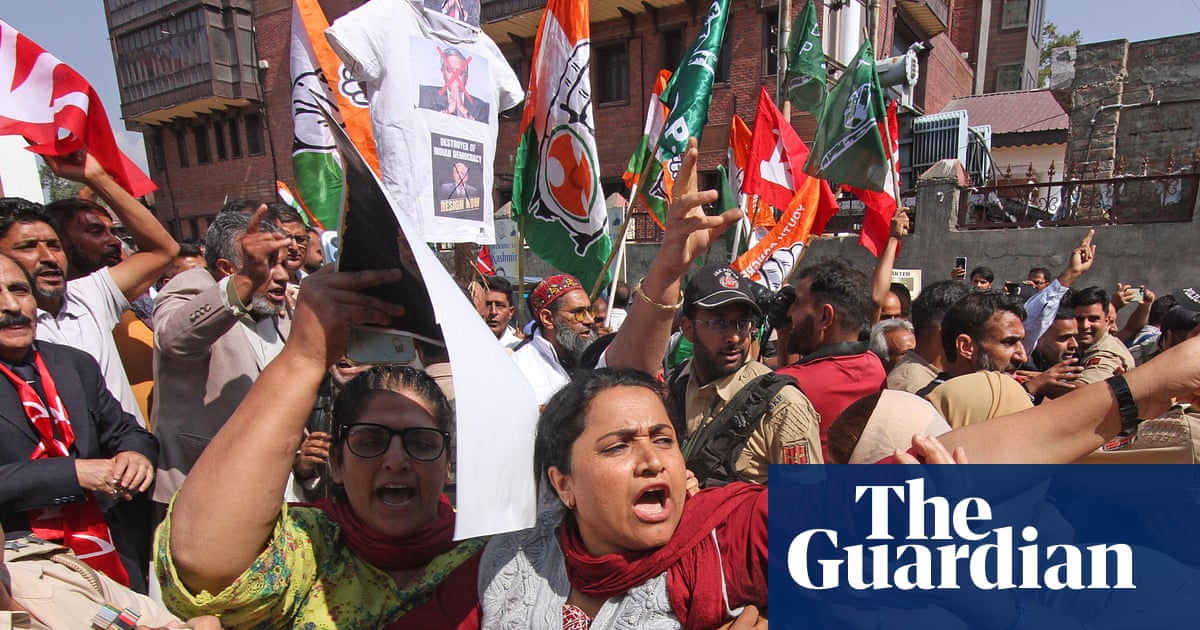
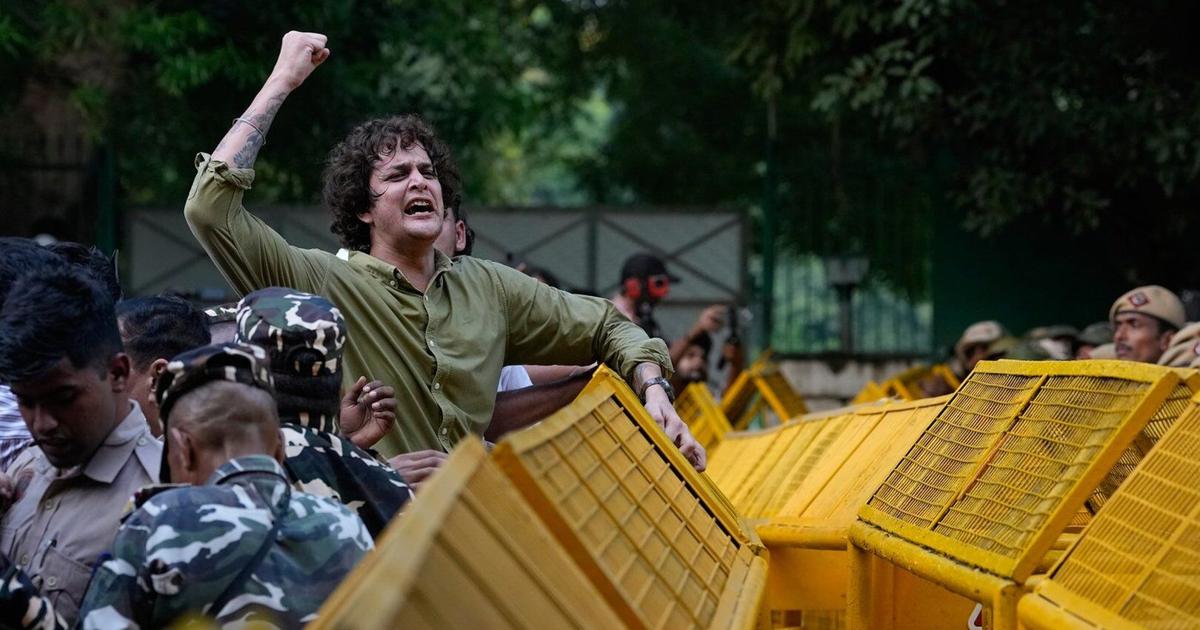
In a matter of weeks, nationwide anger at SIR has boiled up and spilled out on to the streets of India’s biggest cities, presenting a formidable challenge to the government. asserted
anger → boil → government
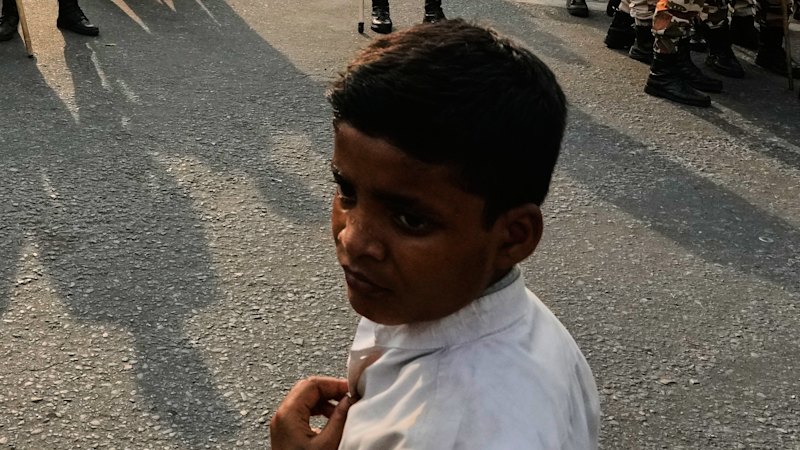
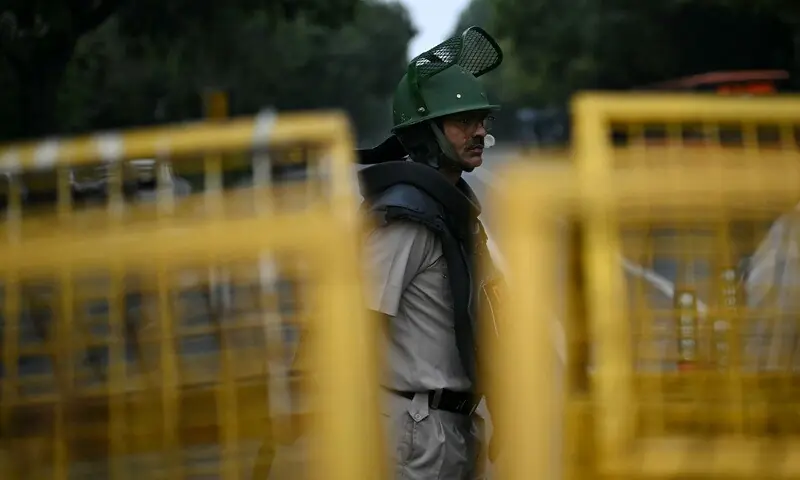
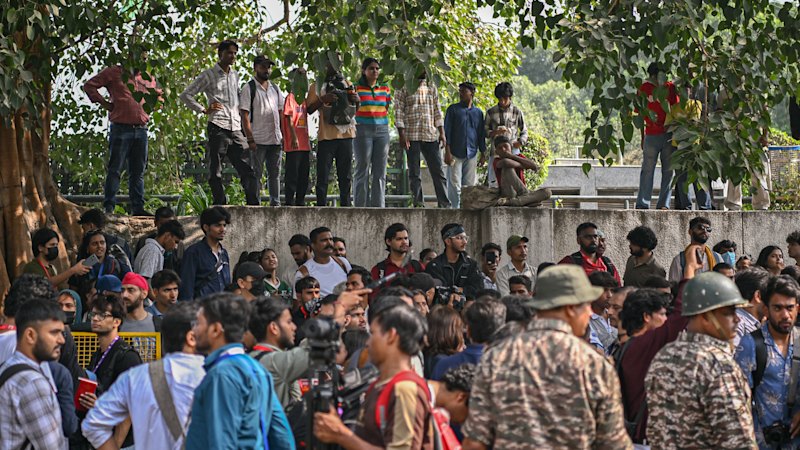
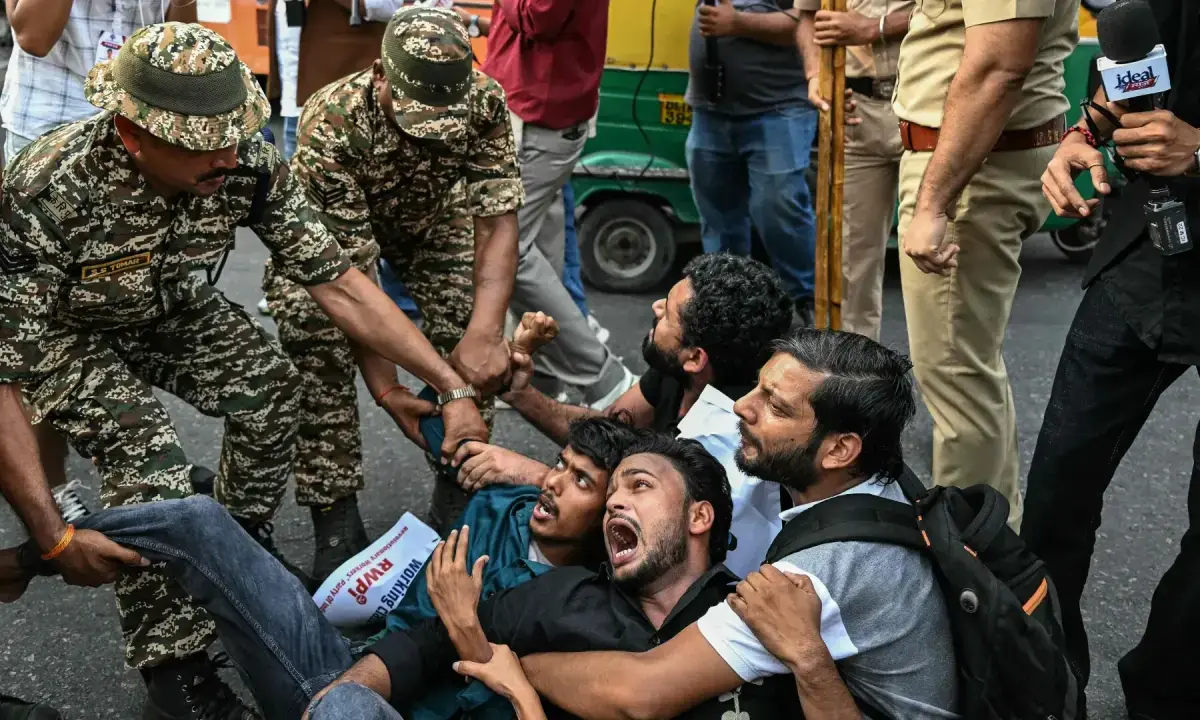
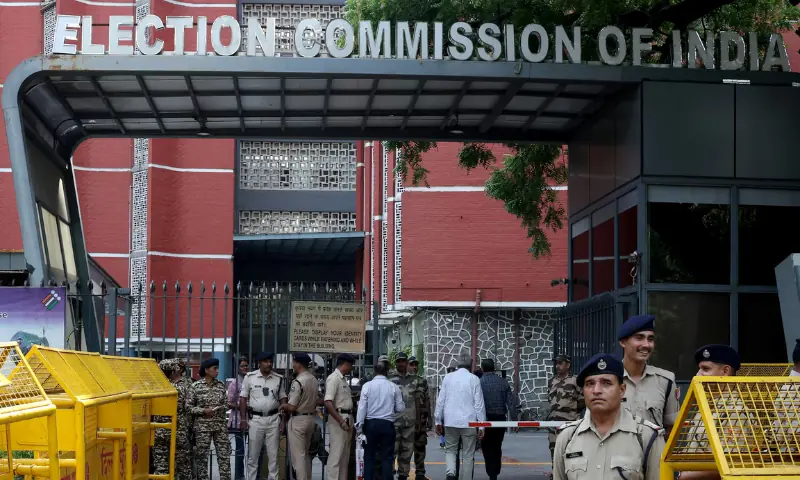
Over the weekend, Delhi was transformed into a high-security fortress of barricades, roadblocks and tens of thousands of police and paramilitaries who detained thousands of people, as they attempted to stop youth-led protests calling for the man who oversaw SIR, the chief election commissioner, Gyanesh Kumar, to step down immediately. asserted
who → transform → SIR
On Monday, opposition parties – who have decried SIR as a “weapon for vote theft” by the Modi government – drew tens of thousands of supporters as they marched through the capital and presented a petition to the supreme court, demanding Kumar’s resignation. asserted
they → decry → resignation
The youth-led Cockroach Janta party (CJP) movement, who were behind the call for Saturday’s action, have vowed to “fight on” in their protests against SIR. asserted
who → lead → SIR
Opposition and civil society leaders allege that SIR has already given the BJP an electoral advantage in states such as Bihar and West Bengal, claims the party denied. uncertain
party → allege → Bihar
Others say the exercise has had even more concerning implications: under changes to SIR unilaterally implemented by Kumar, the election commission has become the arbiter of Indian citizenship, a sweeping overreach of its remit. asserted
commission → say → remit
The consequences are already playing out in West Bengal, where Modi’s Bharatiya Janata party (BJP) recently came to power and began a crackdown on “illegal” immigrants, complete with several new detention centres. asserted
party → play → centres
Civil society groups say Muslims excluded by SIR are being targeted. asserted
Muslims → say → SIR
Just three months after the voter list was published – and while her hearing to challenge her exclusion was pending – she was picked up by police and accused of being an illegal Bangladeshi immigrant. asserted
she → publish → police
In July she was pushed over the border to Bangladesh, a country she had never been to nor had any connection with, and remains stuck there. asserted
she → push → connection
“I have all the documents to prove I am an Indian citizen,” she said in a tearful phone call from the Bangladesh border village where she has been sheltering. asserted
she → have → village
“I fell on their feet and begged the police not to send me to Bangladesh but they pushed me over the border.” asserted
they → fall → border
A Bangladesh border guard officer confirmed Fakir’s account. asserted
officer → confirm → account
“We checked all her documents and are convinced that she is an Indian citizen,” they said. asserted
they → check → documents
In September, her family submitted a petition to the supreme court challenging her deportation. asserted
family → submit → deportation
The Indian government was given a month to respond. asserted
government → give → month
“All I want is to return to my family and my home in India. asserted
I → want → India
I am waiting desperately for that day,” she said. asserted
she → wait → day
The backlog of millions of voters in West Bengal challenging their exclusion means it could be years before Fakir’s case is heard. uncertain
case → challenge → exclusion
Those across West Bengal who have been stripped of their votes speak of their terror of being accused of being an alien in their own land. asserted
who → strip → land
Some have had benefits taken away. asserted
benefits → have → ?
Mohammad Hedayet Ullah Siddiqui, 80, from the North 24 Parganas district, said his grandfather had been a freedom fighter for Indian independence and three generations of his family were on the voter rolls. asserted
generations → say → rolls
Yet after SIR, Siddiqui described his “humiliation” on finding his name gone. asserted
name → describe → humiliation
“With my name erased from the voter list, I am in constant terror. asserted
I → erase → terror
What if they send me to a detention camp?” he said. asserted
he → send → camp
“I cannot bear to think about being separated from my children and grandchildren at this age, especially when all my ancestors have been buried in India.” asserted
ancestors → bear → India
Critics say the problems began in 2023, when the Modi government changed the process for appointing the three-body election commission, giving majority control to the government for the first time. asserted
government → say → time
Within a matter of months, the Modi-led panel had appointed Kumar as the election commissioner in spite of opposition objections. asserted
panel → lead → objections
…and 22 more, not listed.

💬Give feedback
🕘History 🎫Support