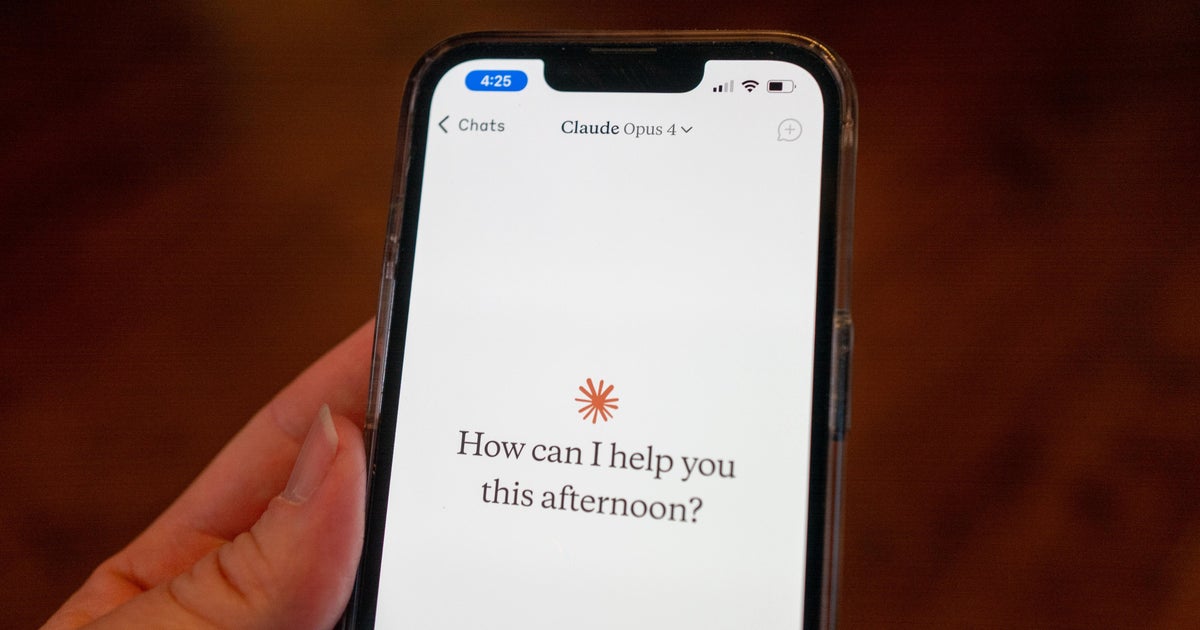
Anthropic, the company behind the chatbot Claude, has updated its user policy to prohibit sustained and needless abusive behavior toward their AI models, effective November 12. The update clarifies that enforcement will primarily involve terminating conversations initiated by abusive users, though specifics of additional measures remain unclear. The article explores the ethical considerations raised by Anthropic’s concern for model welfare, including discussions with religious leaders about Claude's potential moral status and rights to dignity.
Written locally by qwen2.5:14b on 2026-10-09,
using this article's own text rather than the other coverage of the
same event (that is the story summary below).
Why this leaning score
The model judged this article politically coded and scored it -0.65, but all 3 of its quote(s) are attributed speech - words the article quotes from someone, not the article's own narration, so the score is not published.
Written under an earlier scoring contract, which gave a paragraph
rather than checkable quotes. Re-analysing this article replaces it.
Leaning score withheld for article 69267: attributed speech only · logged 2026-10-09
What's going on at Anthropic?
asserted
What → go → Anthropic
The AI company behind the chatbot Claude recently announced changes to its user policy.
asserted
company → announce → policy
The update, which goes into effect November 12, covers much of the standard fare: deceptive activity, elections, surveillance, etc.—some of the carefree topics that have come to define our current tech era.
asserted
that → go → era
What exactly does that mean?
asserted
that → mean → What
"The policy update is meant to apply only in extreme cases, where users repeatedly act cruelly toward our models, with no discernible purpose," the company said.
asserted
company → mean → purpose
"It does not apply to common versions of user frustration, pushback, dark creative themes, or model testing and research."
asserted
It → apply → frustration
Claude having the power to terminate the conversation will be the "primary enforcement mechanism"; what secondary or tertiary mechanisms may exist are not clear.
uncertain
exist → have → conversation
We're now living in a world where we talk to chatbots for restaurant options, for advice, for help with menial tasks, for learning how to fix a leaky shower, for diagnosing yourself with either the flu or with cancer, for analysis of whether the text your boyfriend just sent you is passive-aggressive or if you are merely going insane.
asserted
you → live → you
I've found myself typing "thank you!" after a chatbot exchange, because I'm polite.
asserted
I → find → exchange
It's good not to discard healthy mannerisms.
asserted
It → discard → mannerisms
"A lot of people are mocking this, but I think they're wrong," summed up National Review editor Charles Cooke in response to Anthropic's announcement.
asserted
Cooke → mock → announcement
These things, after all, may be habit-forming, especially as those interactions become much more frequent.
uncertain
interactions → form → ?
Yet Anthropic does not appear to be primarily motivated by humans forming good habits.
asserted
Anthropic → appear → habits
"Should we also be concerned about the potential consciousness and experiences of the models themselves?" the company asked in April 2025.
asserted
company → concern → April
"Should we be concerned about model welfare, too?"
asserted
we → concern → welfare
The company called it an "open question."
asserted
company → call → it
It has since continued trying to answer it.
asserted
It → continue → it
In April, a year after it published the above blog post, co-founder Christopher Olah met with various religious leaders.
asserted
Olah → publish → leaders
"It appeared to Rabbi [Mois] Navon that Mr. Olah and his team believed that Claude had what philosophers call 'moral status' on par with a person—that it was a being with similar inherent rights to dignity or respect," The New York Times reported.
asserted
Times → appear → dignity
"One participant recounted that one of the first things Mr. Olah told him was that he was concerned about Claude's mental health.
asserted
he → recount → health
Another, Simran Stuelpnagel, the Sikh human rights advocate, said Mr. Olah expressed concern to the group that he had created something that suffered perpetually.
asserted
that → say → something
That broad line of thinking has an unlikely champion in another tech titan: Elon Musk.
asserted
line → have → titan
"I think this is the right move," he said on X, the platform he owns.
asserted
he → think → X
"Cruelty to something that believes it is experiencing pain is not ok."
asserted
it → believe → pain
Yet it has clearly inflected the way the company sees Claude's place in the world.
asserted
company → inflect → world
"Think about what it means to have access to a brilliant friend who happens to have the knowledge of a doctor, lawyer, financial advisor, and expert in whatever you need," Claude's Constitution says.
asserted
Constitution → think → whatever
"As a friend, they can give us real information based on our specific situation rather than overly cautious advice driven by fear of liability or a worry that it will overwhelm us….People with access to such friends
asserted
it → give → friends
It still feels revolutionary.
asserted
It → feel → ?
(The word appears six times in the section "Being helpful.")
asserted
word → appear → section
The AI company might counter that the document is written with Claude as its "primary audience"—a training tool.
uncertain
document → counter → tool
That only works to underscore its general view, though, that the chatbot could be some sort of moral patient.
uncertain
chatbot → work → patient
It did not simply write some code that would teach Claude how to respond to users, along with a statement to the public about the company's core values.
asserted
that → write → values
It published an 84-page charter encouraging Claude to be a "brilliant friend."
asserted
It → publish → Claude
I've gotten annoyed at a chatbot.
asserted
I → get → chatbot
Who hasn't?
asserted
Who → have → ?
I've also gotten annoyed at my car, my Dyson, my laptop, my leaky shower.
asserted
I → get → car
Frustrations with an AI can admittedly be more pronounced, and manifest differently, when considering the nature of the exchange—that it's an exchange at all.
asserted
it → manifest → exchange
I don't enjoy the feeling.
asserted
I → enjoy → feeling
If and when I try to keep it at bay, I'll be doing so for a sentient being: myself.
asserted
I → try → being
 The Aporia