Ontario to change how people get safer-supply opioids, in bid to stop drugs being diverted to street

Read the original at Toronto Star ↗
Toronto Star · collected 2026-10-13 · by Omar Mosleh

Quick Summary

The College of Physicians and Surgeons of Ontario has implemented stricter rules for prescribing safer-supply opioids, including mandatory opioid agonist treatment alongside prescriptions, monthly in-person assessments, and supervised consumption. These measures aim to reduce the diversion of pharmaceutical opioids like hydromorphone to illegal markets but have been criticized for potentially pushing patients towards more dangerous street drugs and limiting access for those who need long-term care due to employment or remote location constraints.
Written locally by qwen2.5:14b on 2026-10-13, using this article's own text rather than the other coverage of the same event (that is the story summary below).

AI analysis runs on qwen2.5:14b, locally

Story summary

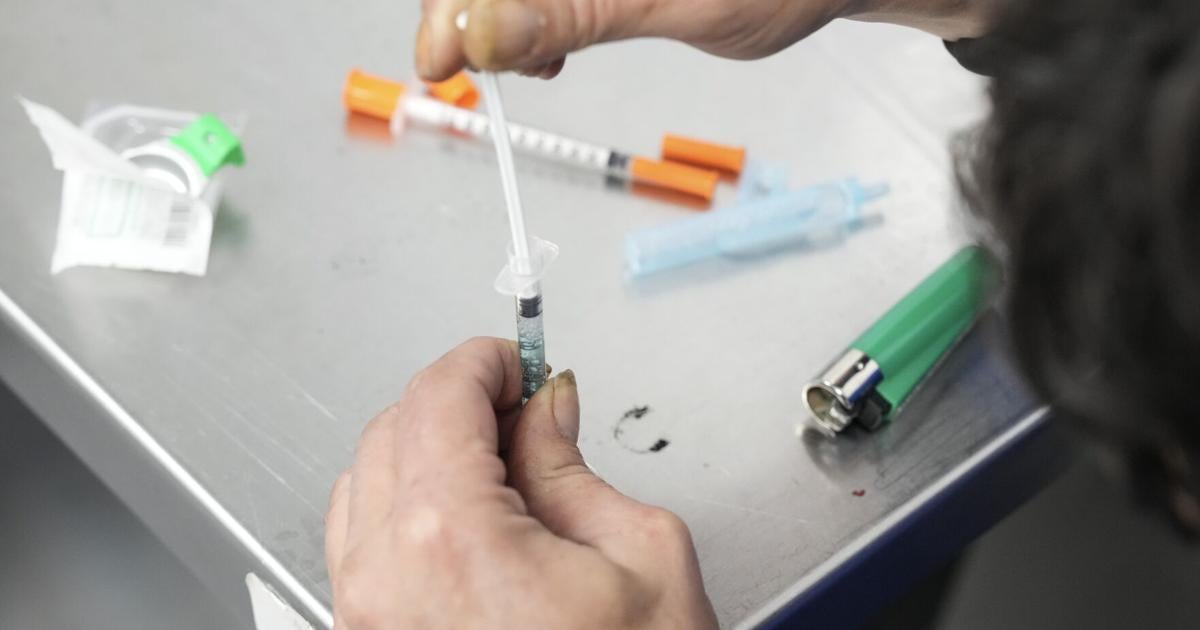
Ontario's medical regulator, The College of Physicians and Surgeons of Ontario (CPSO), approved significant changes to how doctors prescribe safer supply drugs on October 13, 2026. These medications are given to people at high risk of overdose as an alternative to illicit opioids. The CPSO board voted to implement three main measures: requiring physicians to only prescribe safer supply medications in conjunction with opioid agonist treatment; mandating monthly comprehensive in-person clinical assessments for patients receiving these medications; and necessitating that the medication be consumed under physician supervision, eliminating “carries” (prescriptions taken home).

Some experts argue that this move will lead to better oversight of prescribing practices, while others fear it might push high-risk users towards more dangerous street drugs like fentanyl. Hydromorphone, a potent opioid about five to ten times stronger than morphine, is one such drug being regulated under these changes. The shift aims to reduce the diversion of safer supply opioids into illicit markets but raises concerns for those who do not respond well to opioid agonist therapy and might lack effective alternatives.

Written for “Ontario Safer Supply Drugs Regulations” on 2026-10-13, grounded in this article and the 2 other(s) covering the same event.
Why this leaning score
The model judged this article politically coded and scored it -0.45, but every quote it verified points right, so the score is not published.
Written under an earlier scoring contract, which gave a paragraph rather than checkable quotes. Re-analysing this article replaces it.
Leaning score withheld for article 77419: score contradicts its own evidence · logged 2026-10-13

Story

📰 Ontario Safer Supply Drugs Regulations
Health · 3 article(s) covering the same event. See how they differ ↓

Compared with similar articles

This article reads unscored and hedges 12% of its claims. Each row says how that neighbour differs.
Toronto Star
⚖️ leaning not scored 🔴 0% hedged 0 of 2 📰 publisher trust 63
“Both articles report on Ontario's medical regulator approving changes to prescribing safer supply drugs on the same date, aimed at reducing illicit opioid distribution.”
The Globe and Mail
⚖️ leaning not scored 🔴 5% hedged 1 of 20 📰 publisher trust 52
“Both articles describe the same regulatory action taken by Ontario's medical regulator to change prescribing rules for safer supply opioids on the same day.”

Cite this article

Mosleh, O. (2026, October 13). Ontario to change how people get safer-supply opioids, in bid to stop drugs being diverted to street. Toronto Star. https://www.thestar.com/news/gta/ontario-to-change-how-people-get-safer-supply-opioids-in-bid-to-stop-drugs-being-diverted-to-street/article_fd216f8a-560f-4a9b-a4b1-64be0177cdd8.html

Dated from the outlet's own feed. Check the original for its byline.

How this article was measured signals, leaning charts, publisher record, byline, topics and claims

Signals How these are calculated →

Claims extracted
25
sentences that state something as happening or true
Uncertain
12%
3 of 25 hedged ("reportedly", "may", "according to")
Leaning
withheld
no quote in the article backed the model's score
Publisher signals
63/100
Toronto Star's corrections and hedging, across everything collected from it. Not a measure of accuracy.
Outlets on this story
3
Health
Same framing elsewhere
1
articles that frame the event the way this one does
Analyzed 2026-10-13 · how these are computed

How this is being covered How these are calculated →

Article leaning vs. publisher reliability
Source leaning vs. consistency

Publisher

Toronto Star · 6796 article(s) · 20 correction(s) detected
Running correction rate · 20 correction(s)
2026-10-07
Correction
2026-09-24
Correction

Who wrote this

Omar Mosleh
4 article(s) here · 1 carrying a prediction
🔮 The change will mark a major shift in how people with opioid use disorder access potent pharmaceutical opioids such as hydromorphone from a safe source.
🔮 For her part, Prosser said she’s not a natural public speaker, but it’s what Ashtyn would have wanted.
🔮 The aging population is a major factor, but there was also rapid expansion of pharmaceutical opioids (especially OxyContin) in the mid- to late 1990s, following by a steep decline the 2010s, which may have left some people switching to street opioids.
🔮 A court is set to hear victim impact statements on Wednesday from loved ones about how their lives were torn apart due to the actions of Kenneth Law, the Mississauga man who sold poisons to hundreds of people and who pleaded guilty to helping 14 Ontarians die by suicide.
Also by Omar Mosleh
Nothing else under this byline is closely related to this article, so these are simply their most recent.

Topics

CPSO Ontario Suboxone The College of Physicians and Surgeons of Ontario the Drug Strategy Network of Ontario

Subjects

CPSO ORG · 2× Kahan PERSON · 2× Ontario GPE · 2× Anil Chopra PERSON · 1× Chopra PERSON · 1× Meldon Kahan PERSON · 1× Michael Parkinson PERSON · 1× Parkinson PERSON · 1× The College of Physicians and Surgeons of Ontario ORG · 1× the Drug Strategy Network of Ontario ORG · 1×

Narrative

The College of Physicians and Surgeons of Ontario voted to move forward with three main measures: Requiring that physicians only prescribe safer supply medications in concert with opioid agonist treatment; mandating a comprehensive in-person clinical assessment at least monthly for patients receiving the medication; and perhaps most controversially, requiring the medication to be consumed under the supervision of a physician, effectively eliminating what are known as “carries” (prescriptions that can be taken home).
framing: assertive · carried by 1 article(s) · first seen 2026-10-13
🔮 The change will mark a major shift in how people with opioid use disorder access potent pharmaceutical opioids such as hydromorphone from a safe source.

Claims (25 extracted, 3 hedged)

The regulatory body for Ontario physicians has introduced stricter rules for prescribing safer supply opioids, aiming to reduce the rate of those drugs being diverted to the street. asserted
body → introduce → street
The change will mark a major shift in how people with opioid use disorder access potent pharmaceutical opioids such as hydromorphone from a safe source. asserted
people → mark → source
Some experts say the changes seem reasonable and will lead to greater oversight of prescribing practices, while others argue it could drive patients to obtain street fentanyl, which is much more toxic, contaminated and dangerous. uncertain
which → say → fentanyl
Hydromorphone is a potent short-acting pharmaceutical opioid that is about five to 10 times stronger than morphine and has a quicker onset. asserted
that → act → onset
It can be prescribed for high-risk opioid users who are trying to get off street drugs and didn’t respond well to opioid agonist treatment, which uses medications such methadone and Suboxone to reduce withdrawal symptoms, often to help people wean off of street opioids. asserted
people → prescribe → opioids
The College of Physicians and Surgeons of Ontario voted to move forward with three main measures: Requiring that physicians only prescribe safer supply medications in concert with opioid agonist treatment; mandating a comprehensive in-person clinical assessment at least monthly for patients receiving the medication; and perhaps most controversially, requiring the medication to be consumed under the supervision of a physician, effectively eliminating what are known as “carries” (prescriptions that can be taken home). asserted
that → vote → carries
“Taken together, these changes were intended to reduce the risk of diversion, strengthen clinical oversight, and support a transition to” opioid agonist treatment, said Dr. Anil Chopra, associate registrar at CPSO. asserted
Chopra → take → CPSO
Another provision that was heavily criticized was limiting safer supply prescribing to a maximum of eight weeks, which the board removed from the proposal due to feedback from experts. asserted
board → criticize → experts
“They noted that it could lead to rapid tapering, make it more difficult to retain patients in treatment, and destabilize patients who had been stable on long-term safer supply,” Chopra said. uncertain
Chopra → note → supply
“Based on this feedback, CPSO determined that the proposed eight-week limit was unnecessarily prescriptive and could lead to unintended harm to some patients.” uncertain
limit → base → patients
Michael Parkinson, executive director of the Drug Strategy Network of Ontario, said the eight-week limit was most problematic but also took issue with the requirement for doses to be supervised, which he says will disproportionately affect people who are employed or who live in rural and remote areas, which it make it difficult for them to attend a pharmacy several times a day to receive the medication. asserted
them → say → medication
“It’s not a question of if a number of patients in Ontario are going to be harmed,” Parkinson said. asserted
Parkinson → ’ → Ontario
The changes are guaranteed to impact those most in need of health care and least likely to receive it.” asserted
changes → guarantee → it
Safer supply programs were originally funded by the federal government under its Substance Use and Addiction Program and were primarily delivered in primary care clinics. asserted
programs → fund → clinics
In 2025, it stopped funding 31 of the programs nationwide, leading to what some believe was overprescribing of hydromorphone. asserted
some → stop → hydromorphone
Dr. Meldon Kahan, an addictions specialist and former medical director of the Substance Use Service at Women’s College Hospital, said when the feds pulled out, private fee-for-service doctors “filled the gap.” asserted
doctors → say → gap
The medications are covered by OHIP. asserted
medications → cover → OHIP
“There are some doctors who are prescribing conscientiously and carefully, but there are also clinics that are just handing out massive amounts of this drug without anything else, with no counselling, with no careful patient selection,” Kahan said. asserted
Kahan → be → selection
“It’s unethical, in my view.” asserted
It → ’ → view
Kahan is not opposed to safer supply — he said there’s been a number of observation studies that clearly show that people enrolled in safer supply programs do better than patients who are not undergoing any treatment. asserted
who → oppose → treatment
He added that they tended to have good treatment retention rates. asserted
they → add → rates
Patients receiving safer supply are less likely to end up in hospital and less likely to die of overdose, Kahan said. asserted
Kahan → receive → overdose
But he also pointed to another study that found that while safer supply patients were better off then before they entered treatment, they had more emergency department visits compared to methadone programs. asserted
they → point → programs
He said he supports safer supply being prescribed in conjunction with opioid agonist treatment, highlighting a B.C. study that patients were more likely to stay in treatment if they received both treatments simultaneously. asserted
they → say → treatments
“What we need to do is take steps to stop diversion while also attempting to retain patients in treatment,” Kahan said. asserted
Kahan → need → treatment

💬Give feedback
🕘History 🎫Support