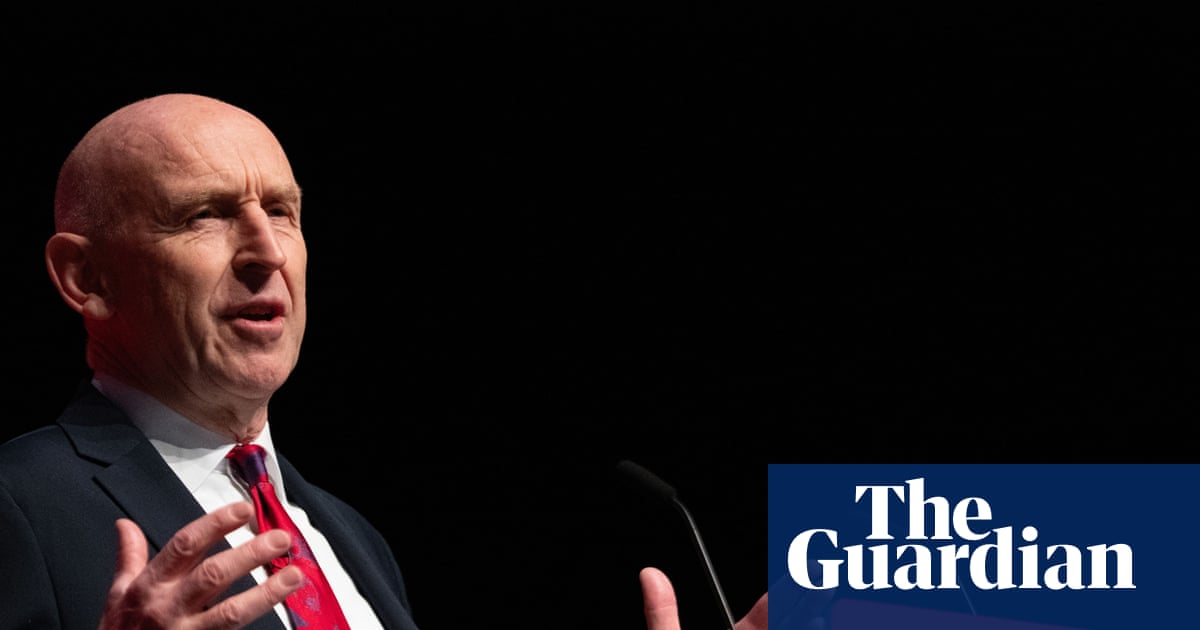
Some of the UK’s biggest retailers and hospitality businesses, including Tesco, Costa Coffee and the Co-op, have met John Healey to urge him to cut the cost of employing young people in his first budget.
asserted
Some → include → budget
At the No 11 event on Tuesday morning, the chancellor heard from sector leaders – including the boss of Marks & Spencer, Stuart Machin, and Sainsbury’s chief executive, Simon Roberts – about the impact of the rise in employers’ national insurance contributions (Nics).
Businesses want a partial reversal of the surprise move by Healey’s predecessor, Rachel Reeves, to lower the earnings threshold at which they start to pay Nics from £9,100 to £5,000 a year.
asserted
they → hear → 5,000
They argue the change contributed to the plunge in the number of high street jobs for young people and part-time workers and a rise in youth unemployment.
asserted
change → argue → unemployment
They want the Nics threshold raised to £6,000, arguing this would help create jobs and ease inflation pressures on high streets.
asserted
this → want → streets
Retail and hospitality firms also hope Healey will ease the burden of business rates, and one source close to the meeting said they were optimistic on both fronts.
asserted
they → hope → fronts
“It felt like they were listening,” the source said.
asserted
source → feel → ?
Healey has vowed to ease the cost of doing business amid mounting pressures on firms from rising energy bills.
asserted
Healey → vow → bills
Another attender, Helen Dickinson, the chief executive of the British Retail Consortium trade body which represents most big retailers, said: “Retail is a major driver of growth, supporting jobs, investment and communities across the country, and providing vital first jobs and career opportunities for young people.
asserted
Retail → represent → people
“But after whacking up retailers’ taxes by 20% in two years, including an extra £6.5bn in new employment costs, any new costs will be paid by consumers at the till and make it harder for retailers to create jobs.
asserted
retailers → whack → jobs
“The chancellor recognised these pressures, and we had a positive discussion about our shared ambition for growth and tackling youth unemployment.
asserted
we → recognise → unemployment
His first budget is the chance to turn that ambition into action by easing costs, making tax fairer and unlocking investment.
asserted
tax → turn → investment
Meanwhile it was reported that Healey has rejected calls from Labour MPs and thinktanks to use the budget to equalise the rates at which capital gains and income from work are taxed.
asserted
gains → report → work
He has come under pressure to increase the rates of capital gains tax (CGT), which is levied on the sale of assets – including second homes and shares – at significantly lower rates than wages.
asserted
which → come → wages
In her first budget in 2024, Reeves increased the rate of CGT from 10% to 18% for basic-rate taxpayers, and from 20% to 24% for higher-rate taxpayers.
asserted
Reeves → increase → taxpayers
That compares with a 20% basic rate of income tax, a 40% higher rate and 45% additional rate for top earners.
asserted
That → compare → earners
Economists have suggested an equalisation of the rates could raise £11.3bn a year for the exchequer.
uncertain
equalisation → suggest → exchequer
However, according to the Financial Times, Healey has dismissed such calls because of fears it could deter inward investment, but may yet opt for a smaller increase in CGT short of equalisation.
uncertain
it → accord → equalisation
It comes after senior Labour figures floated CGT increases among options to repair the government finances while funding priorities ranging from public services, support for households and long-term infrastructure projects.
asserted
figures → come → households
The defence secretary, Wes Streeting, suggested the idea of equalisation during his ill-fated May pitch to be the party leader as a “wealth tax that works”.
uncertain
that → suggest → tax
And the first secretary, Louise Haigh, a close ally of Andy Burnham, argued in an article in the journal Renewal in May – while on the backbenches before her return to cabinet – that CGT rates should be “brought closer to income tax rates”.
uncertain
rates → argue → rates
A Treasury spokesperson said: “As has always been the case, decisions on tax are a matter for the chancellor to set out at fiscal events rather than routinely commenting on rumour, speculation or proposals.”
asserted
chancellor → say → rumour
 The Aporia