18-year-old's plastic-to-water system earns her a $100,000 scholarship

Read the original at Times of India ↗
Times of India · collected 2026-10-13 · by TOI Science Desk

Quick Summary

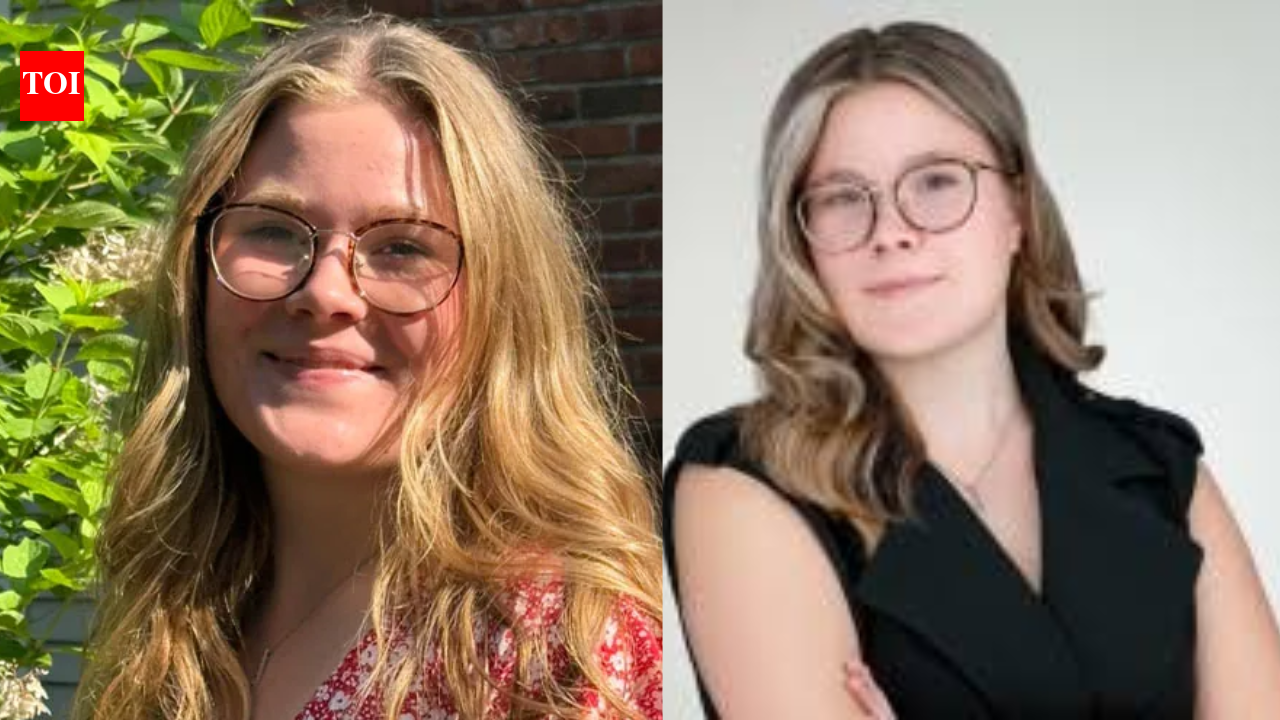
Elizabeth Hanechak, an 18-year-old student from Russell, Massachusetts, developed a microbial system that converts plastic waste into drinkable water and fertilizers using an engineered enzyme and microscopic algae. This innovative project earned her the title of a 2025 Davidson Fellow Laureate in science, with a $100,000 scholarship as part of a program awarding a total of $825,000 to 21 students nationwide. Hanechak's inspiration came from a recycled ocean plastic bracelet given by her grandmother, which sparked her mission to address the environmental harm caused by plastic pollution globally.
Written locally by qwen2.5:14b on 2026-10-13, using this article's own text rather than the other coverage of the same event (that is the story summary below).

AI analysis runs on qwen2.5:14b, locally

Story summary

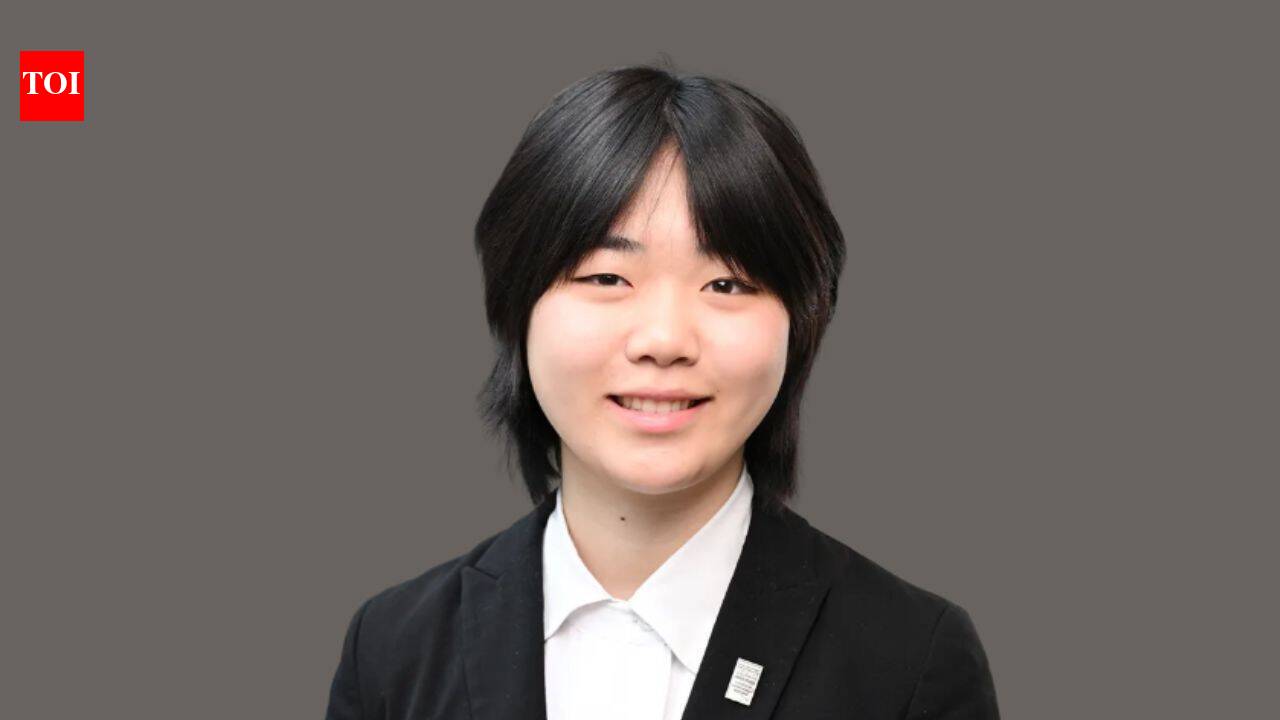
Elizabeth Hanechak, an 18-year-old from Russell, Massachusetts, designed a system that breaks down plastic waste into drinkable water and fertilizer using enzymes and microscopic algae. Her innovation earned her one of the most prestigious honors for young researchers—the 2025 Davidson Fellow Laureate in science—and a $100,000 scholarship. Along with two other Massachusetts students—Ethan Yan from Groton and Philip Meng from Andover—Hanechak received part of an overall award of $825,000 given to 21 national winners. Hanechak's process involves degrading plastic into toxic compounds which are then treated by algae that consume the harmful elements, leaving behind a nontoxic material useful as fertilizer and clean water. This technology aims to benefit developing communities lacking infrastructure for waste management, potentially supporting agriculture and improving air quality by preventing plastic burning.

Written for “Scholarship For Invention” on 2026-10-13, grounded in this article and the 0 other(s) covering the same event.
Why this leaning score
This article does not take a side on a contested political question, so it has no leaning score. That is an answer rather than a gap: a match report or a rescue can be warmly or critically written without being left or right, and scoring it anyway is how approval of a subject gets recorded as a political position.
No political leaning scored for article 76526 · logged 2026-10-13

Story

📰 Scholarship For Invention
Education · 1 article(s) covering the same event.

Compared with similar articles

Nothing to compare against. No article is close enough to this one for the pipeline to have linked or judged the pair.

Cite this article

TOI Science Desk. (2026, October 13). 18-year-old's plastic-to-water system earns her a $100,000 scholarship. Times of India. https://timesofindia.indiatimes.com/science/discovery/meet-elizabeth-hanechak-the-18-year-old-massachusetts-student-whose-microbial-system-could-convert-plastic-waste-into-drinking-water-and-fertiliser-earning-a-100000-scholarship/articleshow/134914619.cms

Dated from the outlet's own feed. Check the original for its byline.

How this article was measured signals, leaning charts, publisher record, byline, topics and claims

Signals How these are calculated →

Claims extracted
32
sentences that state something as happening or true
Uncertain
6%
2 of 32 hedged ("reportedly", "may", "according to")
Leaning
not political
takes no side on a contested political question
Publisher signals
59/100
Times of India's corrections and hedging, across everything collected from it. Not a measure of accuracy.
Outlets on this story
1
Education
Same framing elsewhere
1
articles that frame the event the way this one does
Analyzed 2026-10-13 · how these are computed

How this is being covered How these are calculated →

Article leaning vs. publisher reliability
Source leaning vs. consistency

Publisher

Times of India · 2398 article(s) · 2 correction(s) detected
Running correction rate · 2 correction(s)

Who wrote this

TOI Science Desk
242 article(s) here · 1 carrying a prediction
🔮 She hopes the process will help developing communities that lack the infrastructure to manage large amounts of plastic waste, with fertiliser supporting farms, cleared waterways restoring irrigation, and the absence of plastic preventing accidental burning and improving air quality.
🔮 Instead of relying only on conventional laboratory models, Shen tested a potential cancer drug in clams to determine whether these animals could serve as an animal model for blood-cancer drug discovery.
🔮 But recent years have seen records broken for low sea ice in both winter and summer, raising concerns that global heating could be driving the losses.
🔮 The discovery was made during a research expedition in May 2018 using the manned submersible ‘ShenhaiYongshi’.
🔮 Real environmental restoration is never easy; it requires patience, courage, and the willingness to stand in deep water and thick mud while pushing forward.
🔮 Justin Bernstein, a 17-year-old student from Greenwich, Connecticut, has developed a research project exploring how genetically engineered bacteria could help slow Arctic ice melting.
🔮 Researchers Michael Vecchione and Odd Aksel Bergstad later examined these earlier observations in a scientific paper, suggesting that the raised sediment could indicate excavation by organisms.
🔮 The turnaround showed how removing an invasive species, alongside other conservation measures, could help a threatened seabird recover.
🔮 Photographs from the original excavations show that their skeletal remains were poorly preserved, so the researchers could not rule out mistakes in the recorded orientation of their bodies.
🔮 The technology could eventually allow farmers in remote areas to make fertiliser on demand, reducing their reliance on large industrial production facilities.
Wire or desk byline, not an individual reporter.
Also by TOI Science Desk
Nothing else under this byline is closely related to this article, so these are simply their most recent.
All 242 articles by TOI Science Desk →

Topics

Davidson Groton Massachusetts Russell the Davidson Institute

Subjects

Hanechak PERSON · 6× the Davidson Institute ORG · 6× Elizabeth Hanechak PERSON · 3× Massachusetts GPE · 3× Russell GPE · 2× Davidson ORG · 1× Eli PERSON · 1× Ethan Yan PERSON · 1× Groton GPE · 1× Philip Meng PERSON · 1×

Narrative

The plastic is degraded into two toxic compounds, which are then treated with a type of algae that consumes the carbon molecules in the compounds as food and converts the rest into a nontoxic material that can be used as fertilizer (Image: Davidson Institute) Microalgae consume the toxic compounds, leaving fertiliser material and a broth that filters into water The second stage hands the toxic compounds to a naturally occurring strain of microalgae.
framing: assertive · carried by 1 article(s) · first seen 2026-10-13
🔮 She hopes the process will help developing communities that lack the infrastructure to manage large amounts of plastic waste, with fertiliser supporting farms, cleared waterways restoring irrigation, and the absence of plastic preventing accidental burning and improving air quality.
2026-10-13 · Times of India
18-year-old's plastic-to-water system earns her a $100,000 scholarship · assertive framing

Claims (32 extracted, 2 hedged)

Many young people are still working out how to change the world, but Elizabeth Hanechak has already started with the plastic choking our planet. asserted
Hanechak → work → planet
At eighteen, the student from Russell, Massachusetts, designed a microbial system that uses an engineered enzyme and microscopic algae to break plastic waste down into drinkable water and fertiliser materials. asserted
that → design → water
Her work earned one of the nation's most prestigious honours for students eighteen and younger. asserted
work → earn → students
Curious how one young researcher tackles such a huge problem? asserted
researcher → tackle → problem
This article walks you through her story, her science, and the hopes she carries for communities facing plastic pollution. asserted
she → walk → pollution
Who Elizabeth Hanechak is, and how she became a 2025 Davidson Fellow Laureate with a $100,000 award asserted
she → become → award
Elizabeth Hanechak, known as Eli, comes from Russell, Massachusetts, and was named a 2025 Davidson Fellow Laureate in the science category, an honour that carries a $100,000 scholarship. asserted
that → know → scholarship
According to the Davidson Institute, she was one of three Massachusetts students recognised in 2025, alongside Ethan Yan of Groton and Philip Meng of Andover; the three share $175,000 as part of a program awarding a record $825,000 to 21 students nationwide in its twenty-fifth anniversary year. uncertain
three → accord → year
Hanechak told the Davidson Institute that she plans to earn a doctorate in environmental biochemistry and start her own environmental research company to carry the work into the real world. asserted
she → tell → world
Away from the laboratory, she is an Eagle Scout who loves spending time outdoors, especially hiking and camping. asserted
who → love → time
The recycled ocean plastic bracelet from her grandmother that gave Hanechak a project and a purpose Every big idea has a starting point, and hers was a gift. asserted
hers → give → point
Hanechak told the Davidson Institute that her grandmother gave her a 4Ocean bracelet made from recycled ocean plastic. asserted
grandmother → tell → plastic
Curious, she researched the company and the serious harm plastic pollution causes, and by the end of that day she had found not only a project topic but also a new purpose, easing the suffering that plastic pollution brings. asserted
pollution → research → that
That sense of mission has shaped everything since. asserted
sense → shape → everything
She explained that in the countries most affected, simply getting rid of plastic is not enough. asserted
rid → explain → plastic
For affected people to fully recover, she said, the waste must be turned into something useful and healthy for the environment, and that belief drives her ongoing research. asserted
belief → recover → research
How an engineered cutinase enzyme breaks plastic down within 24 hours into two toxic building blocks Hanechak's system works in two stages. asserted
system → engineer → stages
In the first, she modified an enzyme called cutinase by enlarging its active site, the pocket where materials are broken down, so that long, durable plastic chains can fit inside. asserted
chains → modify → site
According to her project description for the Davidson Institute, this lets the enzyme break the plastic apart within 24 hours, returning it to the two chemicals it was originally made from, ethylene glycol and terephthalic acid, both highly toxic. uncertain
it → accord → chemicals
Hanechak told the Davidson Institute that the project combines modern genetic tools from microbiology with naturally occurring microorganisms. asserted
project → tell → microorganisms
She added that the microbes are inexpensive to replicate, which makes the process an affordable yet effective way to treat large amounts of plastic waste. asserted
process → add → waste
The plastic is degraded into two toxic compounds, which are then treated with a type of algae that consumes the carbon molecules in the compounds as food and converts the rest into a nontoxic material that can be used as fertilizer (Image: Davidson Institute) Microalgae consume the toxic compounds, leaving fertiliser material and a broth that filters into water The second stage hands the toxic compounds to a naturally occurring strain of microalgae. asserted
stage → degrade → microalgae
Hanechak told the Davidson Institute that the algae consume the carbon atoms in those compounds as food and convert the remaining molecules into biomass that is nontoxic and can serve as a fertilising material. asserted
that → tell → material
Because every reaction happens in a liquid broth, she explained, the broth can be filtered to produce a source of drinkable water. asserted
broth → happen → water
She hopes the process will help developing communities that lack the infrastructure to manage large amounts of plastic waste, with fertiliser supporting farms, cleared waterways restoring irrigation, and the absence of plastic preventing accidental burning and improving air quality. asserted
waterways → hop → quality
Her stated aim is to give those communities access to key resources for growth and development while also cleaning up their living spaces. asserted
aim → give → spaces
What the Davidson Fellows honour means to a young scientist, and her service work beyond the laboratory asserted
means → mean → laboratory
She told the Davidson Institute that the scholarship stands out because it acknowledges the focus and determination she sees as natural in young people. asserted
she → tell → people
She said it validates "the hard work and sacrifice required" to bring her project to life, and encourages her to keep committing her energy to it even when she faces failure. asserted
she → say → failure
Her commitments extend beyond science. asserted
commitments → extend → science
For the past three years, she told the Davidson Institute, she has volunteered at her local American Legion post, leading two veteran cemetery improvement projects, and she works as a virtual science fair coach, guiding students new to research as they develop projects and prepare for competitions. asserted
they → tell → competitions
Together, those details sketch a young scientist who pairs laboratory ambition with service. asserted
who → sketch → service

💬Give feedback
🕘History 🎫Support