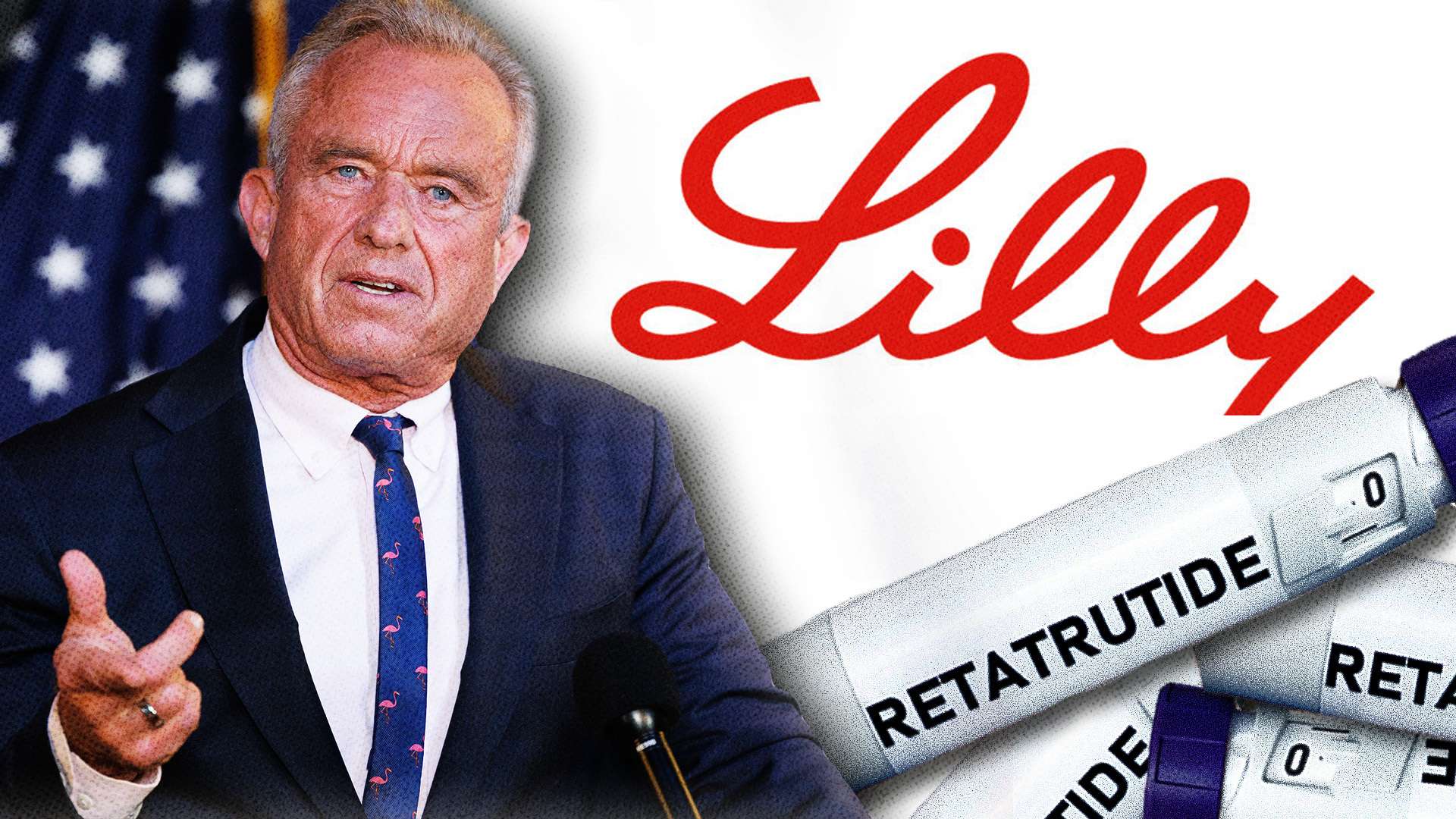
On September 24, Eli Lilly and the Food and Drug Administration (FDA) will begin oral arguments before the 7th Circuit Court of Appeals in Eli Lilly and Company v. Robert F. Kennedy, Jr.
asserted
Lilly → begin → Jr.
But it's actually about the legal and bureaucratic gymnastics Lilly is performing to protect its upcoming peptide from molecular copycats and how affordability will likely suffer if it succeeds.
asserted
it → perform → copycats
Retatrutide is one of the most exciting new medicines to come to market in years.
asserted
Retatrutide → come → years
In clinical trials, it produced an average weight loss of 28.3 percent in 80 weeks, roughly matching the most effective forms of bariatric surgery.
asserted
it → produce → surgery
Lilly plans to submit it to the FDA for approval in early 2027.
asserted
Lilly → plan → 2027
Peptides are all over the news, including the July start of Medicare's pilot program for weight loss GLP-1s and RFK Jr.'s efforts to move some experimental peptides off of the FDA's 503A Category 2 list of banned substances.
asserted
Peptides → include → substances
Yet this new medicine has become entangled in a regulatory and legal mess involving FDA classification rules, the intricacies of administrative law, and competing claims about who gets to decide what it even means to be a drug.
uncertain
it → become → what
Everyone loves to hate big pharma, but Lilly isn't really the villain of this tale.
asserted
Lilly → love → tale
The system that is supposedly designed to promote safety, affordability, and availability of the latest medicines is making it harder to develop them, harder to bring them to market, and harder for patients to get them.
asserted
patients → design → them
How Did We Get Here?
asserted
We → get → ?
Retatrutide is a GLP-1/GIP/Glucagon triple receptor agonist, the next generation of the hugely successful class of drugs known as GLP-1s, a group of medications that includes the peptides semaglutide and tirzepatide, such as Wegovy and Zepbound.
asserted
that → know → Wegovy
Eli Lilly has spent the last decade developing retatrutide.
asserted
Lilly → spend → retatrutide
But now Lilly has a problem.
asserted
Lilly → have → problem
Right now, patients can obtain GLP-1s through several channels.
asserted
patients → obtain → channels
In addition to patent holders, compounding pharmacies and "research-use only" (RUO) providers are also selling the weight loss medications.
asserted
pharmacies → compound → medications
These pathways are good news for customers anxious to try the new generation of weight loss drugs, who would otherwise be stymied by price or availability, but bad news for manufacturers.
asserted
who → try → manufacturers
FDA regulations allow compounding pharmacies to create customized medications for individual patients.
asserted
pharmacies → allow → patients
They can fill prescriptions based on FDA-approved drugs when a patient has a documented need for an alternative dose or formulation, even if the drug is still under patent.
asserted
drug → fill → patent
Compounding usually occurs during shortages or on a limited, case-by-case basis.
asserted
Compounding → occur → basis
But the massive demand for GLP-1s has turned that exception into something much larger.
asserted
demand → turn → something
Compounding has continued at scale even after shortages were resolved in early 2025.
asserted
shortages → continue → 2025
The popularity of compound GLP-1s has been propelled by their affordability, with current offerings around $150 to 200 a month, compared with self-pay options of $299 to $449 for the highest doses of brand-name products.
asserted
offerings → propel → products
Novo Nordisk's CEO recently estimated 1.5 million patients are currently obtaining Lilly's tirzepatide and Novo Nordisk's semaglutide through compounders, and the real number may be even larger.
uncertain
number → estimate → compounders
Lilly would very much like to prevent that from happening with retatrutide.
asserted
Lilly → like → retatrutide
On August 12, Lilly announced six lawsuits against organizations selling or advertising "research-use only" retatrutide and said it had referred over 200 entities and individuals to regulatory and law enforcement agencies.
asserted
it → announce → agencies
Developing a new drug is extraordinarily expensive—thanks in large part to the slow and expensive approval process—and Lilly wants legal protections that will allow it to recoup those costs.
asserted
it → develop → costs
But the government's attempt to provide those protections has created another set of problems.
asserted
attempt → provide → problems
One way Lilly can shield retatrutide from compounding is to secure FDA designation as a biologic product rather than a drug, because biologics are not eligible for compounding.
asserted
biologics → shield → compounding
Biologics receive 12 years of statutory exclusivity, compared with five for new drugs.
asserted
Biologics → receive → drugs
Their biosimilar competitors face a more demanding approval process than conventional generics as well.
asserted
competitors → face → generics
When those protections are combined with patent thickets, biologics can be shielded from biosimilar competition well beyond the original patent or 12-year exclusivity period.
asserted
biologics → combine → period
That makes the classification extremely valuable.
asserted
classification → make → ?
All of this hinges on the question of what counts as a protein.
asserted
what → hinge → protein
The FDA defines a protein as "any alpha amino acid polymer with a specific defined sequence that is greater than 40 amino acids in size."
asserted
that → define → size
Lilly argued that retatrutide meets those requirements because it has 39 alpha amino acids in its backbone, with another chain of two additional amino acids covalently bonded to the main backbone, giving them a total of 41 amino acids.
asserted
chain → argue → acids
In March 2024, the FDA disagreed, saying that the word alpha modified all of the amino acids in the definition, meaning that the molecule doesn't qualify.
asserted
molecule → disagree → definition
Then it gets even more complicated.
asserted
it → get → ?
Federal law doesn't actually limit biologics to products that satisfy this very specific definition of a protein.
asserted
that → limit → protein
It also covers products that are "analogous."
asserted
that → cover → products
Lilly argued that retatrutide didn't have to meet the FDA's requirements to be a protein.
asserted
retatrutide → argue → requirements
…and 50 more, not listed.
 The Aporia