The Sydney Morning Herald
· collected 2026-10-12 · by Cassandra Morgan
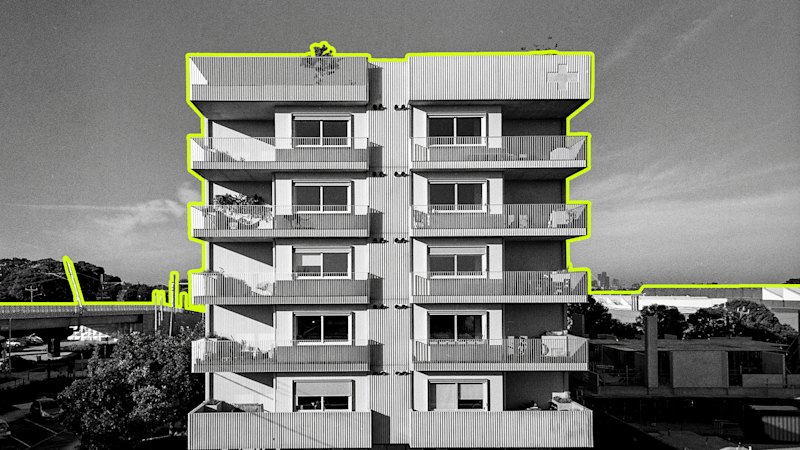
At a University of Melbourne symposium on future suburbs, Jeremy McLeod, co-founder of the celebrated Nightingale housing model, questioned whether his creation is truly solving Melbourne’s housing crisis. McLeod noted that while average home sizes have tripled since the 1950s, household occupancy has decreased, suggesting larger homes aren’t necessary for improved quality of life. He highlighted that a couple earning $120,000 annually could afford a mortgage covering approximately 54 square meters, equivalent to living spaces in the 1950s, and argued that this size is actually reasonable rather than restrictive.
Written locally by qwen2.5:14b on 2026-10-12,
using this article's own text rather than the other coverage of the
same event (that is the story summary below).
In a lecture theatre hushed but for the occasional tapping of keystrokes, the co-creator of Melbourne’s most lauded housing model took the podium – and undercut the very thing he conceived.
asserted
he → take → thing
Design students, architects, educators and researchers shifted uncomfortably in their seats as Nightingale co-founder Jeremy McLeod triggered ripples of nervous laughter through the audience.
We live in a confluence of crises – climate, cost of living, loneliness and housing chief among them, he said.
asserted
he → shift → them
But the way we’re trying to fix them is to build “bigger houses, further from community”.
asserted
we → try → community
“We’re trying to solve the problem in the wrong ways,” McLeod told the University of Melbourne’s Future Suburb Symposium.
asserted
McLeod → try → Symposium
“So I want to talk to you about, how the f--- did we get here?”
asserted
we → want → you
In 2025, it was 235 square metres – tripling the per person housing footprint to 94 square metres.
asserted
it → triple → metres
Meanwhile, the average occupancy fell from about 3.6 people per home, to fewer than three.
asserted
occupancy → fall → three
“So, we’ve got less people living in houses that are nearly 2½ times the size,” said McLeod, gesturing to the audience.
asserted
McLeod → get → audience
“Are we better off now than our parents were in the ’50s? Ask them.”
asserted
parents → ask → them
Australians decry Millennials spending twice as much to get into the housing market.
asserted
Millennials → decry → market
But when they want more than three times the individual space, of course it costs more, McLeod said.
asserted
McLeod → want → more
‘We’re all saying: “This is horrific.
asserted
This → say → ?
Oh my God, all I can live in is 54 square metres?
asserted
I → live → ?
That’s all my money will buy me?”
asserted
money → ’ → me
As it turns out, it’s the same as our parents had in the ’50s.
asserted
parents → turn → 50s
History and hard economics reveal they need – and can afford – a lot less.
asserted
they → reveal → less
The symposium was staged ahead of The Age’s Melbourne Assembly civic forum, to be held next week in partnership with the University of Melbourne.
asserted
symposium → stag → Melbourne
The forum brings together industry leaders, key decision-makers and the community to shape the city’s future, with a view to what Melbourne could look like by the year 2050.
uncertain
Melbourne → bring → year
McLeod told the Future Suburb Symposium that, before the recent interest rate rise, the average couple earning $120,000 a year could manage a $692 weekly mortgage payment.
uncertain
couple → tell → payment
When factoring in apartment costs, that equated to 54 square metres in Brunswick.
asserted
that → factor → Brunswick
“Which is about the right size,” McLeod said.
asserted
McLeod → say → ?
“And we’re all saying: ‘This is horrific.
asserted
This → say → ?
Oh my God, all I can live in is 54 square metres?
asserted
I → live → ?
That’s all my money will buy me?’
asserted
money → ’ → me
“As it turns out, it’s the same as our parents had in the ’50s.
asserted
parents → turn → 50s
It’s not that bad.”
asserted
It → ’ → ?
McLeod’s architecture firm, Breathe, tried the Nightingale housing model in answer to the crisis, and it’s been seen as “an amazing success”, he said.
But for all the praise, “it’s been pretty hard, and it hasn’t scaled easily”.
asserted
it → try → praise
Nightingale formed after the success of an apartment project McLeod helped complete in Brunswick in 2013, called The Commons.
asserted
McLeod → form → 2013
The development, for which McLeod won multiple design awards, was a first attempt at removing the profits of developers, and launching projects led by architects to create green buildings that were also good places to live.
asserted
that → win → buildings
The buzz around the “deep green” apartment building that followed, Nightingale 1, gave rise to the housing organisation of the same name.
asserted
that → follow → name
Together with The Commons, it helped shift consciousness about what apartments in Melbourne could look like.
uncertain
apartments → help → Melbourne
“But my God, you know – every great architect in the city working on this project, and we’ve delivered under 800 homes [or 740 in 12 years],” McLeod told the symposium.
asserted
McLeod → know → symposium
“The thing is that Nightingale only works with great architects, with concessional capital, and concessional land.
asserted
Nightingale → work → capital
“So, we’ve got great architects, but sourcing the other two things?
asserted
we → get → things
The answers may instead lie in small, modular homes (which Breathe Architecture has designed in its project Kiin), and factory-built kit homes through its University of Melbourne-partnered project Featherweight, McLeod said.
uncertain
McLeod → lie → project
The latter requires collaborating with a developer and volume builder and, “God forbid, a real estate agent”, he said.
asserted
he → require → developer
McLeod said he had spent much of his career trying “not to push further out of the city, not to increase the amount of land we’re building over” – and to leave that land to biodiversity and ecology.
asserted
we → say → biodiversity
“But I’ve had to accept in the last five years that if you cannot beat them – join them,” he said.
asserted
he → have → them
“As an architect, I’ve been desperately trying to engage with volume builders and developers … and it has been tough to get in the room.
asserted
it → try → room
”
The Featherweight model is ultimately a means to an end: good quality housing for what people can afford – less than $692 a week, McLeod said.
asserted
McLeod → afford → 692
…and 32 more, not listed.
 The Aporia