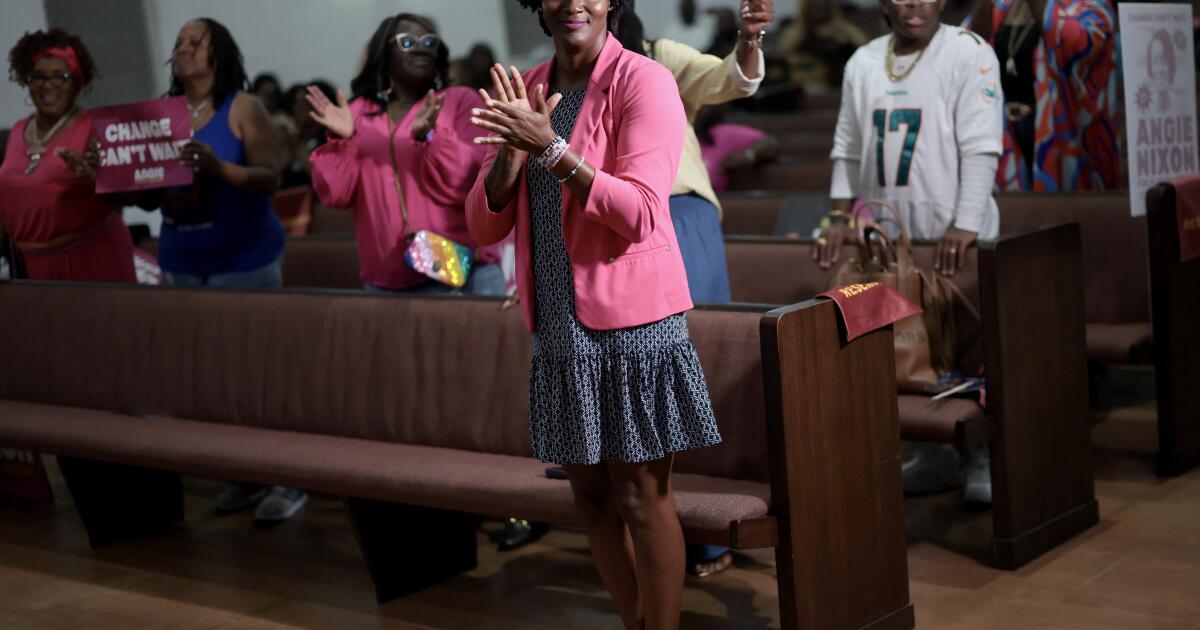
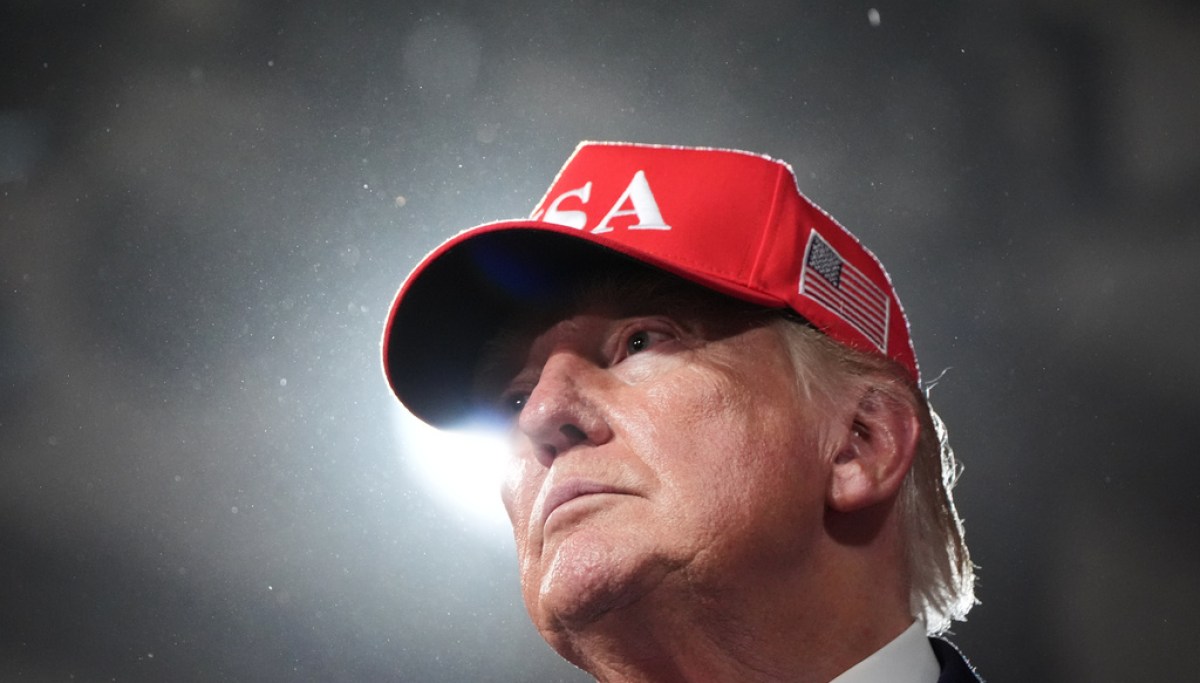
A pair of new polls in Senate battleground states highlights the basic tension at the heart of the midterm elections.
asserted
pair → highlight → elections
Both states show a high percentage of voters who say they want to register a protest against President Donald Trump by voting in their Senate races, but both races are competitive despite taking place in what would normally be considered blue territory.
asserted
what → show → place
In Maine, 46% told CNN their vote in the Senate race was aimed at “Sending a message that you oppose Donald Trump.”
asserted
you → tell → Trump
Trump has never won a statewide election in Maine, though he has carried its 2nd Congressional District, which is worth a single electoral vote, in the last three presidential elections.
asserted
which → win → elections
The story is similar in Michigan, where CNN’s poll found 42% were basing their Senate votes on “Sending a message that you oppose Donald Trump.”
asserted
you → find → Trump
Trump carried Michigan by a slim margin in 2024 and has won the state in two of the last three presidential elections, both times he made it to the White House.
asserted
he → carry → House
Michigan Democratic Senate nominee Abdul el Sayed leads Republican former Rep. Mike Rogers by just three points, 47% to 44%.
asserted
Sayed → lead → points
One-quarter of voters say they are still persuadable, including one in five voters who say they have picked a candidate but could still change their minds.
uncertain
they → say → minds
Michigan hasn’t elected a Republican to the Senate since 1994, a historic red wave year.
asserted
Michigan → elect → 1994
Former Sen. Spencer Abraham served only a single term before being voted out in 2000.
asserted
Abraham → serve → 2000
Democrat Senate nominee Troy Jackson, who replaced the disgraced Graham Platner on the ticket, is also up by just three points, leading Sen. Susan Collins (R-ME) 48% to 45%.
asserted
who → replace → Collins
Collins has a history of outperforming her poll numbers, winning by nearly 9 points six years ago despite trailing for months and having the drag of Trump on the ballot.
asserted
Collins → have → ballot
The risk for Collins this time around is that Maine voters won’t have the option of ticket-splitting and can only protest Trump by voting against her.
asserted
voters → have → her
In 2020, they could support her and vote against Trump directly.
uncertain
they → support → Trump
This dynamic runs counter to the logic of the Republicans’ midterm election convention, which is designed to solve a different problem: turning out Trump voters who have historically not shown up for other Republicans when he is not on the ballot.
asserted
he → run → ballot
In 2024, Trump helped Republicans win the House and the Senate, although his coattails weren’t sufficient to drag Rogers across the finish line against Sen. Elissa Slotkin (D-MI) that year.
asserted
coattails → help → Slotkin
He played an important role in averting a protracted fight to re-elect House Speaker Mike Johnson (R-LA).
asserted
He → play → Johnson
He is starting to spend his massive warchest on behalf of Republican candidates and is starring at the midterm convention as part of his effort to keep the GOP in control of Congress.
asserted
He → start → Congress
Trump told reporters on Wednesday, hours ahead of his convention speech in Dallas, that the Iran war likely won’t end until after November’s election.
asserted
war → tell → election
Republicans, in many cases, are currently outrunning Trump’s approval in their races.
asserted
Republicans → outrun → races
Collins is skipping the midterm convention, while Rogers is speaking.
asserted
Rogers → skip → convention
Fifty percent of Michigan voters think el Sayed’s views are “too liberal,” to 42% who think Rogers is “too conservative.”
asserted
Rogers → think → %
Another 45% think Rogers’s views are “just right” and 12% think his policies aren’t conservative enough.
asserted
policies → think → ?
Forty-one percent of Maine voters think Jackson is “too liberal,” though 44% find him “just right” and 14% say he is “not liberal enough.”
asserted
he → think → voters
Yet Collins is still running well ahead of the Republican nominee for governor, while Jackson is running behind Democrat Hannah Pingree, who is winning her race easily.
asserted
who → run → race
A TIPP poll in Minnesota, a third blue state where Democrats have nominated a socialist for Senate, also found a close race.
asserted
Democrats → nominate → race
Lt. Gov. Peggy Flanagan (D-MN) leads Republican former broadcaster Michelle Tafoya by just 2 points, 44% to 42%.
asserted
Flanagan → lead → points
That’s within the margin of error.
asserted
That → ’ → error
While all these races are winnable for the Democrats, the fact that they haven’t locked down these blue states yet suggests the Senate remains a toss-up.
uncertain
Senate → lock → states
Democrats are competitive in Senate races in several more GOP-friendly states, including Georgia, North Carolina, Texas, Ohio, and Alaska.
asserted
Democrats → include → Georgia
But those contests could tighten too.
uncertain
contests → tighten → ?
“In the last few election cycles, we’ve seen a pattern of Democrats looking competitive in red state Senate contests during the summer only to fade by election day,” Republican pollster Patrick Ruffini wrote in August.
“If that’s the case, and historically there is no reason to think this year is different from prior years, except for Georgia and North Carolina, the Republicans’ worst polling here at Labor Day is the high water mark for Democrat polling, and the GOP is in a very good position,” conservative radio commentator Erick Erickson wrote on Wednesday.
asserted
Erickson → see → Wednesday
Unless the GOP midterm convention is misdiagnosing the party’s current political problem.
asserted
convention → misdiagnose → problem
 The Aporia