IAEA accuses Iran of ‘noncompliance’: Why, and what now?

Al Jazeera · collected 2026-09-10
Read the original at Al Jazeera ↗

Summary

The Board of Governors of the International Atomic Energy Agency (IAEA) has passed a resolution accusing Iran of failing to comply with its nuclear nonproliferation commitments, citing a "lack of information" about Iranian nuclear material and access to facilities. The resolution was backed by the US and key European allies, including the UK, France, and Germany. The IAEA expressed "grave concern" over Iran's continued noncompliance with the Nuclear Non-Proliferation Treaty (NPT), which is forbidden from producing nuclear weapons. Iran has condemned the resolution as baseless and politically motivated, citing ongoing conflict and military operations that prevent inspectors from accessing its nuclear sites.
Written by the local model on 2026-09-10, using this article's own text rather than the other coverage of the same event (that is the story summary below).

Signals How these are calculated →

Claims extracted
40
claim-shaped sentences
Uncertain
15%
6 of 40 hedged
Leaning
withheld
no quote in the article backed the model's score
Correction & hedging signals
95.9
corrections and hedging in what we collected; not a measure of accuracy
Outlets on this story
157
Politics
Narrative spread
1
articles carrying this framing
Analyzed 2026-09-10 · how these are computed

AI analysis (generated at analysis time, not now)

Story summary

In January, the U.S. military intervened in Venezuela, abducting President Nicolás Maduro. Following this, the Trump administration announced a significant oil deal with Venezuela's interim government last week. Under the agreement, Venezuela granted rights to 17 oil fields containing an estimated 65 billion barrels of oil to a company called North American Blue Energy Partners (NABEP), which has ties to Venezuelan businessman Alejandro Betancourt. The U.S. government will receive a 35% stake in NABEP and the State Department will have preferential rights to buy up to 20% of its output at cost, with first refusal on an additional 80%. This deal is part of broader efforts by the Trump administration to secure U.S. energy dominance and exclude China and Russia from Venezuela's oil resources. However, opposition leaders like María Corina Machado argue that the interim government lacks legitimacy and question whether this agreement will benefit the Venezuelan people or simply enrich U.S. interests.

Written for “US-Venezuela Oil Deal Controversy” on 2026-09-14, grounded in this article and the 156 other(s) covering the same event.
Why this leaning score
The model judged this article politically coded and scored it +0.35, but 1 quote(s) could not be found in the article and the other 1 are attributed speech rather than the article's own narration, so the score is not published.
Written under an earlier scoring contract, which gave a paragraph rather than checkable quotes. Re-analysing this article replaces it.
Leaning score withheld for article 7453: no verified evidence · logged 2026-09-11

Story

📰 US-Venezuela Oil Deal Controversy
Politics · 157 article(s) covering the same event.

How this is being covered How these are calculated →

Article leaning vs. publisher reliability
Source leaning vs. consistency

Compared with similar articles

This article reads unscored and hedges 15% of its claims. Each row says how that neighbour differs.
Al Jazeera
⚖️ Leans right 🔴 8% hedged 3 of 37 📰 publisher trust 96
“The articles describe different diplomatic and military developments related to Iran but refer to distinct events.”
CBC News
⚖️ Leans right 🔴 2% hedged 1 of 45 📰 publisher trust 95
“Article A describes a specific incident where U.S. military strikes Iranian oil tankers on September 5, while Article B refers to a broader escalation of tensions and Iran's noncompliance with nuclear nonproliferation commitments, but does not mention the tanker strike incident”
BBC News
⚖️ Leans right 🔴 11% hedged 4 of 35 📰 publisher trust 96
“Article B mentions the diplomatic move and escalation in tensions six months into the war against Iran, which includes the Strait of Hormuz where the US and Iran have traded attacks on vessels in recent days, but it does not describe the specific attacks or incidents mentioned in Article A”
The Straits Times
⚖️ Leans strongly right 🔴 8% hedged 2 of 26 📰 publisher trust 58
“Article A describes military strikes on Iranian oil tankers, while Article B mentions trading attacks on vessels in general, but not specifically the same incident.”
CBC News
⚖️ Leans right 🔴 6% hedged 2 of 31 📰 publisher trust 95
“Article A mentions an announcement of an 'exclusion zone', while Article B discusses IAEA accusations and UN resolution regarding noncompliance with nuclear commitments, indicating two separate incidents”
The Straits Times
⚖️ Leans left 🔴 14% hedged 4 of 29 📰 publisher trust 58
“Article A mentions 'six months after U.S.-Israeli strikes on Iran launched the war', while Article B refers to the conflict being six months old, implying a different time frame for the start of the war”
Washington Examiner
⚖️ Leans strongly right 🔴 2% hedged 1 of 50 📰 publisher trust 96
“Article A describes Oman's secret shipping deal and its consequences in the Strait of Hormuz, while Article B mentions the Strait of Hormuz as a location of ongoing conflict but does not directly relate to Oman or the specific deal described in Article A”
South China Morning Post
⚖️ Leans right 🔴 14% hedged 1 of 7 📰 publisher trust 93
“Article A describes an incident where Iran attacks a US naval drone and oil tankers, while Article B mentions tensions in the Strait of Hormuz but does not specifically describe this incident”
Washington Examiner
⚖️ Leans right 🔴 0% hedged 0 of 14 📰 publisher trust 96
“The articles discuss different events: Article A is about an alleged strike on a U.S. Navy ship in the Strait of Hormuz, while Article B discusses Iran's noncompliance with nuclear commitments and refers to previous vessel attacks as part of escalating tensions”
The Hindu
⚖️ Leans left 🔴 0% hedged 0 of 8 📰 publisher trust 96
“Article A mentions a new 'exclusion zone' to be announced by Iran, while Article B discusses a resolution by the IAEA accusing Iran of noncompliance with its nuclear commitments, and does not mention an exclusion zone”

Publisher

Al Jazeera · 412 article(s) · 0 correction(s) detected
No corrections detected for this publisher. That may mean careful reporting, or simply that nothing has been checked.

Who wrote this

No reporter is named on this article.

Topics

IAEA Iran Tehran The Board of Governors United Nations

Subjects

Iran GPE · 22× IAEA ORG · 10× Tehran GPE · 4× China GPE · 2× Russia GPE · 2× UNSC ORG · 2× The Board of Governors ORG · 1× United Nations ORG · 1× the UN Security Council ORG · 1× the United States GPE · 1×

Narrative

Under the NPT, Iran is forbidden from producing nuclear weapons and is required to meet IAEA safeguards to verify that any nuclear material it has is for peaceful purposes. But the IAEA has not had access to key nuclear facilities in Iran since the US and Israel launched a 12-day war against Iran in June 2025, which included attacks on key Iranian nuclear sites, such as Fordow, Natanz and Isfahan facilities.
framing: assertive · carried by 1 article(s) · first seen 2026-09-10
🔮 Tehran “will cooperate only to the extent that circumstances and safety permit”, he added.
2026-09-10 · Al Jazeera
IAEA accuses Iran of ‘noncompliance’: Why, and what now? · assertive framing

Claims (40 extracted, 6 hedged)

The Board of Governors of the United Nations nuclear watchdog has passed a resolution accusing Iran of failing to comply with its nuclear nonproliferation commitments and referring the matter to the UN Security Council (UNSC). asserted
Board → pass → Council
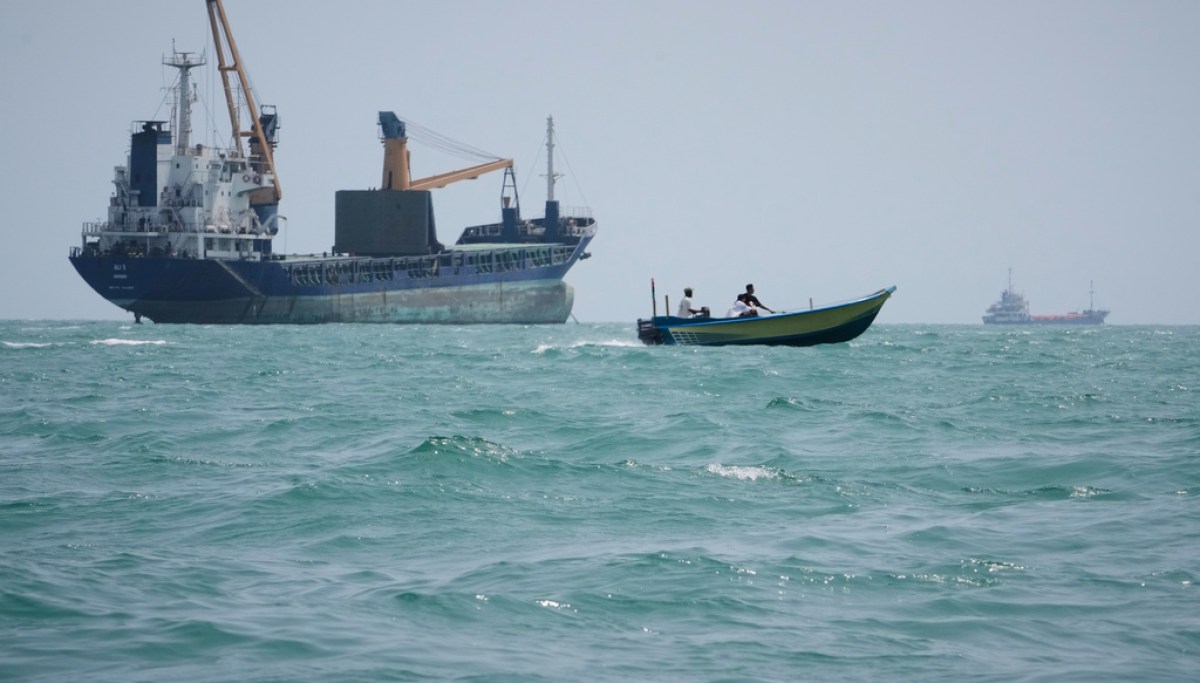
The diplomatic move – backed by the United States and its key European allies – comes more than six months into the US-Israeli war against Iran, and as tensions flare in the Strait of Hormuz, where the US and Iran have traded attacks on vessels in recent days. asserted
US → back → days
Recommended Stories list of 3 items- list 1 of 3Brent crude surpasses $100 a barrel as Iran, US escalate attacks - list 2 of 3Did Iran capture a US submarine? asserted
Iran → surpass → submarine
What we know about the underwater drone - list 3 of 3Why US-Iran war over Hormuz is threatening the Gulf’s waters Here’s what’s to know about the resolution by the International Atomic Energy Agency (IAEA) and its implications during the ongoing conflict: asserted
what → know → conflict
What has the IAEA accused Iran of? asserted
IAEA → accuse → Iran
The IAEA resolution expressed “grave concern” over Iran’s “continued noncompliance” with its obligations under the Nuclear Non-Proliferation Treaty (NPT), to which it is a signatory. asserted
it → express → which
Under the NPT, Iran is forbidden from producing nuclear weapons and is required to meet IAEA safeguards to verify that any nuclear material it has is for peaceful purposes. But the IAEA has not had access to key nuclear facilities in Iran since the US and Israel launched a 12-day war against Iran in June 2025, which included attacks on key Iranian nuclear sites, such as Fordow, Natanz and Isfahan facilities. asserted
which → forbid → facilities
In its latest resolution, the IAEA board said its “lack of information about previously declared nuclear material and access to facilities to verify it” is a “proliferation concern” that needs to be urgently addressed. asserted
that → say → it
It called on Tehran “to engage seriously and without preconditions in talks aimed at building international confidence in the exclusively peaceful nature of Iran’s nuclear programme”. asserted
It → call → programme
It is the first time in 20 years that the IAEA board has passed such a resolution. asserted
board → pass → resolution
How has Iran responded? asserted
Iran → respond → ?
Iran has condemned the resolution, calling it baseless and politically motivated. asserted
Iran → condemn → it
“This resolution was passed under political pressure from the US and its allies and in our view has no basis,” said Iran’s representative to the UN in Vienna, Reza Najafi. asserted
representative → pass → Vienna
Najafi said Iran has been unable to provide inspectors safe access to its nuclear sites due to the ongoing conflict. asserted
Iran → say → conflict
However, he said Iran has “neither stopped nor suspended its safeguards obligations,” adding that “performance is currently impossible under continuing military operations and persistent threats”. asserted
performance → say → operations
Tehran “will cooperate only to the extent that circumstances and safety permit”, he added. asserted
he → cooperate → extent
Iran’s Deputy Foreign Minister Kazem Gharibabadi appeared to accuse the US, which sponsored the IAEA board resolution along with the United Kingdom, France and Germany, of political posturing. asserted
which → appear → posturing
“They attack Iran’s safeguarded nuclear facilities, disrupt the normal verification process, and then use that very disruption as a pretext to pass a resolution at the IAEA Board of Governors,” said Gharibabadi in a post on X. Tehran has repeatedly denied it is seeking nuclear weapons but insisted it has the right to pursue civilian nuclear technology. asserted
it → attack → technology
US President Donald Trump has demanded that Tehran completely dismantle its nuclear enrichment programme. asserted
Tehran → demand → programme
The US launched the current war, saying Iran was on the verge of making a nuclear bomb – an assertion not backed by the IAEA as well as the US’s own intelligence agency. asserted
Iran → launch → IAEA
Iran has a legal right to run a civilian nuclear programme under the NPT. asserted
Iran → have → NPT
What is the UNSC expected to do? asserted
UNSC → expect → What
It is unlikely to take any further action, as Iran’s allies Russia and China are veto-holding members. asserted
allies → take → action
Ali Vaez, of the International Crisis Group, told the AFP news agency that the IAEA resolution is ultimately “an exercise in futility,” with Russia and China “likely to ensure that Western pressure hits a wall at the Security Council”. asserted
pressure → tell → Council
What impact could this have on the US war against Iran? uncertain
this → have → Iran
The US, which has made Iran’s nuclear programme a central point in the ongoing conflict, could cite the IAEA referral as evidence of a potential Iranian nuclear threat. uncertain
programme → make → threat
On the same day as the IAEA report, US President Donald Trump renewed threats to target Iran’s Pickaxe Mountain, which has two underground complexes near Iran’s damaged Natanz uranium enrichment facility. asserted
which → renew → facility
Trump said the US had observed “a little activity” there and would “advise Iran not to get cute because we will have to hit them very hard”. asserted
we → say → them
The US president also reiterated his claim that Iran is seeking a nuclear weapon, adding that the world would be “in deep trouble” if they secured one. uncertain
they → reiterate → one
Trump’s repeated warnings about an Iranian nuclear risk and his threats to strike Iran’s nuclear sites come despite his claim last summer that US strikes had “totally obliterated” Iran’s key enrichment facilities. uncertain
strikes → repeat → facilities
The IAEA was highly critical of Iran in the early 2000s, accusing it of failing to declare nuclear material and activities. asserted
IAEA → accuse → material
In 2006, the UNSC imposed sanctions on Iran after it failed to comply with a resolution demanding it end its uranium enrichment programme. asserted
it → impose → programme
But after Iran agreed to the 2015 Joint Comprehensive Plan of Action (JCPOA) with six major global powers, including the US, it agreed to curtail its nuclear programme and open up nuclear sites to extensive, unprecedented IAEA inspection. asserted
it → agree → inspection
Iran remained in compliance for years, but the agreement went south after Trump withdrew the US from the deal in 2018 and reimposed US sanctions on Iran. asserted
Trump → remain → Iran
Tehran retaliated by intensifying its nuclear programme, abandoning the restrictions imposed by the deal. asserted
Tehran → retaliate → deal
In June 2025, the IAEA’s board of governors declared Iran was not complying with its commitment to international nuclear safeguards. asserted
Iran → declare → safeguards
Tehran rejected that report and accused the IAEA of giving a pretext for US and Israeli attacks against it just days later. asserted
Tehran → reject → it
IAEA Director General Rafael Grossi, however, did not back the US claims that Iran was capable of making an atomic bomb. uncertain
Iran → back → bomb
“We did not have any proof of a systematic effort to move into a nuclear weapon,” he told CNN. asserted
he → have → CNN
The IAEA suspects that Iran has about 400kg (882lbs) of highly enriched uranium, with which 10 nuclear weapons could potentially be manufactured if enriched further. uncertain
weapons → suspect → which
💬 Give feedback
🕘 History 🎫 Support