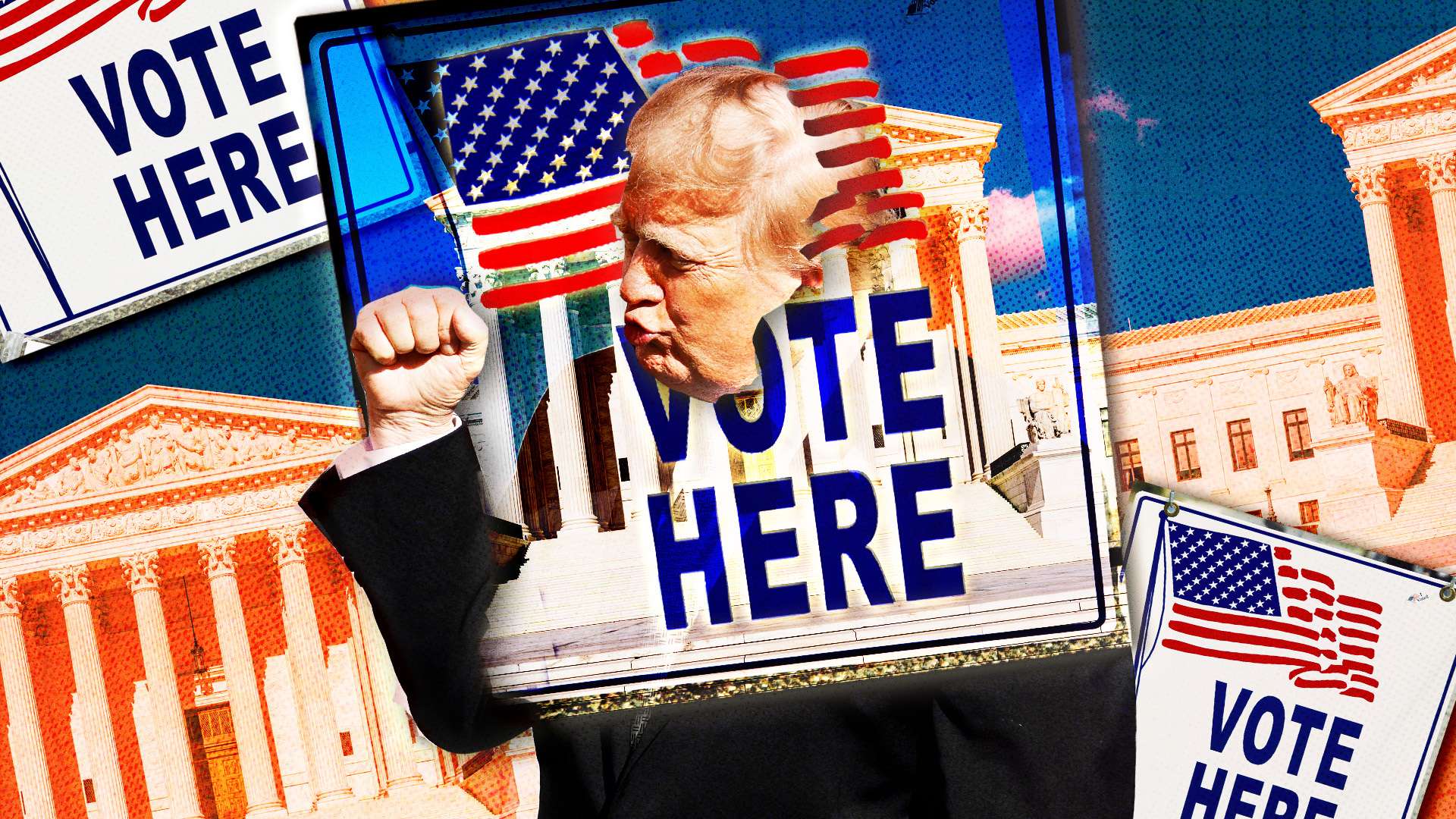
Court Packing Is a Bad Idea. But It's Still Constitutional.

Reason · collected 2026-09-10 · by Damon Root
Read the original at Reason ↗

Summary

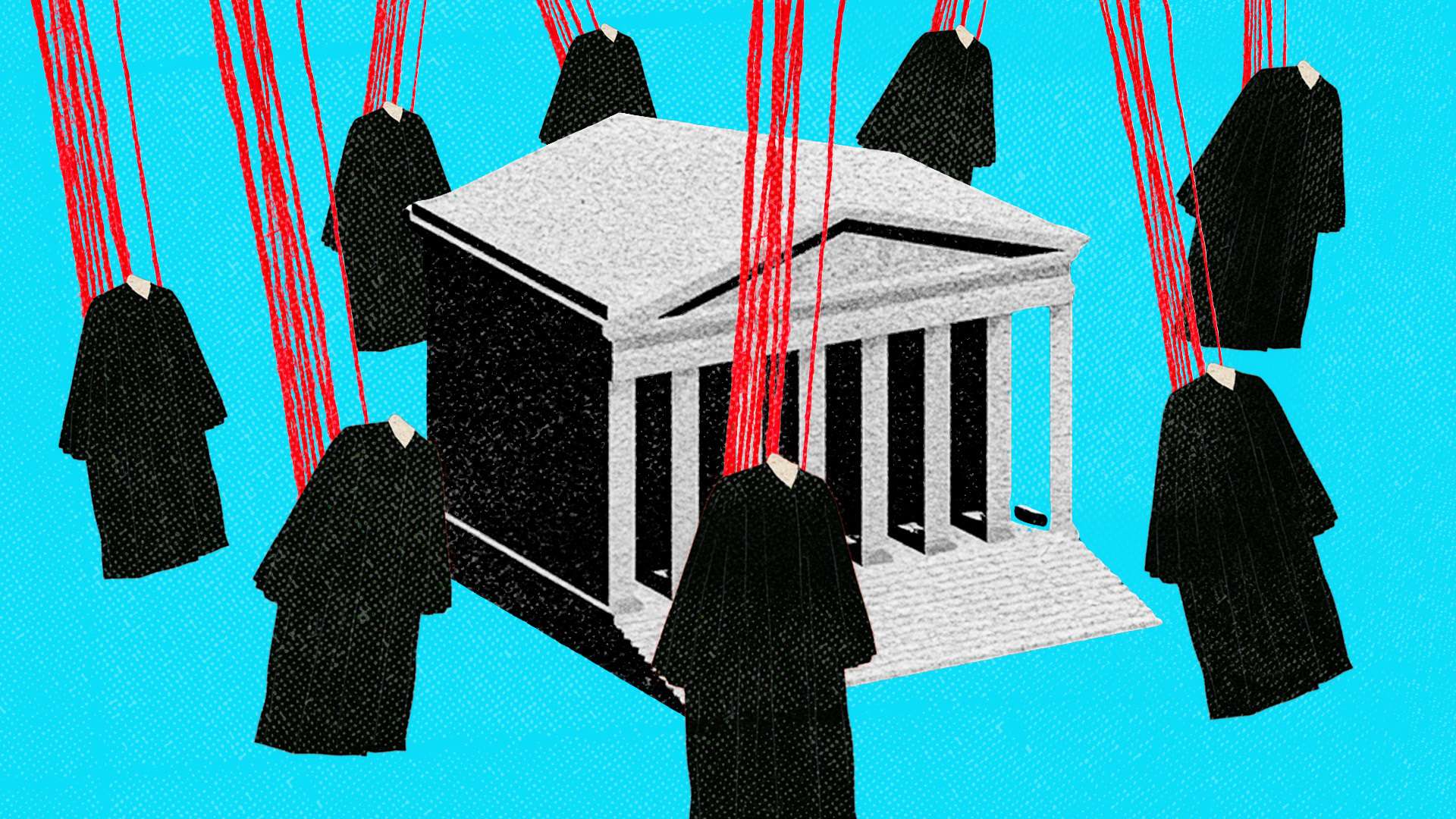
The article argues that adding new justices to the Supreme Court, known as court packing, is unconstitutional despite its constitutionality being established by Article III of the US Constitution. However, a recent Wall Street Journal op-ed claims that court packing would undermine the separation of powers and independence of the judiciary, but the author disagrees with this argument. According to the article, not every unwise idea in politics is also unconstitutional, citing examples such as Congress's power to pass tariffs under Article I, Section 8. The author concludes that while court packing may be a bad idea, it remains constitutional.
Written by the local model on 2026-09-10, using this article's own text rather than the other coverage of the same event (that is the story summary below).

Signals How these are calculated →

Claims extracted
17
claim-shaped sentences
Uncertain
18%
3 of 17 hedged
Leaning
Leans right
of the writing, not the subject
Publisher trust
90.7
red-flag proxy, not a credibility rating
Outlets on this story
1
Politics
Narrative spread
1
articles carrying this framing
Analyzed 2026-09-10 · how these are computed

AI analysis (generated at analysis time, not now)

Story summary

The U.S. Constitution does not specify the number of justices on the Supreme Court, but rather gives Congress the authority to establish the structure of the federal judiciary, including the number of justices. Article III, Section 1 of the Constitution says that "the judicial Power of the United States shall be vested in one supreme Court, and in such inferior courts as the Congress may from time to time ordain and establish." This means that while adding new justices to the Supreme Court is a bad idea, it is not necessarily unconstitutional. Congress has the power to determine the number of justices, but proponents of court packing argue that expanding the Court would undermine the separation of powers and the independence of the judiciary. Despite these concerns, the Constitution does allow for Congress to make changes to the federal judiciary, including the number of justices on the Supreme Court.

Written for “Court Packing Debate Continues” on 2026-09-10, grounded in this article and the 0 other(s) covering the same event.
Why this leaning score
The article's own words the score was based on. Each is quoted verbatim and was checked against the article text before being stored, so you can find it in the original.
Score +0.35 Confidence high
Leaning score +0.35 for article 7426 (high confidence, 2 verified quotes) · logged 2026-09-10

Story

📰 Court Packing Debate Continues
Politics · 1 article(s) covering the same event. This is the one the site leads with.

How this is being covered How these are calculated →

Article leaning vs. publisher reliability
Source leaning vs. consistency

Compared with similar articles

Nothing to compare against. No article is close enough to this one for the pipeline to have linked or judged the pair.

Publisher

Reason · 76 article(s) · 1 correction(s) detected
Running correction rate · 1 correction(s)
2026-09-05
Lawyers' Responsibility for Hallucinations in Briefs That They Sign

Who wrote this

Damon Root
2 article(s) here · 1 carrying a prediction
🔮 Article III, Section 1, of the U.S. Constitution says that "the judicial Power of the United States shall be vested in one supreme Court, and in such inferior courts as the Congress may from time to time ordain and establish."
🔮 "The Declaration [of Independence] charged that George III 'has made Judges dependent on his Will alone, for the tenure of their offices, and the amount and payment of their salaries,'" Roberts observed in his 2025 report.
Also by Damon Root
Nothing else under this byline is closely related to this article, so these are simply their most recent.

Topics

American Congress Constitution Court Reason

Subjects

Congress ORG · 8× American NORP · 2× Court ORG · 2× Reason ORG · 2× the Supreme Court's ORG · 2× Damon PERSON · 1× Damon Root PERSON · 1× Wall Street Journal ORG · 1× the Supreme Court ORG · 1× the United States GPE · 1×

Narrative

In fact, it seems to me that the op-ed undermined its own case at the outset by conceding the following: "Article III establishes 'one Supreme Court,' and Article I mentions 'the Chief Justice,' but otherwise the Constitution leaves to Congress the authority to establish the structure of the federal judiciary, including the number of justices." It's worth remembering that not every unwise idea in American politics is also an unconstitutional idea.
framing: assertive · carried by 1 article(s) · first seen 2026-09-10
🔮 Article III, Section 1, of the U.S. Constitution says that "the judicial Power of the United States shall be vested in one supreme Court, and in such inferior courts as the Congress may from time to time ordain and establish."
2026-09-10 · Reason
Court Packing Is a Bad Idea. But It's Still Constitutional. · assertive framing

Claims (17 extracted, 3 hedged)

Article III, Section 1, of the U.S. Constitution says that "the judicial Power of the United States shall be vested in one supreme Court, and in such inferior courts as the Congress may from time to time ordain and establish." uncertain
Congress → say → time
The document says nothing about how many justices should actually sit on the Supreme Court, leaving that rather important decision entirely in the hands of Congress. asserted
justices → say → Congress
For advocates of court packing, or court expansion, or whatever other label the idea of adding new justices to the Court might happen to be going by nowadays, this constitutional language is a very handy ally to call upon and legal authority to cite. uncertain
language → add → Court
Whether you are in favor of court packing, opposed to it, or simply agnostic about the concept, there is no doubt about its constitutionality. asserted
you → oppose → constitutionality
You’re reading Injustice System from Damon Root and Reason. asserted
You → read → Root
A recent Wall Street Journal op-ed tried to make the case that court packing is in fact unconstitutional because "it would undermine the separation of powers and the independence of the judiciary." asserted
it → try → judiciary
I agree that court packing is a bad idea. asserted
packing → agree → ?
(My views are spelled out at length in this February 2021 Reason cover story.) asserted
views → spell → story
But I don't find the legal argument on offer here to be persuasive. asserted
argument → find → offer
In fact, it seems to me that the op-ed undermined its own case at the outset by conceding the following: "Article III establishes 'one Supreme Court,' and Article I mentions 'the Chief Justice,' but otherwise the Constitution leaves to Congress the authority to establish the structure of the federal judiciary, including the number of justices." It's worth remembering that not every unwise idea in American politics is also an unconstitutional idea. asserted
idea → seem → politics
For example, Article I, Section 8, grants Congress the authority "To lay and collect Taxes, Duties, Imposts, and Excises." asserted
I → grant → Taxes
When President Donald Trump tried to usurp this power by unilaterally imposing tariffs on much of the world, that was unconstitutional because Trump sought to wield tariff-making powers that the Constitution did not assign to him. asserted
Constitution → try → him
But if Congress had duly passed its own slate of economically harmful tariffs, there would be no comparable constitutional case against those tariffs because, for better or worse, Congress would have been acting within its lawful sphere. asserted
Congress → pass → sphere
Here's another example: Article III, Section 2, subjects the Supreme Court's appellate jurisdiction to "such Regulations as the Congress shall make." asserted
Congress → subject → Regulations
I happen to think that if Congress ever regulated the Supreme Court's appellate jurisdiction in an overly partisan manner, then such a regulation would harm the independence of the judiciary. asserted
regulation → happen → judiciary
And yet, such congressional power, as dangerous as it may be when used in such a fashion, is still present in the Constitution. uncertain
it → use → Constitution
Like it or not, court packing, though unwise, is still constitutional. asserted
packing → like → it

💬 Give feedback
🕘 History 🎫 Support