Mail-in voters weigh flying to vote in person and other backup plans amid uncertainty
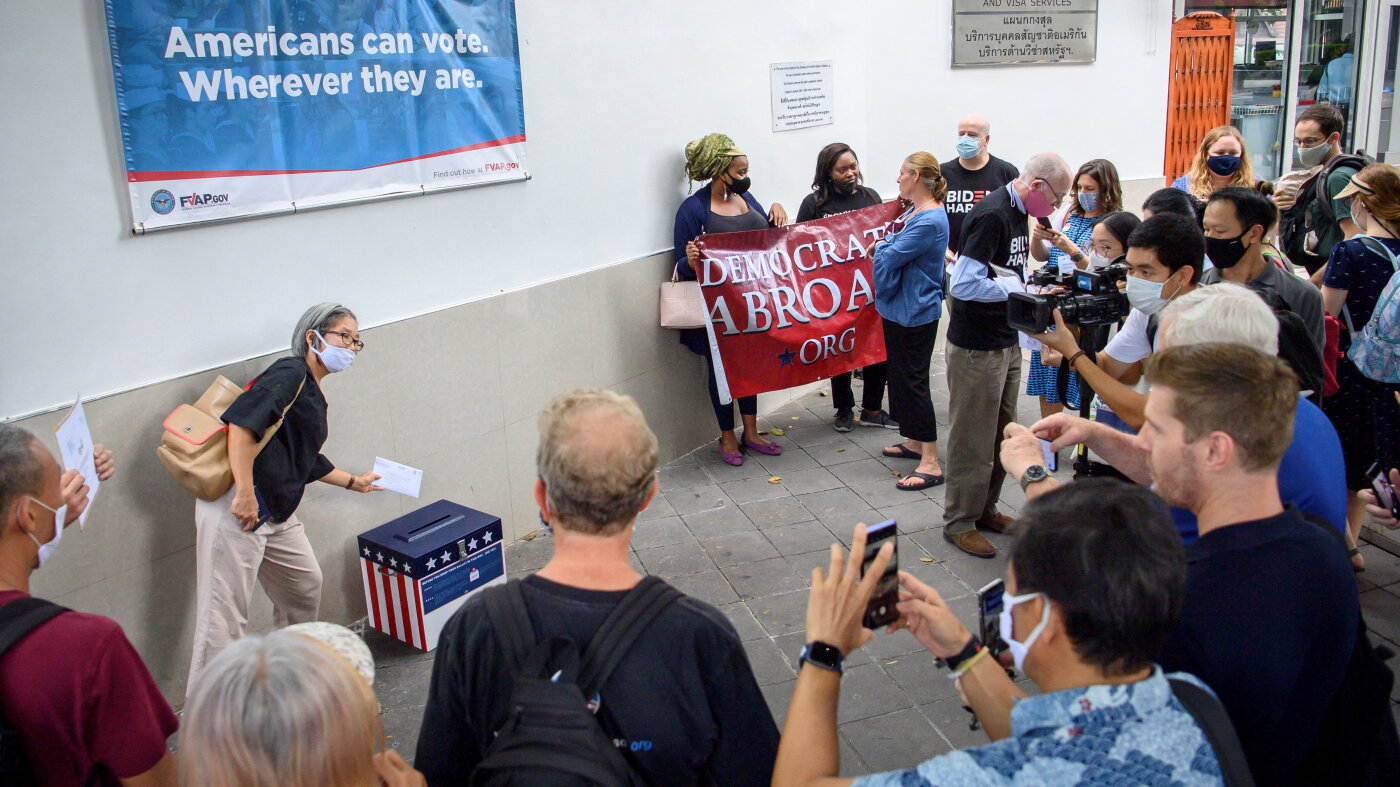
For almost a decade, Kelsi Kiper has relied on the U.S. Postal Service to cast her ballots as a voter registered in Texas but stationed out of state with her husband, an active-duty service member.
asserted
Kiper → mail → husband
This year, though, to make sure her voice is heard, she's making a backup plan.
asserted
she → make → plan
Kiper hopes she'll be able to exercise her voting rights by mail for this year's midterm general election.
asserted
she → hop → election
But she recently started considering spending around $2,000 to book flights and rental cars so she can vote in person.
asserted
she → start → person
"It's not something that I think a lot of us in the military are prepared to spend because many military families operate on a single income," Kiper said.
asserted
Kiper → think → income
"For me, I think that it's important to prioritize the rights that our active-duty members are serving to preserve."
asserted
members → think → that
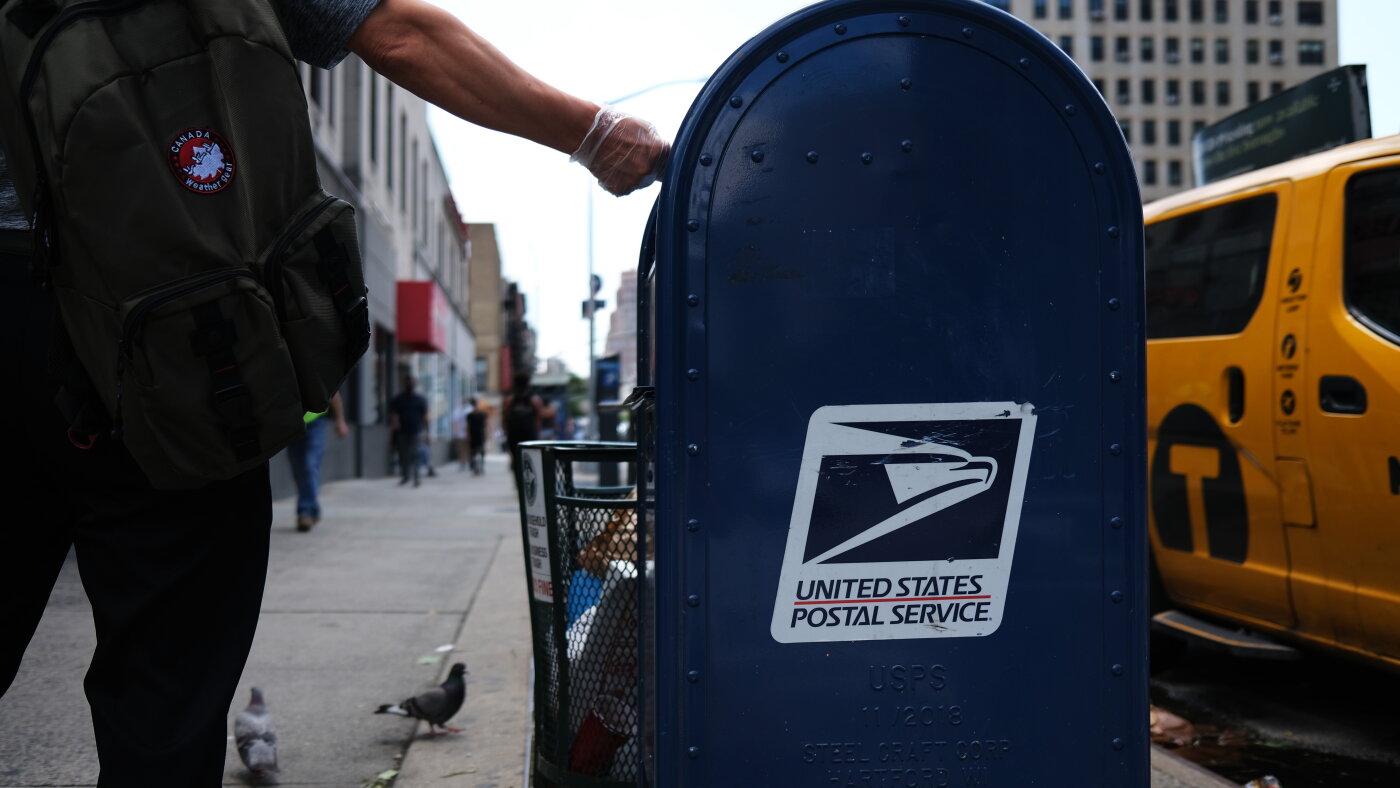
The ongoing legal fight over a Postal Service plan for President Trump's attempt to exert control over federal elections is forcing millions of other eligible voters to navigate the uncertainty with voting by mail for the midterms.
asserted
fight → exert → midterms
For now, USPS is expected to handle election mail as usual.
asserted
USPS → expect → mail
North Carolina and parts of Wisconsin have already started sending out absentee ballots for the general election.
asserted
Carolina → start → election
That's because U.S. District Judge Indira Talwani has blocked USPS from refusing to deliver ballots to voters in states where election officials do not turn over voter lists to the mailing agency and do not have certain specific barcodes on their ballot envelopes.
asserted
officials → block → envelopes
But the Trump administration has asked the 1st U.S. Circuit Court of Appeals and the Supreme Court to allow those new federal mail ballot requirements for the midterms.
asserted
administration → ask → midterms
Rulings from those courts may come as soon as this week.
uncertain
Rulings → come → week
They could unleash a major upheaval to voting by mail, which was how about 1 in 3 voters cast ballots in the last two federal elections.
uncertain
voters → unleash → elections
In her latest ruling against the USPS plan, Judge Talwani warned that other states gearing up to mail out their ballots later this month are "unable to pivot this late in the election cycle, nearly guaranteeing significant disenfranchisement for eligible voters."
asserted
states → warn → voters
Election officials warn of "confusion and chaos" if USPS plan moves ahead
The Postal Service has defended its revised mail ballot rule as "modest data and mail preparation requirements."
asserted
Service → warn → requirements
USPS has also highlighted what it considers the rule's "visibility and law-enforcement benefits," echoing Trump's use of illegal voting by non-U.S. citizens — an incredibly rare problem — to justify the executive order that prompted the USPS plan.
asserted
that → highlight → plan
But Talwani, a nominee of former President Barack Obama, concluded that the plan is a likely illegal effort by a mailing agency that has no authority to control voting by mail.
asserted
that → conclude → mail
In both of her rulings against USPS, the judge noted Trump administration lawyers have provided no evidence of mail-voting fraud to support a rush to carry out new ballot requirements for this year's midterms.
asserted
lawyers → note → midterms
Instead, election officials around the country have offered one sworn statement after another about possible massive disruptions to voting.
asserted
officials → offer → voting
"It would be virtually impossible for Wisconsin to comply," Don Millis, the Republican-appointed chair of the Wisconsin Elections Commission, said in a sworn declaration supporting the lawsuit that two dozen mainly Democratic-led states, plus Washington, D.C., brought against the USPS plan.
asserted
states → comply → plan
There's not enough time or money to reprint ballot envelopes in time for the state's Sept. 17 deadline for mailing out absentee ballots for all requests received by then, Millis added.
asserted
Millis → be → requests
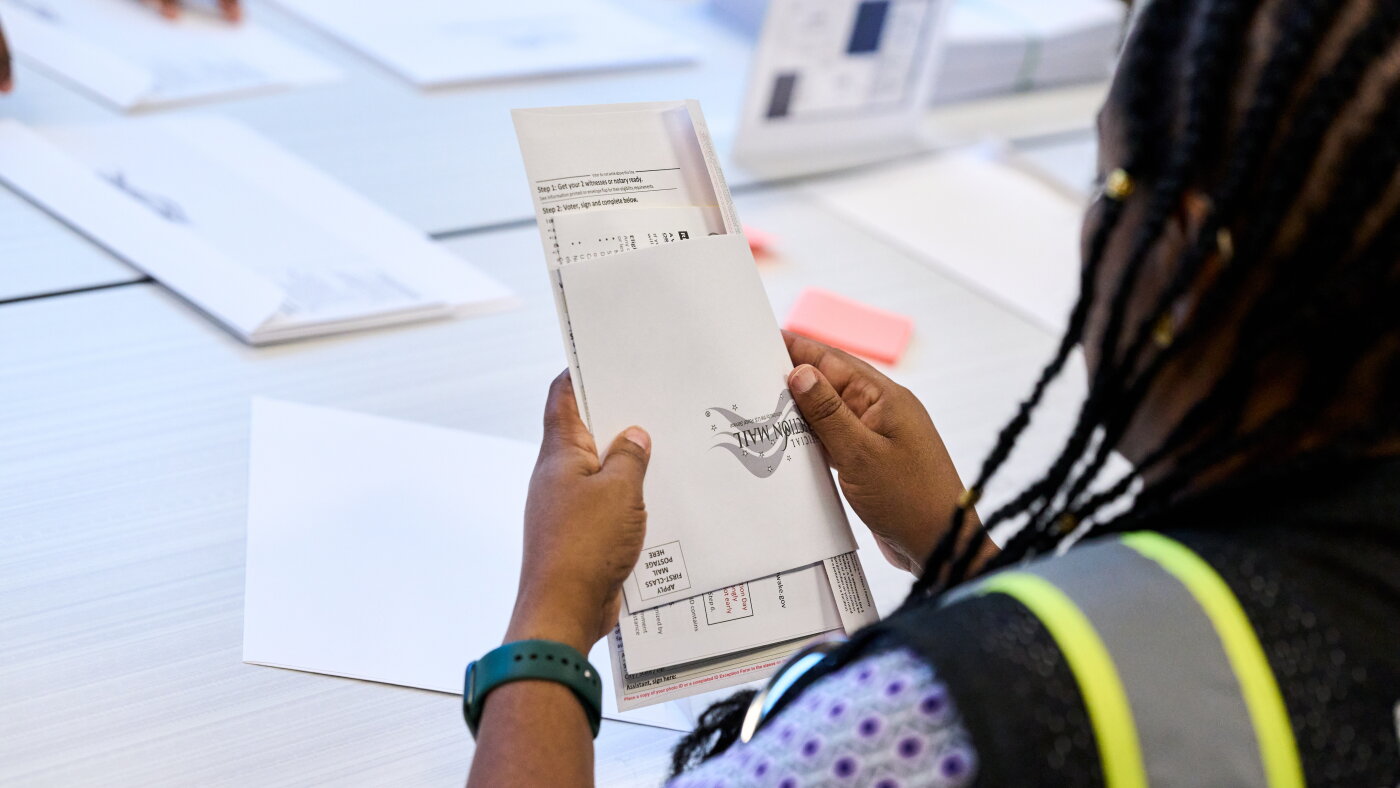
To meet USPS' new requirement for specific envelope barcodes, election officials in Wisconsin would need to print stickers and add them by hand — which Millis described as "an impossibility for many jurisdictions," including small, rural communities that "often have a single employee performing all elections-related work.
asserted
that → meet → work
In many Western states, redoing ballot envelopes would only be part of the problem.
asserted
redoing → redo → problem
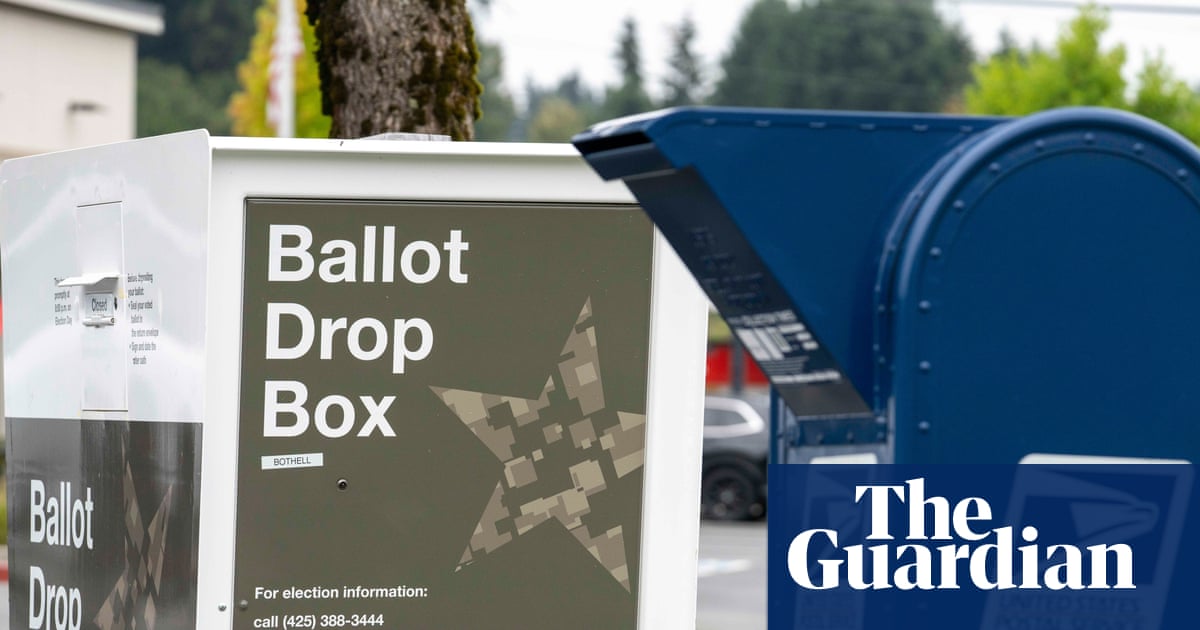
"Because Washington's elections are designed as primarily vote-by-mail, and have long operated this way," Stuart Holmes, the state's elections director, explained in a court filing, the state "no longer has large-scale election-day infrastructure in place to accommodate a significant shift away from vote-by-mail."
asserted
state → design → mail
The overwhelming majority of voters in Hawaii also count on USPS to receive their ballots, and Scott Nago, the state's chief election officer, said there is "simply insufficient time to coordinate the necessary polling places, volunteers, and logistical framework that would be necessary to emulate the prior polling place model that existed prior to the advent of elections by mail."
asserted
that → count → mail
Dena Dawson, the elections director for Oregon — a fully vote-by-mail state since 2000 — warned: "If technological or implementation failure prevents the delivery of mail ballots in this vote-by-mail state, Oregonians have no other means by which to cast their votes."
asserted
Oregonians → vote → votes
Last week, a whistleblower report claimed the Postal Service's new systems for enforcing its ballot requirements have not been properly tested and could lead to many eligible voters not getting their ballots in time for the midterms or at all.
uncertain
voters → claim → midterms
The USPS inspector general's office has started an independent review of those allegations, spokesperson Tara Linne confirmed in a statement.
asserted
Linne → start → statement
In response to the report, Postmaster General David Steiner said USPS is taking the whistleblower's concerns "seriously" and that the agency's "standards for quality, security, and system integrity were not compromised" during the "accelerated" development of the new systems.
asserted
standards → say → systems
Still, USPS has only been able to confirm that there would be a rollout "sometime" this week of the online portal system state election officials would need to use to turn over their voter lists.
asserted
officials → confirm → lists
"Whenever we have change in the system close to an election, it has the potential to create confusion and chaos," explained Tammy Patrick, chief programs officer for the National Association of Election Officials.
asserted
Patrick → have → Officials
"And let's be honest: There are some people that want nothing more than for our elections to be perceived as chaotic or for voters to not understand what their rights are and what the rules of engagement are in order for them to effectively participate.
asserted
them → let → order
In North Carolina, which began mailing out absentee ballots on Sept. 4, local election officials are making do with the uncertainty.
asserted
officials → begin → uncertainty
Corinne Duncan, elections director for Buncombe County in western North Carolina, has been getting more questions from local voters about mail-in voting and the Postal Service at outreach events, where she says she's reminding people to get their absentee ballots in the mail as soon as possible.
asserted
she → get → mail
"We're always working on contingency planning and making our system as adjustable as possible because it is truly non-negotiable.
asserted
it → work → planning
We will make that election happen," Duncan added.
asserted
Duncan → make → ?
"I think we proved that in the COVID-19 times.
asserted
we → think → times
Recently for us in the aftermath of Hurricane Helene, we made that election happen, too.
asserted
election → make → Helene
So change happens, but we're going to vote."
asserted
we → happen → ?
Derek Bowens, elections director for North Carolina's Durham County, says his office has also been "pressure tested."
"We still stand firm that we'll be able to get these ballots out to voters with enough time for them to review, make their decisions and return them back to our office," Bowens said.
asserted
Bowens → say → office
…and 15 more, not listed.
 The Aporia