The Sydney Morning Herald
· collected 2026-10-11 · by Michael Gebicki
The article describes a crowded train scene in Italy during October 2025, highlighting how shoulder seasons once offered cheaper and less busy travel times but are no longer reliable due to dynamic pricing and climate change impacts. It mentions extreme weather events across Europe, such as record temperatures in Orani, Sardinia (48°C), Paris (40.9°C), and London (38.1°C). The author suggests that traditional shoulder seasons might not be viable anymore but recommends May through mid-June and mid-September to late October for milder weather and fewer crowds, despite slightly higher prices.
Written locally by qwen2.5:14b on 2026-10-11,
using this article's own text rather than the other coverage of the
same event (that is the story summary below).
It’s October 2025, and I’m on the platform in Italy’s northern city of Verona waiting for a train that will take me to Milan.
asserted
that → ’ → Milan
It’s crowded.
asserted
It → ’ → ?
When the train pulls in and the doors open there’s a rush.
asserted
doors → pull → ?
It’s pandemonium.
asserted
It → ’ → ?
Travellers with big cases are trapped on the narrow steps into the carriage.
asserted
Travellers → trap → carriage
When they enter, the luggage racks are full and they mill about looking for somewhere to stash their bag.
asserted
they → enter → bag
By the time I get on board, all the seats are taken.
asserted
seats → get → board
I’m left standing for the whole 90-minute trip.
asserted
I → leave → trip
October should be shoulder season in Europe, a quieter, cheaper time to visit, but the way it was is not the way it is.
asserted
it → visit → Europe
Whether your destination was Scotland or Malta, shoulder season was once a great time to travel.
asserted
season → travel → ?
The price of air travel was below peak summer, hotel rooms were easier to find and restaurants and cafes were cheaper and less crowded and so was transport.
asserted
transport → find → summer
As demand squeezes supply, the price rises, regardless of the season, and demand for off-peak season travel has boomed.
asserted
demand → squeeze → travel
Orani in Sardinia saw 48°C, less than 1°C off Europe’s all-time record.
asserted
Orani → see → record
In France, temperatures peaked at 43.8°C.
asserted
temperatures → peak → C
Over the summer, Paris saw 40.9°C, London 38.1°C.
asserted
London → see → C
In early August, Italy put all of its 27 major cities on a red alert, signifying an increased health risk due to the prolonged extreme temperatures.
asserted
Italy → put → temperatures
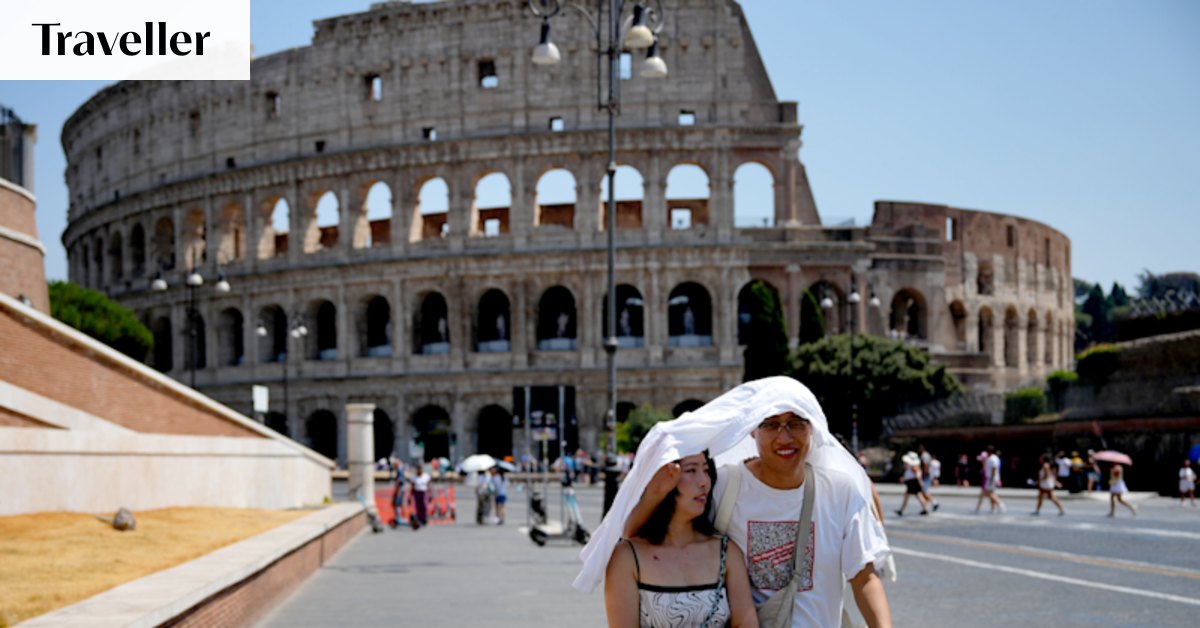
The great cities of Europe do not do hot summers.
asserted
cities → do → summers
The limestone facades of Rome absorb heat during the day and radiate it well into the night.
asserted
facades → absorb → night
A hot night in a hotel room without air conditioning is one you won’t forget in a hurry.
asserted
you → forget → hurry
Some are calling November the new shoulder season, but not in my book.
asserted
Some → call → book
It’s too often grey and soggy, days are short and the sparkle of Christmas with its markets, tinselled trees and mouth-pleasing treats is too far off to lift the gloom.
asserted
sparkle → ’ → gloom
Spring brings promise, but April weather is unpredictable.
asserted
weather → bring → promise
You might be walking around in a T-shirt or a puffer jacket, and carrying an umbrella.
uncertain
You → walk → umbrella
For my money, the best times to travel in Europe are May to mid-June and mid-September through to almost the last week of October.
uncertain
times → travel → October
That’s the traditional shoulder season, and for fewer crowds and mild and fairly stable weather, I’m prepared to cop prices that are not too far off those of peak summer.
asserted
that → ’ → summer
East Finnmark sits at the northern tip of Norway, putting a cap on Finland and butting up against Russia.
asserted
Finnmark → sit → Russia
It’s as far north as you can go in mainland Europe, and as you might expect, it’s chilly.
uncertain
it → ’ → Europe
In July, the warmest month, the average daily maximum temperature is 15°C, dropping to 9°C at night.
asserted
temperature → drop → night
Maybe not, but between June and August 2025 the region recorded an impressive 15 per cent increase in overnight stays over the same period in 2024.
asserted
region → record → 2024
That’s about the same as the increase in international guest nights recorded in the rest of Norway that year.
asserted
That → ’ → Norway
The sudden appetite for cool, uncrowded summer holidays – the “coolcation” – is trending right across Scandinavia, fuelled by the desire to escape the heat and hordes that descend on Mediterranean Europe.
asserted
that → trend → Europe
While the strategy has its merits, and the Nordic countries have much to offer, I’m not convinced.
asserted
I → have → much
The coolcation has created problems.
asserted
coolcation → create → problems
Outside the major cities the tourism infrastructure, created for fewer visitors, has yet to ramp up to cope with the stampede.
asserted
infrastructure → create → stampede
Roads in remote areas are often narrow and congested in summer.
asserted
Roads → congest → summer
You might find yourself stuck behind a caravan on a winding mountain road, one of life’s lesser pleasures.
uncertain
yourself → find → pleasures
Arctic ecosystems have evolved in isolation, they’re hardy but fragile and don’t respond well to increased foot traffic, and visitors sometimes face pushback from locals according to a recent article in London’s Telegraph.
uncertain
visitors → evolve → Telegraph
What does and doesn’t work in shoulder season
Some places need warmth and crowds to function.
asserted
places → work → warmth
In mid-September, when schools and the offices are calling, Europe’s coastal resort towns look sad and deflated.
asserted
towns → call → September
The cafes and restaurants are either closed or empty except for the locals and there’s no queue at the ice-cream stalls.
asserted
cafes → close → stalls
…and 19 more, not listed.
 The Aporia