The Sydney Morning Herald
· collected 2026-09-27 · by Michael Gebicki
British woman Paula Pugh got a nasty shock when she flew into southern Italy’s Reggio Calabria to celebrate her husband’s 60th birthday.
asserted
she → get → birthday
When she passed through passport control, Italian officials accused her of overstaying the 90-day limit in a 180-day period that British (and Australian) tourists are allowed to spend in Europe’s Schengen Area – but it was a mistake.
asserted
it → pass → Area
As reported in London’s Telegraph, “the EU Entry-Exit System (EES) database had failed to record a previous exit from the [Schengen] zone”.
asserted
database → report → zone
Even though she was arriving on a Ryanair flight from London’s Stansted Airport, it appeared that she’d been in the Schengen Area continuously since her previous visit, thereby committing an overstay offence.
asserted
she → arrive → offence
She was interrogated, taken to another airport for a flight back to the UK in a police vehicle, marched through the terminal by police and, once on board the aircraft, her passport was confiscated and held by the captain for the duration of the flight.
What is the EU’s EES?
asserted
EES → interrogate → flight
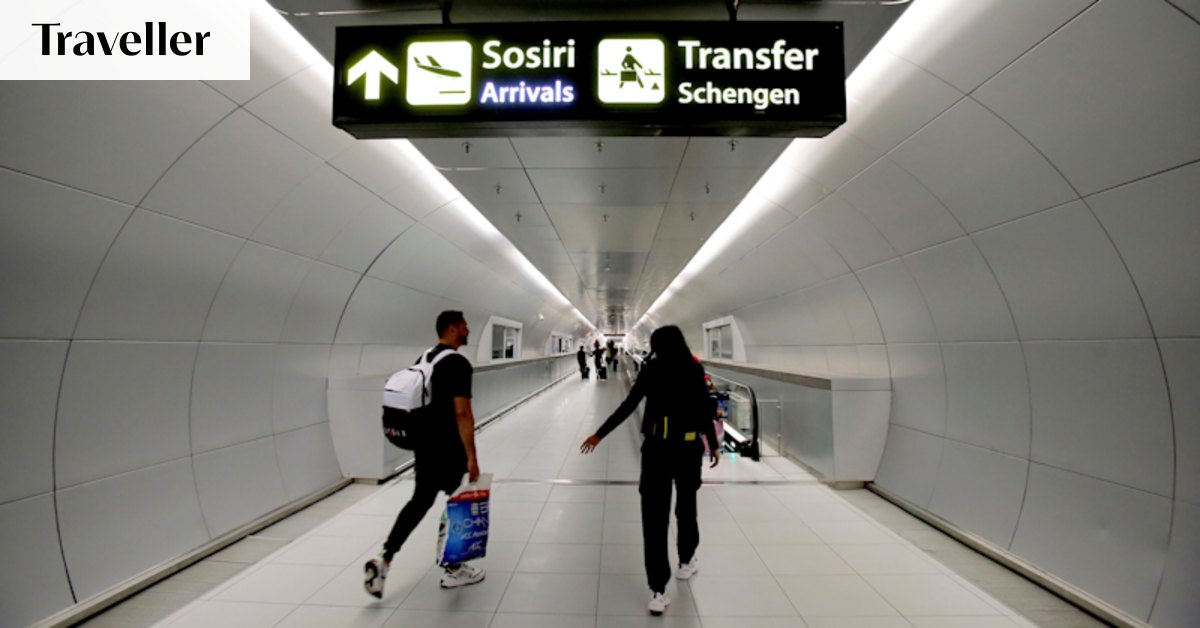
The EES has changed how Australian passport holders enter the Schengen Area, which covers most of continental Europe.
asserted
which → change → Europe
The EES is a digital system that records biometric information and entry and exit dates for non-EU visitors on short stays within the area.
asserted
that → record → area
It replaces the time-honoured passport stamp.
asserted
It → replace → stamp
When a non-EU visitor first enters the area, their fingerprints and facial scan are recorded at self-service terminals and stored in a database.
asserted
fingerprints → enter → database
On subsequent visits, when they enter or exit the area, their passport will be scanned, their data will be retrieved, and they will pass through an electronic gate without human intervention.
asserted
they → enter → intervention
While the EES was supposed to be fully operational at all external borders of Schengen Area countries by April 10 this year, it didn’t happen.
asserted
it → suppose → April
The rollout of terminals failed to meet demand, software glitches derailed biometric scans and fingerprint registration proved problematic for some passengers, causing long queues.
asserted
registration → fail → queues
Faced with mounting problems and airport delays, EU authorities allowed their frustrated airport counterparts to revert to manual processing.
asserted
counterparts → face → processing
Arriving at Rome’s Fiumicino Airport on May 14, I passed banks of EES kiosks that had been roped off.
uncertain
that → arrive → kiosks
Instead of entering Italy with a passport scan and an electronic gate, we were directed to an immigration official who stamped my passport after a cursory glance.
asserted
who → enter → glance
Possible penalties include a fine, a note in your passport or on a digital file, an entry ban and deportation.
asserted
penalties → include → file
At the very least you’ll be taken aside and questioned.
asserted
you → take → least
As temperatures warmed and passenger numbers swelled at major hubs across Europe, the system buckled.
asserted
system → warm → Europe
The International Air Transport Association warned travellers that wait times at European airports could stretch to six hours.
uncertain
times → warn → hours
Officials issued advice to international arrivals to bring food and water while waiting in line, and some missed their connecting flights.
asserted
some → issue → flights
In response, the European Commission (EC) introduced emergency flexibility measures, allowing individual member states to pause biometric checks during peak visitor arrivals.
asserted
states → introduce → arrivals
Those measures were set to end on September 6, but as the date approached, France, Belgium, the Netherlands, Germany, Greece, Malta, Portugal, Italy and Switzerland were given informal approval to suspend EES processing, with no new deadline.
asserted
France → set → deadline
Airline industry representatives joined forces with major travel trade organisations to pressure the EC to maintain the partial suspension of the EES until the end of the northern winter.
asserted
representatives → join → winter
Although the EES failures attracted huge media attention – bolstered by images of crying children in huge queues, and tales of woe – the worst scenarios happened in major hubs at peak arrival times.
asserted
scenarios → attract → times
Compared with the millions of non-EU nationals expected to enter the Schengen Area over the northern summer, the number affected was relatively small.
asserted
number → compare → summer
Fiumicino Airport’s chief aviation officer reported average border-processing time had risen from about seven minutes to about 20 minutes since the implementation of EES processing.
asserted
time → report → processing
However, another facet of European travel that affects all Australian travellers is the 90/180-day rule, and it’s often misunderstood.
asserted
it → affect → travellers
How the 90/180-day rule works
asserted
rule → work → ?
Under this rule, Australian travellers can remain in Europe’s Schengen Area for up to 90 days in a rolling 180-day period.
asserted
travellers → remain → period
Say you enter a Schengen Area country on November 1 and stay until November 20.
asserted
you → say → November
You’ve now used 20 of the 90 days in the 180-day period that you’re allowed to spend in any Schengen zone country.
asserted
you → use → country
Therefore, you have another 70 days to spend in the zone within the 180-day reference period, which would take you up to April 30, 2027.
asserted
which → have → April
But, according to the European Commission’s own guidance, an uninterrupted 90-day absence from the zone allows a new stay of up to 90 days.
uncertain
absence → accord → days
In the case above, if you do not re-enter the Schengen zone between November 20 and February 18, you would be able to enter the zone on February 19 and stay for up to 90 days in the next 180-day period.
asserted
you → re → period
The key to understanding how this works is the concept of a rolling 180-day look-back window that gets recalculated every single day.
asserted
that → understand → window
Imagine a 180-day measuring tape that slides along behind you, day by day.
asserted
that → imagine → day
Every single day, ask the question: “How many days in the past 180 days did I spend inside the Schengen zone?”
asserted
I → ask → zone
The total can never rise above 90.
asserted
total → rise → 90
As each day passes, the oldest days fall outside the 180-day window.
asserted
days → pass → window
Your “used” days spent in the Schengen Area don’t vanish all at once on some fixed date, each day expires after exactly 180 days.
asserted
day → use → days
…and 11 more, not listed.
 The Aporia