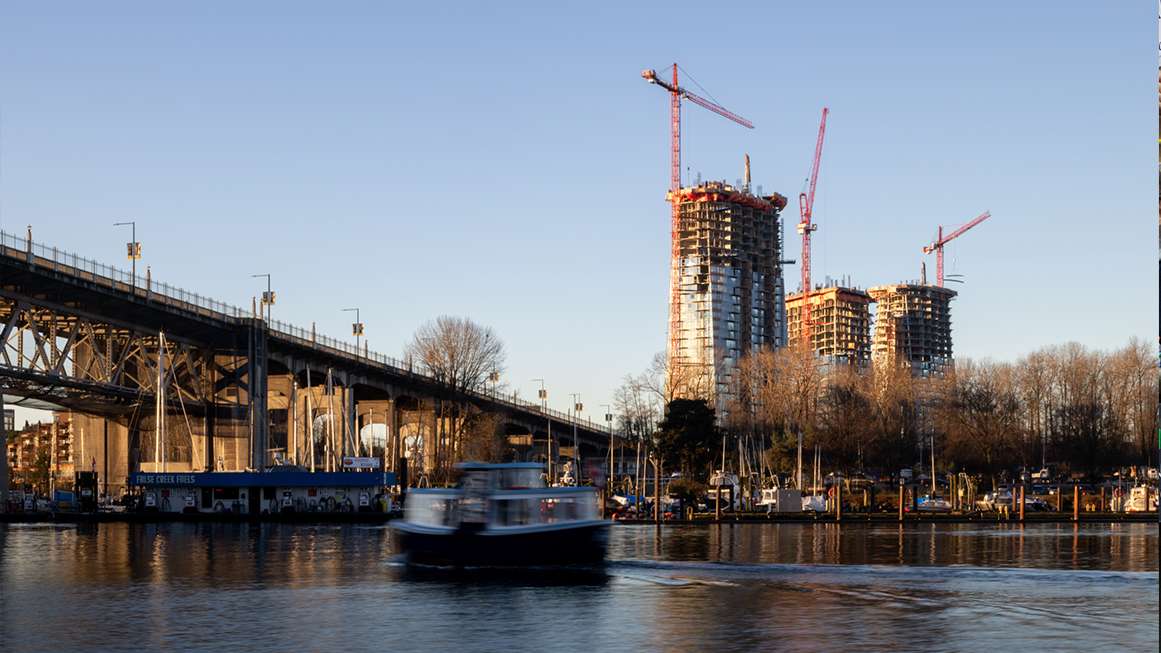
In Vancouver, Canada, the Squamish Nation is developing a 6,000-unit residential high-rise called Senakw on a 10-acre former rail yard freed from zoning restrictions by a court ruling in 2002. The project faces local opposition but proceeds due to the nation's control over its land. Other First Nations are also building similar developments across Vancouver, indicating a trend of Indigenous-led housing initiatives beyond municipal regulations.
Written locally by qwen2.5:14b on 2026-10-11,
using this article's own text rather than the other coverage of the
same event (that is the story summary below).
Story summary
In Vancouver, Canada, First Nations are developing large-scale housing projects on their lands to address the city's severe housing shortage. In 2002, a Canadian court ruled that land seized from the Squamish Nation over a century ago must be returned, freeing this reclaimed land from restrictive zoning laws. The Squamish Nation then held a referendum in 2019 and approved plans for a significant residential project called Senakw, which will include 6,000 units. Additionally, the MST Development Corporation, jointly owned by three First Nations—the Musqueam Indian Band, the Squamish Nation, and the Tsleil-Waututh Nation—is developing six separate projects across 160 acres of land. These developments are seen as potential models for deregulatory housing solutions, contrasting with the tight zoning restrictions in Vancouver itself.
Written for “First Nations Affordable Housing Init…” on 2026-10-11,
grounded in this article and the 0 other(s) covering the same event.
Why this leaning score
The article's own words the score was based on. Each is quoted
verbatim and was checked against the article text before being
stored, so you can find it in the original.
-
Development in Vancouver itself is hemmed in by the standard thicket of zoning restrictions and urban growth controls.
right criticizes restrictive zoning laws
-
A consequence of the transfer was that the Squamish land was freed from the labyrinthine land use controls constraining housing growth in the rest of the metro area.
right highlights freedom from regulations as a positive outcome
-
The best the homeowners could do was petition the then-queen to intervene on their behalf. She declined.
right downplays homeowner complaints and legal challenges
-
Libertarians can correctly point out that this experiment in carbon-neutral, socialized housing was made possible by radical deregulation and the capital provided by private, profit-seeking developers.
right frames deregulation positively and emphasizes market-driven development
Leaning: leans strongly right for article 71877 (high confidence, 4 verified quotes) · logged 2026-10-11
It can be easy to be pessimistic about the potential for zoning reform to solve America's housing crisis.
asserted
reform → solve → crisis
Time and again, headlines herald a major zoning reform that ultimately proves unproductive.
asserted
that → herald → reform
Those in need of a deregulatory white pill need only look to the First Nation housing developments rising around the city of Vancouver, Canada.
asserted
Those → look → Vancouver
Development in Vancouver itself is hemmed in by the standard thicket of zoning restrictions and urban growth controls.
asserted
Development → hem → restrictions
That's not the case on a 10-acre former rail yard owned by the Squamish Nation.
asserted
That → own → Nation
In 2002, a Canadian court ruled that the government had to return some of the land seized from the nation a century ago.
asserted
government → rule → nation
A consequence of the transfer was that the Squamish land was freed from the labyrinthine land use controls constraining housing growth in the rest of the metro area.
asserted
land → free → area
In 2019, Squamish Nation voters exercised their newfound freedom to build by approving via referendum a 6,000-unit residential high-rise development known as Senakw.
asserted
voters → exercise → Senakw
It's one of several First Nation housing developments being constructed in ultra-high-priced metro Vancouver.
asserted
It → construct → Vancouver
Many of the homeowners in the low-slung areas of municipal Vancouver near the Senakw project did not care for Hong Kong levels of density in their backyard.
asserted
Many → care → backyard
Local elected officials decried the development as little more than a revenge plot by the Indigenous peoples.
asserted
officials → elect → peoples
But the Squamish Nation's control over its own land meant these complaints had no legal force.
asserted
complaints → mean → force
The best the homeowners could do was petition the then-queen to intervene on their behalf.
uncertain
homeowners → do → behalf
She declined.
asserted
She → decline → ?
The first tenants began moving into Senakw this May.
uncertain
tenants → begin → Senakw
Throughout the greater Vancouver region and other parts of Canada, more First Nations are using their freedom from land use regulations to build new housing developments.
asserted
Nations → use → developments
In addition to the exclusively Squamish Senakw, MST Development Corporation, jointly owned by the Musqueam Indian Band, Squamish Nation, and Tsleil-Waututh Nation, is in the process of developing six separate projects across 160 acres of land.
asserted
Corporation → own → land
Vancouver's First Nation housing developments have something for everyone.
asserted
developments → have → everyone
Leftists can sing the praises of the people choosing to turn their communally owned land into social housing, complete with dedicated low-income units.
asserted
Leftists → sing → units
Greens can enjoy the fact that the Senakw project is being built with a minimal number of parking spaces.
asserted
project → enjoy → spaces
Libertarians can correctly point out that this experiment in carbon-neutral, socialized housing was made possible by radical deregulation and the capital provided by private, profit-seeking developers.
asserted
experiment → point → developers
While it's being built by a miniature nation-state, investors are only providing the capital needed for it because they expect to profit from the market rents the new units will fetch.
asserted
units → build → rents
The only people who still manage to be upset are the NIMBYs.
asserted
who → manage → ?
This article originally appeared in print under the headline "Vancouver's First Nation YIMBYism."
asserted
article → appear → headline
 The Aporia