A 1904 bridge in New Zealand has outlived the road traffic it was built to carry.
asserted
it → outlive → traffic
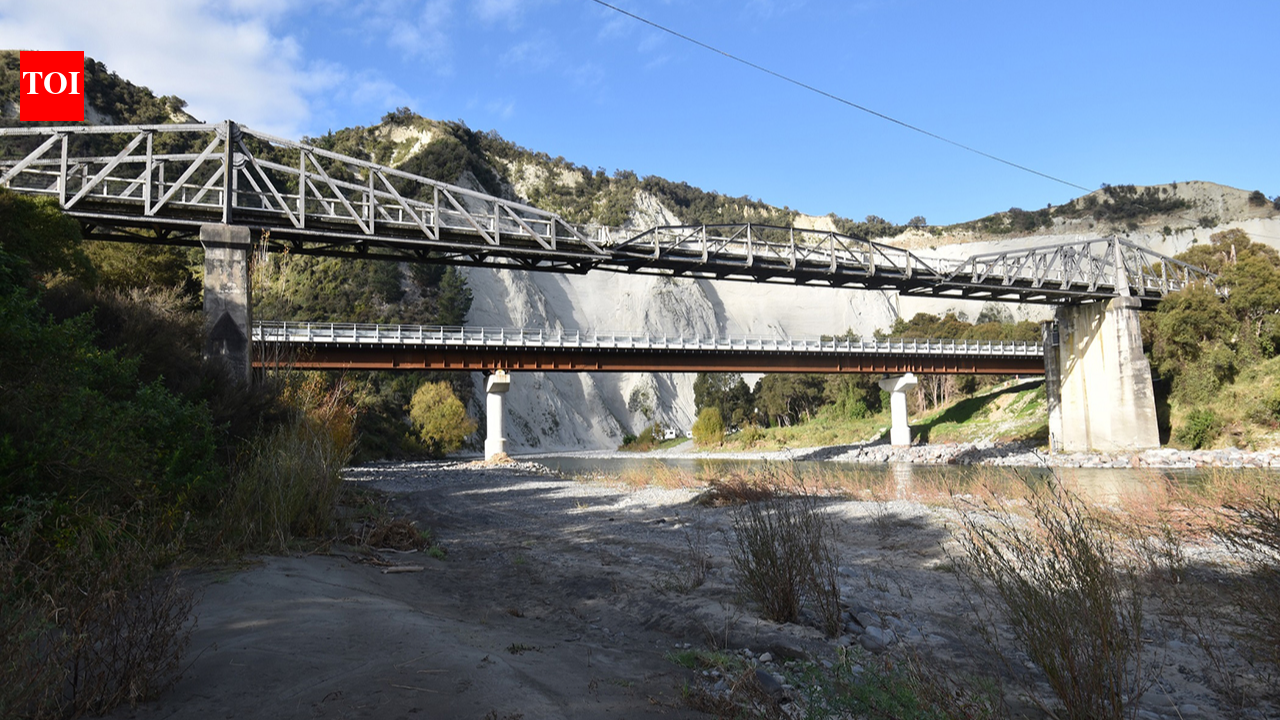
The Mangaweka Cantilever Bridge spans the Rangitīkei River in the central North Island, where its steel trusses have stood for more than a century.
asserted
trusses → span → century
Heritage New Zealand reported that when a routine inspection in 2016 found serious structural deterioration, a new crossing was built nearby and the old bridge was closed to vehicles.
asserted
bridge → report → vehicles
Yet it was not demolished.
asserted
it → demolish → ?
Strong local support helped secure its future, and the historic structure reopened for pedestrians and cyclists
asserted
structure → secure → pedestrians
Its survival also preserves a rare engineering design, as it remains New Zealand’s only steel cantilever road bridge.
asserted
it → preserve → design
What drove New Zealand to build the Mangaweka bridge
The bridge emerged from a practical problem that had become increasingly difficult to ignore as settlement expanded through the region.
asserted
settlement → drive → region
The Mōkai Pātea area had long been home to Māori communities, including Ngāti Hauiti, while Pākehā settlement increased during the 19th century through leases, land purchases and the development of farming and forestry.
asserted
settlement → include → farming
The North Island Main Trunk railway helped connect the area, while growing numbers of settlers and travellers needed reliable ways to cross the Rangitīkei River.
asserted
numbers → connect → River
Earlier crossings had served the area, but the river could be difficult and dangerous, particularly in a region prone to flooding.
uncertain
river → serve → flooding
Residents repeatedly called for a safer crossing.
asserted
Residents → call → crossing
Its design was shaped by the river itself.
asserted
design → shape → river
Rather than placing supports in the middle of the water, engineers used a cantilever arrangement that allowed the main structure to span the river without a midstream pier.
asserted
structure → place → pier
A rare cantilever design gave the Mangaweka bridge its historic status
As reported by Heritage New Zealand, the bridge was designed and constructed under the direction of the Public Works Department, with the engineering firm J and A Anderson Ltd also associated with the work.
asserted
firm → give → work
The single-lane crossing measures about 141 metres and consists of three steel truss spans with a timber deck.
asserted
crossing → measure → deck
Two concrete piers already stood at the site, having originally been constructed for a cylinder bridge that was never completed.
asserted
that → stand → bridge
Those structures were extended and incorporated into the eventual cantilever bridge.
The result was a type of crossing that was rarely used elsewhere in the country.
asserted
that → extend → country
Heritage records identify Mangaweka as the first and only steel cantilever road bridge constructed in New Zealand.
asserted
records → identify → Zealand
It is also one of only three known surviving cantilever bridges in the country.
asserted
It → know → country
Mangaweka bridge became part of New Zealand’s farming and forestry history
The bridge occupies a striking position within the surrounding landscape.
asserted
bridge → become → landscape
Rather than sitting high above the river, it runs lower between the surrounding hills, giving people crossing it a different view of the valley and river environment.
asserted
it → sit → environment
For generations, that setting was experienced from behind the wheel or from a vehicle travelling across the single-lane deck.
asserted
setting → experience → deck
Today, the crossing can be appreciated at a slower pace.
asserted
crossing → appreciate → pace
Its connection to the surrounding countryside is also part of its heritage value.
asserted
connection → surround → value
The bridge helped support the settlement and development of farming and forestry across the central Manawatū-Whanganui region, making it part of a much wider story than its steelwork alone suggests.
uncertain
steelwork → help → story
PC: Heritage New Zealand
A century passed before its official opening
There is an unusual detail in the bridge's history.
asserted
century → pass → history
Although plans were made for an official opening around the time construction was completed, the ceremony did not actually take place until 111 years later.
asserted
ceremony → make → place
By then, the bridge had already spent most of its life carrying people and vehicles across the river.
asserted
bridge → spend → river
It had also undergone repairs over the decades, but its basic form remained largely intact.
asserted
form → undergo → decades
The longevity of the structure is reflected in how little its original design changed.
asserted
design → reflect → structure
The steel trusses, timber deck and overall arrangement retained the character of the crossing built at the beginning of the 20th century.
asserted
trusses → retain → century
For a working road bridge, that continuity was remarkable.
asserted
continuity → work → bridge
But eventually the demands placed on it became greater than its structure could accommodate.
uncertain
structure → place → it
A new bridge changed its future
In 2016, a routine inspection found significant structural deterioration.
asserted
inspection → change → deterioration
The old crossing was no longer considered capable of meeting modern traffic requirements, effectively bringing its use as a road bridge to an end.
asserted
crossing → consider → end
A replacement was constructed about 30 metres to the south.
asserted
replacement → construct → south
From a transport perspective, the decision provided a modern crossing better suited to contemporary traffic.
asserted
decision → provide → traffic
The older bridge faced a very different question: whether it should remain at all.
asserted
it → face → question
Demolition had been considered, but there was strong local support for keeping the historic structure.
asserted
Demolition → consider → structure
The community response reflected more than nostalgia for an old road.
asserted
response → reflect → road
…and 8 more, not listed.
 The Aporia