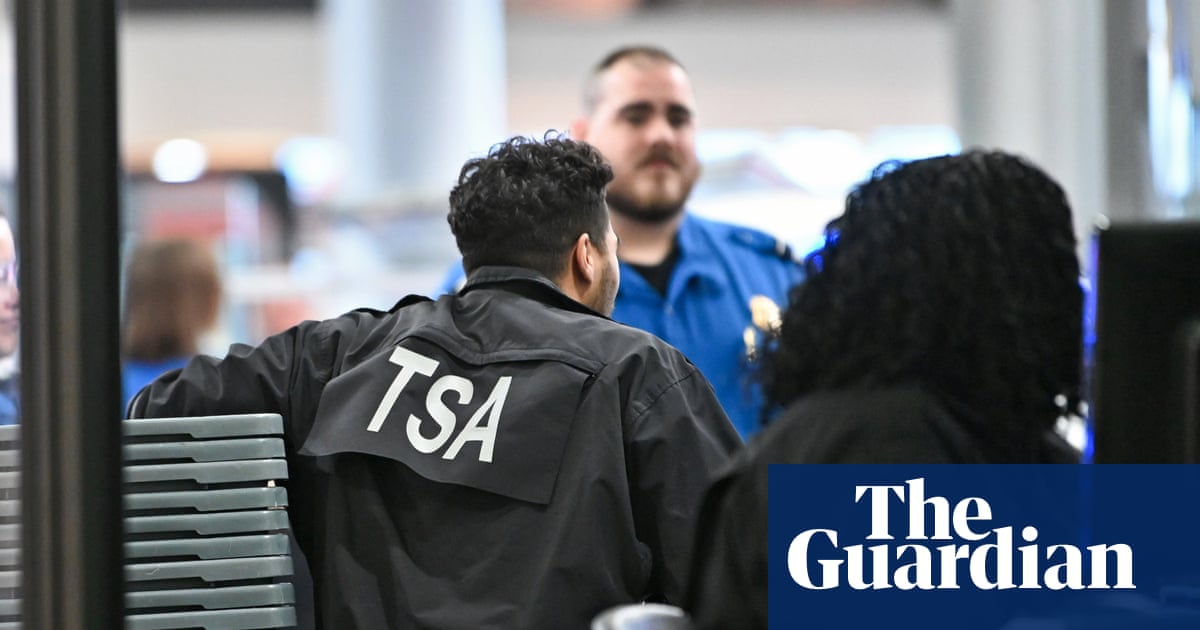
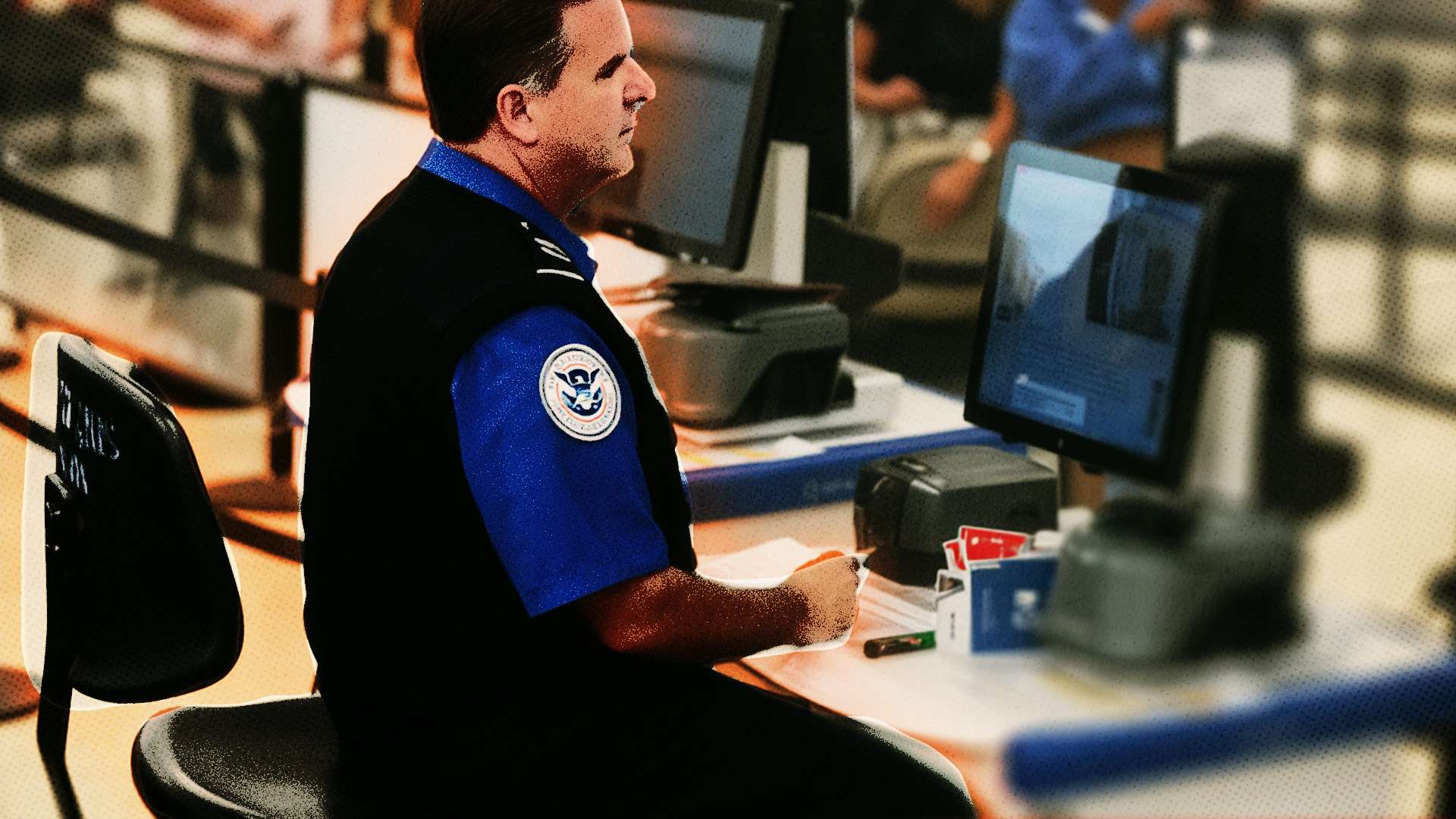
Union officials have launched a campaign to allow airport security staff to sit once more after the Trump administration unilaterally removed all the chairs for Transportation Security Administration (TSA) staff at checkpoints.
asserted
administration → launch → checkpoints
“People are pissed,” said Johnny Jones, secretary-treasurer of American Federation of Government Employees (AFGE) TSA council 100 and president of AFGE local 1040, which represents TSA workers in Dallas-Fort Worth.
asserted
which → say → Worth
TSA officials ordered that chairs be removed from travel document check stations on September 25, arguing “maintaining a standing posture helps reinforce professionalism, attentiveness and active engagement with passengers” and that the policy change “reinforces both our security posture and our commitment to hospitality”.
asserted
change → order → hospitality
Jones said his members had been flooded with calls and messages about the agency removing chairs.
asserted
agency → say → chairs
“People are calling, members are mad, employees are upset because they literally started their day, everything was normal, and by halfway through their shift, they’re (TSA) taking all the chairs out and replacing them with inadequate mats,” said Jones.
asserted
Jones → call → mats
“The amount of phone calls I received is almost the same as if everybody got fired all at once, almost similar to when we have government shutdowns.”
asserted
we → receive → shutdowns
“Our officers screen millions of people a day and they do it right, sitting or standing,” said Hydrick Thomas, president of AFGE TSA council 100, in a statement.
asserted
Thomas → screen → statement
“Nobody who works a checkpoint asked for this.
asserted
who → work → this
Nobody who flies asked for this.”
asserted
who → fly → this
Jones noted the TSA checkpoint podiums are one of two places where TSA officers can rest their legs while screening passengers.
asserted
officers → note → passengers
Chairs were not removed from x-ray machines because the manufacturers recommend sitting while operating the machines.
asserted
manufacturers → remove → machines
Jones cited the union was not informed on the policy change and it was not negotiated, rather unilaterally implemented by the agency, and its unclear where it leaves TSA employees who require light duty accommodations.
uncertain
who → cite → accommodations
Following the policy change, TSA workers were also required to sign a pledge that promises to support “the well-being and morale of our colleagues,” according to the union.
uncertain
that → follow → union
“They didn’t notify the union at all, obviously, nor the employees.
asserted
They → notify → union
They decided it would be a great idea to make their employees upset,” said Jones.
asserted
Jones → decide → ?
He said he is unsure what is being done with the chairs in airports around the US.
asserted
what → say → US
Jones explained the policy worsens the working conditions of TSA officers who no longer have the option of taking time off of their feet, and noted that border patrol officers and customs officers are still using chairs while screening travel documents.
US Customs and Border Patrol said it has not adopted this policy.
asserted
it → explain → policy
“A lot of people don’t have adequate footwear to need to stand up for that long,” Jones said.
asserted
Jones → have → long
“The agency didn’t allow us to bargain any of these changes.
asserted
us → allow → changes
They just implemented them.
asserted
They → implement → them
It’s very demoralizing, upsetting that the agency would do this to transportation security officers.”
asserted
agency → ’ → officers
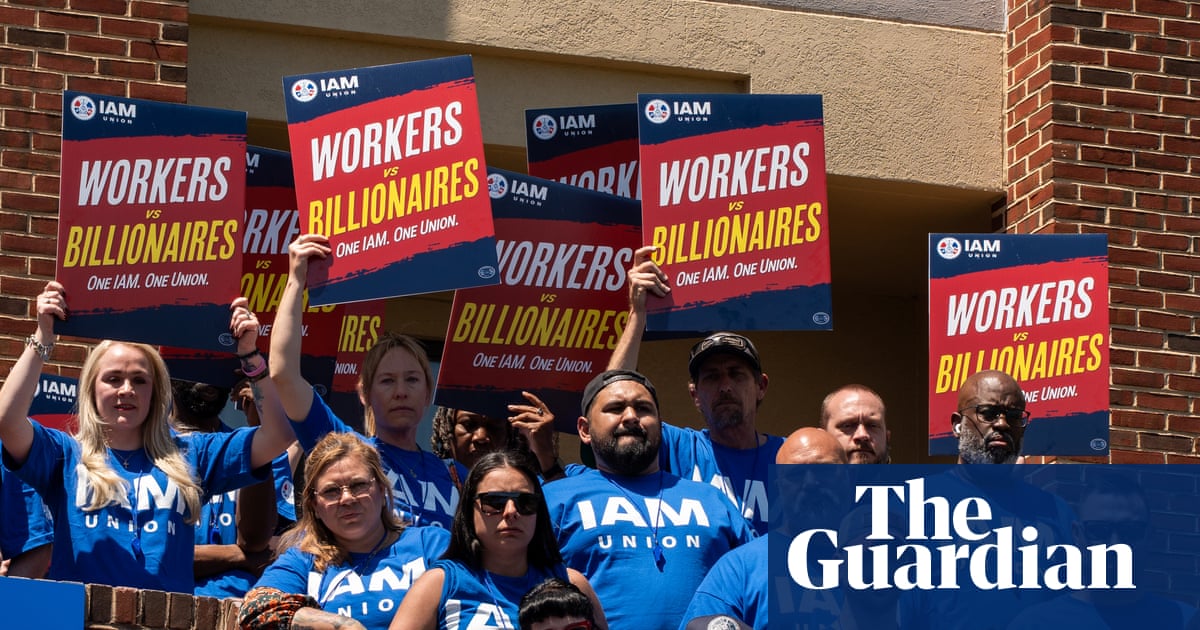
AFGE, the largest union representing federal workers and representing TSA employees, launched a letter-writing campaign calling on the public to tell TSA to “restore the chairs”.
asserted
AFGE → represent → chairs
Union leaders criticized the policy change, TSA’s justification for it, and the agency requiring workers sign a morality pledge the same week the policy was unilaterally implemented.
asserted
policy → criticize → pledge
“Nobody who works a checkpoint asked for this.
asserted
who → work → this
Nobody who flies asked for this,” said Thomas in a statement.
asserted
Thomas → fly → statement
“If TSA leadership truly believes standing makes people better at their jobs, I look forward to watching every manager in the building prove it for eight hours straight.
asserted
manager → believe → hours
We will bring the pledge.
asserted
We → bring → pledge
They can bring their own chair, if they are allowed one.”
asserted
they → bring → one
The policy change is just the latest issue to impact workers at TSA under the Trump administration, who are also currently facing possible pay freezes and significant increases to their health insurance premium costs.
asserted
who → impact → costs
Under the Trump administration, the Department of Homeland Security has attempted twice to cancel the collective bargaining agreement between the agency and TSA unions, with a judge ruling in January to reinstate the contract, ruling the agency’s attempt to cancel it violated a court injunction.
asserted
attempt → attempt → injunction
TSA workers also continued working during two government shutdowns without pay since Trump began his second presidential term, which included a government shutdown from 1 October to 12 November 2025, followed by a partial government shutdown that impacted TSA workers for 76 days from February to April this year.
asserted
that → continue → April
The Trump administration has also been expanding privatization of work done by TSA workers to private contractors through the TSA Gold+ program; however, following criticism of the plan, Tampa airport abandoned its plan to join the program.
asserted
airport → expand → program
TSA did not respond to multiple requests for comment on the policy change and union’s criticisms of the policy and morale pledge.
asserted
TSA → respond → policy
TSA still requires a chair must be available upon request for travelers.
asserted
chair → require → travelers
“This welcome change reinforces both our security posture and our commitment to hospitality by having these officers on their feet and alert,” a TSA spokesperson said in a statement to ABC News on the policy change, but did not cite why the agency did not negotiate the change with the union.
“All officers must meet fitness for duty requirements to be capable of performing their vital national security function while simultaneously creating a welcoming and professional environment for travelers.”
asserted
officers → reinforce → travelers
 The Aporia