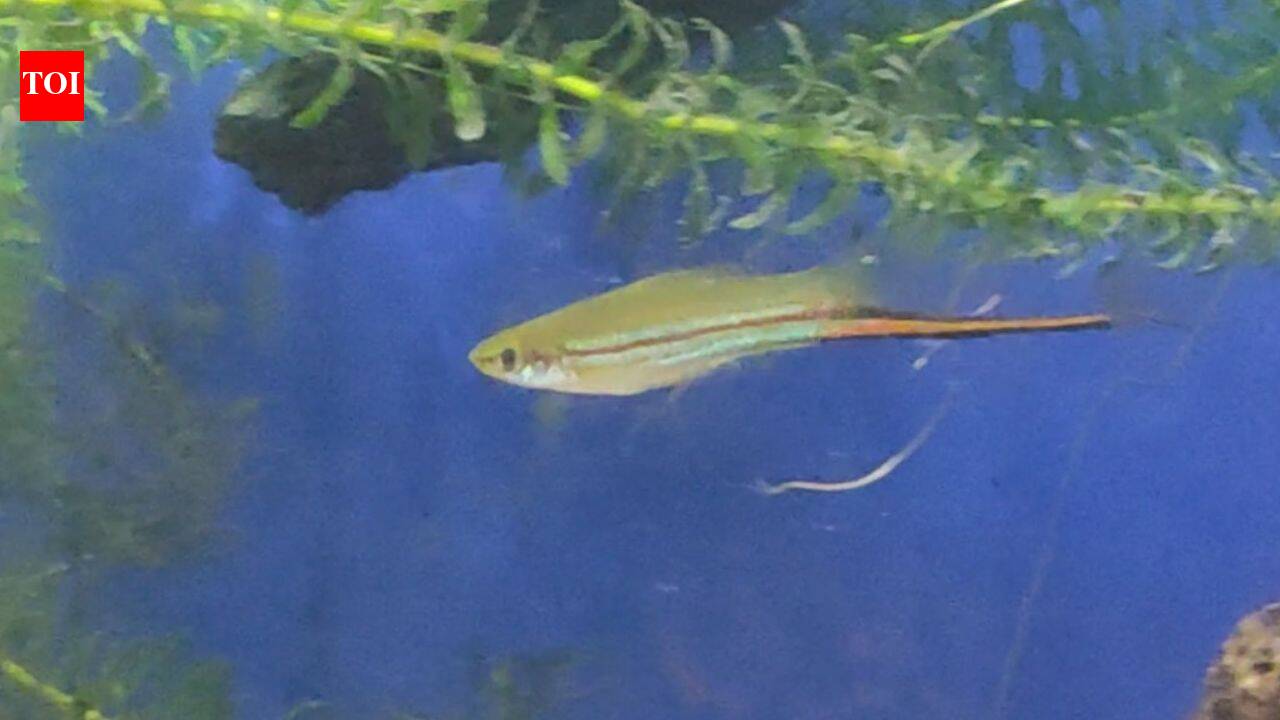
University of Exeter scientists conducted an experiment using green swordtail fish to study mate selection over nine generations. Individual male and female fish were placed in tanks with virtual images of potential mates on screens, allowing them to choose their preferred partner based on time spent near the image. Over successive generations, males consistently chose larger females, leading to a 24% increase in average body size by the ninth generation. Female preferences were more varied but included traits like longer tails and brighter colors. This digital approach helped track evolving mate preferences across multiple generations.
Written locally by qwen2.5:14b on 2026-10-10,
using this article's own text rather than the other coverage of the
same event (that is the story summary below).
Story summary
Scientists from the University of Exeter in Cornwall allowed green swordtail fish to choose their mates through a digital dating simulation for nine generations. The experiment involved placing individual fish in tanks with screens displaying virtual partners, enabling researchers to observe which potential mates the fish preferred over time. Males consistently chose larger females, while female preferences were more varied, including an inclination towards longer tails and brighter colors.
Using genetic algorithms based on the fish's choices, the scientists created new virtual fish for subsequent generations, tracking mate preference evolution through 11 female and 12 male subjects individually over three-minute intervals. Fish spent time in zones around each virtual partner; if they lingered near one image longer than the other, that virtual fish was deemed preferred. This method allowed researchers to study how mating preferences are passed down across generations without the limitations of traditional mate-choice experiments.
Written for “Fish Mate Selection Experiment” on 2026-10-10,
grounded in this article and the 0 other(s) covering the same event.
Green swordtail fish have taken part in a digital dating game to help scientists understand how animals choose their mates.
asserted
animals → take → mates
Researchers from the University of Exeter placed individual fish in tanks with screens showing virtual partners.
asserted
Researchers → place → partners
The fish could then spend time near the partner they preferred.
uncertain
they → spend → partner
Those choices were used to create new virtual fish for the next generation, allowing the researchers to track preferences across nine generations.
asserted
researchers → use → generations
Males repeatedly chose larger females, while females showed more varied preferences, including longer tails and brighter colours.
asserted
females → choose → tails
According to the University of Exeter, they used genetic algorithms to create new virtual partners based on the fish’s choices.
uncertain
they → accord → choices
How did researchers track fish preferences across generations
University of Exeter scientists tested 11 females and 12 males individually in tanks with a moving image of a possible mate displayed at either side.
asserted
scientists → track → side
Each fish could swim freely for three minutes while researchers observed its movement.
uncertain
researchers → swim → movement
The tank was divided into three zones: a neutral centre and an area near each virtual mate.
asserted
tank → divide → mate
If a fish spent longer near one option, that virtual mate was declared the winner.
asserted
mate → spend → option
Two new virtual fish were then created using the winning mate’s characteristics and those of another randomly selected winner.
asserted
fish → create → winner
The process was repeated across nine generations.
asserted
process → repeat → generations
The experiment allowed researchers to see which traits became more common as fish selected their preferred partners, creating a digital version of selection.
asserted
fish → allow → selection
Male swordtails consistently chose larger females
Male green swordtails showed a consistent preference for larger females throughout the experiment.
asserted
swordtails → choose → experiment
As this choice was repeated across generations, the virtual female fish became larger.
asserted
fish → repeat → generations
The study notes that this preference probably reflects the fact that larger females can produce more offspring.
asserted
females → note → offspring
Different females favoured different traits in potential mates, including longer tails and brighter colours.
asserted
females → favour → tails
One female increasingly chose mates that looked more like females, although the reason for this preference remains unclear.
uncertain
reason → choose → preference
Digital fish allowed researchers to track changing mate preferences
The experiment used digital fish rather than real animals as potential mates in the trials.
asserted
experiment → allow → trials
Genetic algorithms created new sets of virtual fish based on the characteristics selected by the participants.
asserted
algorithms → create → participants
This gave the researchers a way to let the fish refine their preferences over successive generations.
asserted
fish → give → generations
Kathryn Bullough from the Centre for Ecology and Conservation at Exeter’s Penryn Campus in Cornwall said, “Studying mate choices in animals is difficult because experiments can only present animals with a limited range of potential mates”.
asserted
experiments → say → mates
The new approach allowed fish to design their ideal partner by repeatedly selecting from newly generated options.
asserted
fish → allow → options
The researchers could then track how preferences changed as generations progressed.
uncertain
generations → track → ?
Why green swordtails were chosen for the dating experiment
Green swordtails are native to Central America and are named for the distinctive sword-like tail found on males.
asserted
swordtails → choose → males
The species was considered suitable for the experiment because the fish respond to videos of other fish and provide no parental care for their young.
asserted
fish → consider → young
Dr Laura Kelley said this makes their mate choice relatively straightforward, because the fish are primarily looking for good genes to pass to their offspring.
asserted
fish → say → offspring
The researchers said a similar study using real fish would take years.
asserted
study → say → years
Their digital method provides a tool for examining how wild animals choose mates while allowing potential partners and their traits to change through successive generations.
asserted
partners → provide → generations
 The Aporia