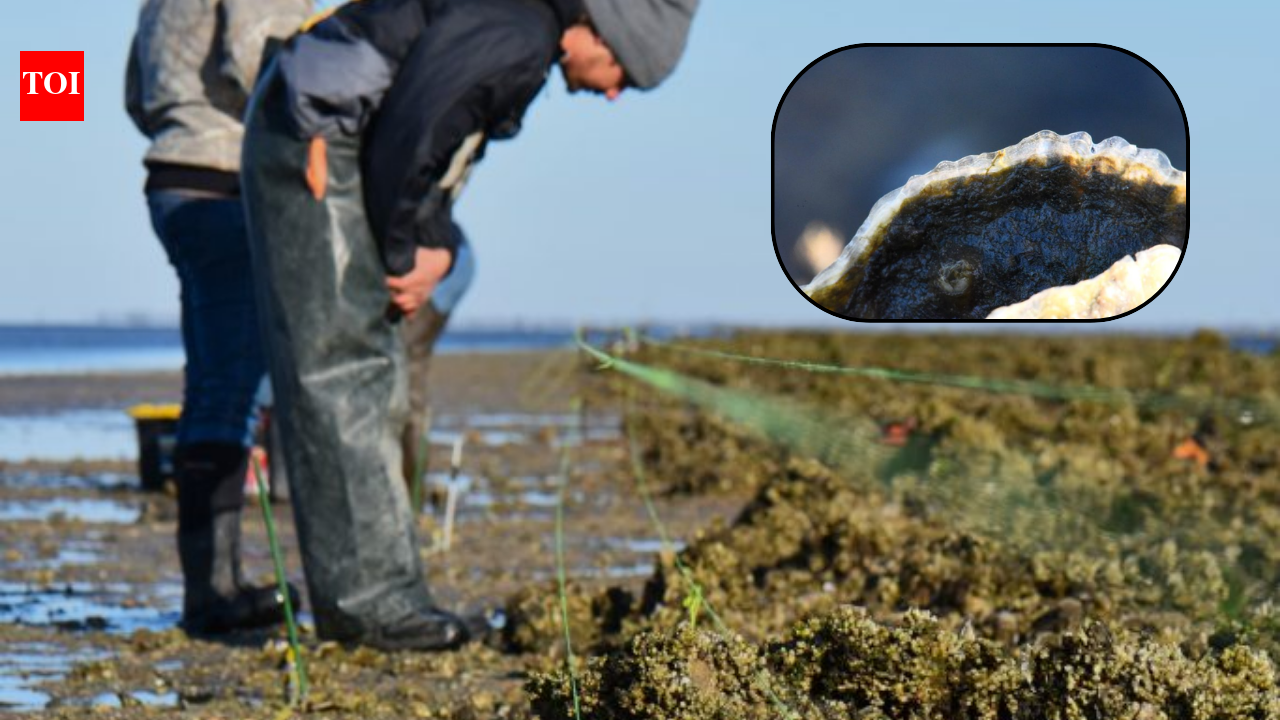
Florida’s Lone Cabbage Reef, once a productive oyster habitat that had deteriorated into a sandbar, began recovering after researchers and local oyster harvesters rebuilt it with dolomite limestone in 2018.
asserted
researchers → deteriorate → 2018
According to the University of Florida’s Institute of Food and Agricultural Sciences (UF/IFAS), the restoration created a suitable surface for oyster larvae to settle and grow.
uncertain
larvae → accord → surface
A research
study published in Marine and Coastal Fisheries subsequently documented the scale of that recovery, with live-oyster density at fixed restored offshore stations rising from near zero to 91 per square metre within six months and reaching 244 by the fifth year.
asserted
study → publish → year
The findings show how rebuilding lost reef structure can help revive a damaged marine ecosystem, although restoration alone cannot reverse every cause of oyster decline.
asserted
restoration → show → decline
How Florida’s oyster reef deteriorated
Lone Cabbage Reef lies near the mouth of the East Pass of the Suwannee River in Suwannee Sound, along Florida’s Gulf Coast.
asserted
Reef → deteriorate → Coast
Historically, it supported oyster populations, provided habitat for fish and wildlife, and helped reduce wave action along the shoreline.
asserted
it → support → shoreline
Over roughly three decades, however, oyster numbers declined until the once-thriving reef collapsed and became a sandbar.
asserted
reef → decline → decades
The loss mattered beyond the oysters themselves.
asserted
loss → matter → oysters
Healthy oyster reefs provide habitat for other marine life, support fisheries and help protect coastal areas from waves.
asserted
reefs → provide → waves
Researchers spent more than a decade investigating the problem and testing possible restoration methods.
asserted
Researchers → spend → methods
Field assessments and smaller experiments conducted between 2010 and 2017 suggested that the reef’s recovery was being limited by the lack of suitable hard surfaces, rather than a shortage of oyster larvae.
uncertain
recovery → conduct → larvae
That distinction shaped the restoration strategy: instead of relying on oysters to return to the degraded seabed on their own, the project rebuilt the physical structure they needed to settle and grow.
asserted
they → shape → structure
Why researchers chose dolomite limestone
The large-scale restoration was completed in the summer of 2018 with support from the National Fish and Wildlife Foundation.
asserted
restoration → choose → Foundation
The project brought together University of Florida researchers, local contractors, quarry operators and members of the Cedar Key Oystermen’s Association.
asserted
project → bring → Association
The team placed locally sourced dolomite limestone across the footprint of the degraded reef.
asserted
team → place → reef
Rocks measuring between six and 36 inches were used to recreate the uneven structure of a natural oyster reef.
asserted
Rocks → measure → reef
The restored surface was also built to an elevation of about 15 to 18 inches, similar to nearby healthy reefs.
asserted
surface → restore → reefs
This design was important because oyster larvae, known as spat, need a firm surface on which to attach and grow.
asserted
larvae → know → which
The gaps between rocks also provided places for young oysters to settle.
asserted
oysters → provide → places
The approach produced early results.
asserted
approach → produce → results
According to UF/IFAS, oyster larvae appeared within a few months of construction, and monitoring showed that the restored reef’s oyster population increased annually during the five years following restoration.
uncertain
population → accord → restoration
Oyster density increased over five years
asserted
density → increase → years
The research paper, Restoration is a partial but not complete solution for long-term declines in oyster populations: A case history from the northeastern Gulf of America, examined the reef’s recovery through repeated monitoring and comparisons between restored and unrestored areas.
asserted
Restoration → examine → areas
At four fixed restored offshore monitoring stations, mean live-oyster density increased from near zero to 91 oysters per square metre within six months.
asserted
density → fix → months
By the fifth year, it had reached 244 oysters per square metre.
asserted
it → reach → metre
The study also examined the wider reef landscape.
asserted
study → examine → landscape
Across restored offshore sites and post-restoration monitoring periods, average oyster density was approximately 83 oysters per square metre.
asserted
density → restore → metre
Model-based estimates for restored offshore reefs reached 218 oysters per square metre during the final sampling period.
asserted
estimates → base → period
These figures describe different measurements: the 244 figure comes from fixed monitoring stations, while the 218 figure represents a model-based estimate at the broader landscape scale.
asserted
figure → describe → scale
Unrestored reefs did not show the same consistent recovery.
asserted
reefs → show → recovery
Depending on their distance from shore, oyster densities at these sites either remained broadly stable or declined during the same period.
asserted
densities → depend → period
The researchers concluded that restoring the underlying reef structure helped re-establish the conditions oysters needed to survive and grow.
asserted
oysters → conclude → conditions
Fishing activity and river discharge also mattered to the wider ecosystem, but their associations with oyster density were weaker and less consistent once restoration was considered.
asserted
restoration → matter → density
The recovery had practical implications for the local fishing community.
asserted
recovery → have → community
UF/IFAS reported that oyster sizes at restored and unrestored sites had become similar within three years of the work.
asserted
sizes → report → work
In the portion of the restored reef open to commercial harvesting, local oyster harvesters began finding legally sized oysters on and near the reef in 2022.
asserted
harvesters → restore → 2022
Estimates indicated that the work generated $5.08 million in total industry output, including $3.02 million in regional value added, and supported 44 full-time and part-time jobs with $1.01 million in labour income.
asserted
work → indicate → income
However, the results do not mean that rebuilding one reef can solve Florida’s wider oyster losses.
asserted
rebuilding → mean → losses
UF/IFAS estimates that the Lone Cabbage restoration replaced only about 3% to 4% of the oyster reef area lost across the Big Bend region.
asserted
restoration → estimate → region
Monitoring also found no evidence that the restoration changed salinity patterns in Suwannee Sound, based on measurements collected at six locations over more than five years.
asserted
restoration → find → years
…and 6 more, not listed.
 The Aporia