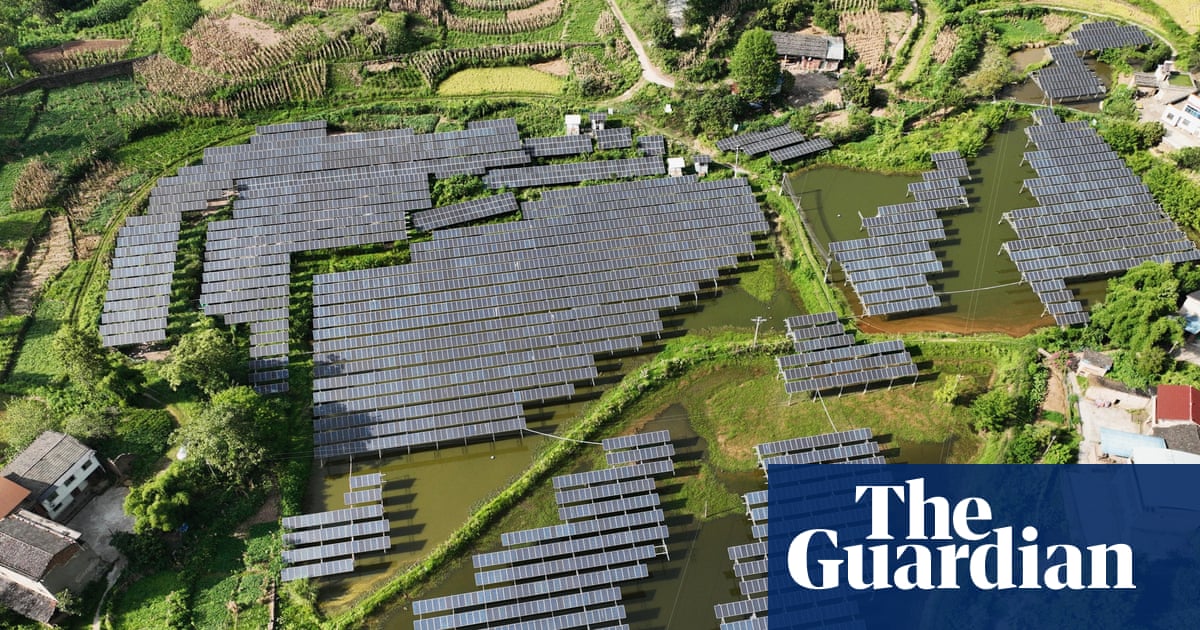
China touts itself as being the world leader in manufacturing climate-change-related products and the processing of minerals related thereto.
asserted
China → tout → minerals
While true, this hardly tells the whole story.
asserted
this → tell → story
China manufactured about 85% of all solar panels globally in 2025, with no other country (exclusive of possibly Vietnam, where solar panel manufacturing data is uncertain) producing more than around 2.8%.
uncertain
data → manufacture → %
Both transition minerals, and its subset, rare earth minerals, are used in the manufacture of climate change-related products.
asserted
minerals → use → products
China in 2025 controlled about 70% to 90% of the worldwide transition mineral processing capacity.
asserted
China → control → capacity
In 2025, with respect to rare earth minerals, China produced roughly 69% of the world’s supply and controlled about 90% of global refined output.
asserted
China → produce → output
To the climate change activists, China’s record on the creation of climate change-related products is admirable.
asserted
record → relate → products
Unfortunately, this is only part of China’s story as it relates to climate change.
asserted
it → relate → change
Also, of China’s more than 10,000 terawatt-hours of power production in 2025, approximately 6,000 hours were derived from fossil fuels, with much of this fossil fuel power being produced by the burning of dirty coal.
asserted
much → derive → coal
While leaning toward the use of much cleaner natural gas as opposed to coal, in 2025, the U.S. came in at roughly 2,500 terawatt-hours of fossil fuel power creation, less than half of China’s output.
asserted
U.S. → lean → output
China accounts for about 35% of the world’s total greenhouse gas emissions annually, making it the planet’s largest emitter.
asserted
it → account → emissions
Meanwhile, the U.S., the globe’s second-largest emitter of greenhouse gases, comes in at around 12% annually, considerably less than half of China’s output.
asserted
U.S. → come → output
China’s leading the world on emitting greenhouse gases cannot please the climate change crusaders, yet you hear little from the climate change zealots when it comes to this fact.
asserted
it → lead → fact
Meanwhile, the climate change alarmists continue to harass the U.S. for not taking sufficient action to address their perceived climate change crisis.
asserted
alarmists → continue → crisis
It is entirely possible, if not probable, that the climate change crowd is being directly or indirectly paid or at least supported in some manner by Beijing to carry China’s water on the climate change issue.
asserted
crowd → pay → issue
Due to limited fossil fuel reserves of its own that fall short of the country’s needs, and not for any benevolent climate-change-related reason, China is forced to lean on the production of renewable energy to power its dream of displacing the U.S. as the world’s leading superpower.
asserted
China → fall → superpower
On the other hand, the U.S., which is among the global leaders in fossil fuel reserves, has prudently, under President Donald Trump, reduced its emphasis on costly renewable energy and turned to economical fossil fuels to support America’s economy in its quest to maintain its position as the world’s preeminent superpower.
asserted
which → reduce → superpower
Faced with this fossil fuel disadvantage, it is easy to see how China’s propaganda machine might want to support those promoting the position that climate change is real, with such action providing the dual benefit of supporting China’s sales of climate change-related products globally, while hurting the U.S.
Also, China is locked in a battle with the U.S. for worldwide artificial intelligence supremacy.
uncertain
China → face → supremacy
Recently in the U.S., a considerable amount of conjectural negative information has been disseminated about the detrimental impact, both environmentally, including with respect to climate change, and economically, of data centers crucial to the artificial intelligence race.
asserted
amount → disseminate → race
Many believe that this unfavorable information with respect to data centers is false or an exaggeration.
asserted
information → believe → centers
Regardless, it is easy to see how a disinformation campaign by Beijing with respect to the theoretically harmful effects of data centers, including their supposed adverse impact on climate change, could delay or prevent the construction of such critical facilities in the U.S. and provide a benefit to China in this competition as it continues to build its own data centers.
uncertain
it → see → centers
Unfortunately, due to a loophole in U.S. law with respect to donations to U.S. tax-exempt, nonprofit 501(c)(4) “social welfare” organizations, funds can easily and without identification be funneled into America to support disinformation campaigns by China, detrimental to our country.
asserted
funds → funnel → country
The U.S. must take action to expose (and combat) any climate change-driven propaganda campaigns and other disinformation operations waged by China that are aimed at hurting America.
asserted
that → take → America
 The Aporia