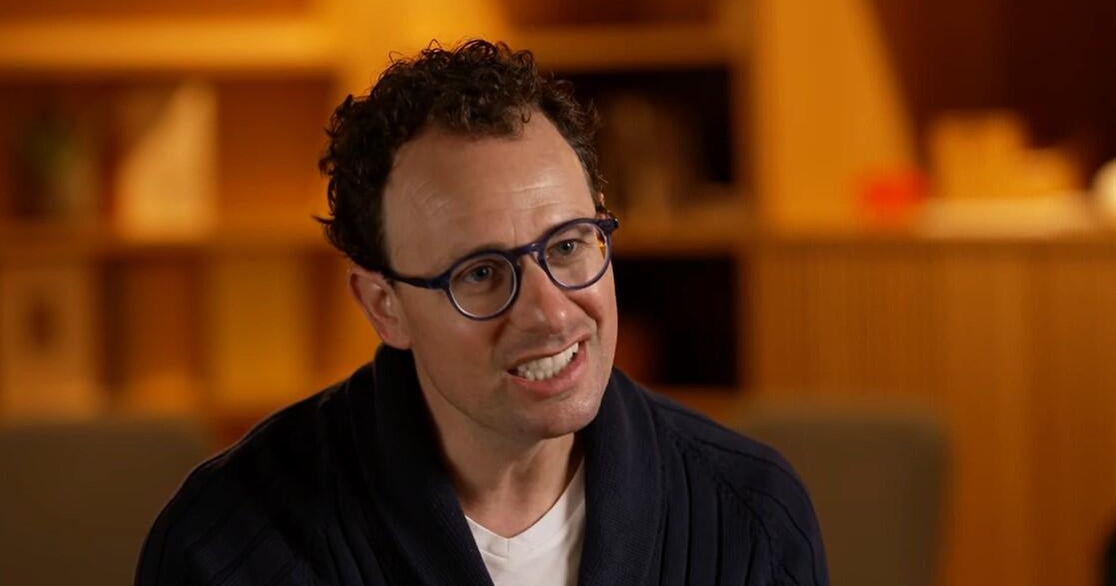
For over 25 years, I have studied exceptional leaders of innovation, individuals from a range of companies and countries, from the Cleveland Clinic Abu Dhabi to Pixar.
asserted
I → study → Pixar
For hundreds of hours, I have observed leaders who have figured out how to get their colleagues to adopt emerging technologies to innovate and change the game for their customers.
asserted
colleagues → observe → customers
What I have learned from doing this work is this: leading AI innovation is not about having a vision and getting others to follow you to the future; rather, it is about inviting others to co-create the future with you.
asserted
it → learn → you
While virtually every company is scrambling to adopt new AI practices, the leaders who have made the most progress are those who believe the value of AI will come from using the technology to do work people could never do themselves, and the least value will come from simply swapping machines for people.
uncertain
value → scramble → people
Their goal is to pursue solutions that augment human ingenuity.
asserted
that → pursue → ingenuity
And they appreciate that their toughest challenge is about people, not technology.
asserted
challenge → appreciate → people
These leaders know that we all need help navigating uncertainty, and they encourage others to try out new ways of working despite real intellectual and emotional demands.
asserted
they → know → demands
Innovation is rarely the feat of a solo genius but rather the fruit of co-creation, which requires collaboration, experimentation, and learning from people with differing expertise and perspectives.
asserted
which → require → expertise
Collaboration entails weaving together diversity of thought through constructive conflict to create a marketplace of ideas.
asserted
Collaboration → entail → ideas
Experimentation involves actively testing, pivoting, and refining.
asserted
Experimentation → involve → ?
And learning happens when individuals and collectives reflect on what they have gleaned from those experiments—and then adapt their course of action.
asserted
they → happen → action
To generate and scale innovative AI solutions, leaders rely on a repertoire of interrelated roles, what we refer to as the “ABCs” of leadership: architects, bridgers, and catalysts.
asserted
we → generate → leadership
Architects know they cannot mandate innovation; they foster the culture and capabilities that enable co-creation.
asserted
that → know → creation
These leaders start by raising their organization’s collective aspirations through a shared sense of purpose and values.
asserted
leaders → start → purpose
By re-shaping the social environment of their organizations, these leaders encourage their colleagues to work through the inevitable conflicts of collaborating with others and the fear of failure.
asserted
leaders → re → failure
They reward thoughtful risk-taking, treat intelligent failures as learning opportunities, and provide people the tools, data, and perhaps most importantly, the permission to try.
asserted
They → reward → tools
Bridgers work at the boundaries of their enterprises, building trust-based partnerships with those outside their walls.
asserted
Bridgers → work → walls
No company, no matter how well-resourced, has all the talent and tools they need for innovation given the unprecedented pace at which technology is advancing.
asserted
technology → resource → which
With AI, I hear that there is a shortage of individuals who know how to translate and work across technology and business.
asserted
who → hear → technology
Technical experts who are developing AI solutions typically do not have the contextual intelligence about the realities of business and what customers want, while the businesspeople do not appreciate the opportunities and risks of implementing the technology.
asserted
businesspeople → develop → technology
Catalysts have to mobilize stakeholders across whole industries, sectors, or nations to address the most audacious innovation challenges.
asserted
Catalysts → have → challenges
Catalysts are also essential if we are to establish the global norms and guardrails that keep AI aligned with human interests.
asserted
that → establish → interests
They can bring in overlooked voices, surface second-order effects, and help mitigate AI risks and share the benefits of AI more equitably.
asserted
They → bring → AI
Many leaders must be prepared to reinvent themselves if they hope not only to generate AI innovative solutions but actually turn them into reality—launch or commercialize them so they have the desired impact.
asserted
they → prepare → impact
They must give up being the smartest person in the room and get comfortable collaborating, experimenting, and learning with “unusual suspects.”
Even AI-first executives admit we do not know where AI will take us nor how we are going to get there.
asserted
we → give → us
The winners of the AI race will be the companies whose leaders accept that their task is wayfinding.
asserted
task → accept → race
Leaders must enable their colleagues to have the courage and curiosity of explorers who once crossed the uncharted oceans without clarity about their destination.
asserted
who → enable → destination
Fortunately, we have access to more sophisticated tools than the ancient seafarers.
asserted
we → have → seafarers
For AI to make a positive difference for customers and society, it will take individuals at all levels of our organizations to be willing and able to join the journey.
asserted
it → make → journey
 The Aporia