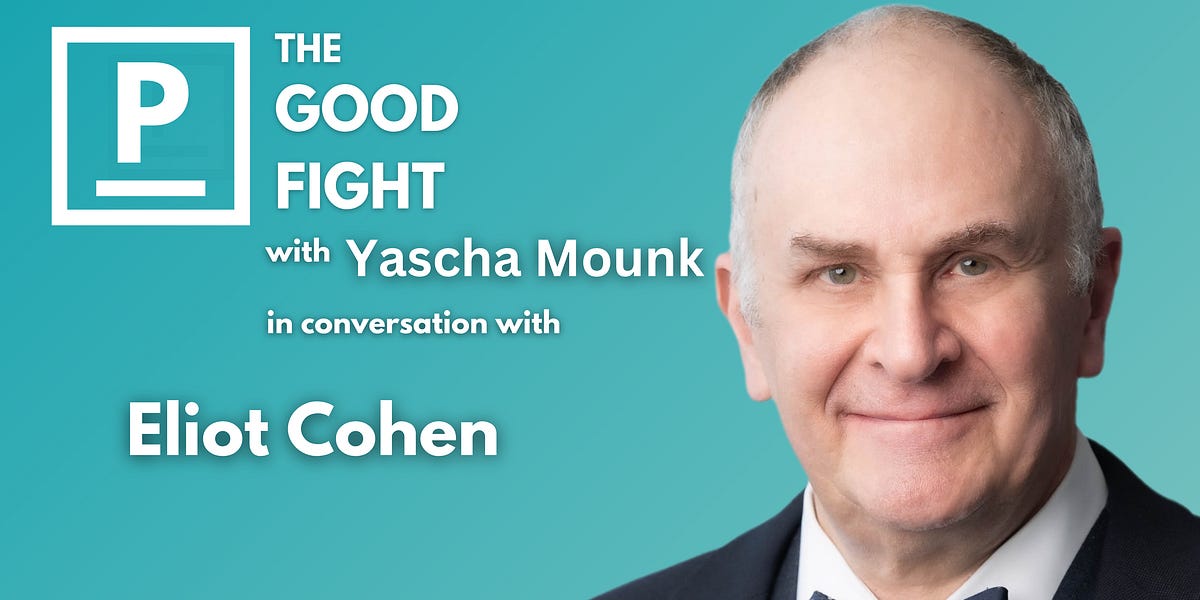
Sarah Longwell is publisher of The Bulwark, host of The Focus Group podcast, and author of How to Eat an Elephant: One Voter at a Time.
asserted
Longwell → eat → Time
In this week’s conversation, Yascha Mounk and Sarah Longwell discuss why Donald Trump has dominated American politics for a decade, where Kamala Harris went wrong, and how the Democratic Party can win back working-class voters.
asserted
Party → discuss → voters
This transcript has been condensed and lightly edited for clarity.
asserted
transcript → condense → clarity
I’m really excited to talk about the book—and how on earth we can defeat Donald Trump and the broader movement he stands for.
asserted
he → ’m → Trump
Do you want to give us your elevator pitch?
asserted
you → want → pitch
If I had to give you a thesis, it would be that Donald Trump is a unique figure in our politics, that there aren’t a lot of other people like him, because of his relationship to America for decades and decades, not just as a television game show host, but as somebody who lived on Page Six, somebody who wrote The Art of the Deal, someone who’s been on all of these luminaries and talk shows.
asserted
who → have → luminaries
Obviously, he had strong relationships with every sort of big radio personality, and so he was omnipresent for the public.
asserted
he → have → public
Sometimes people say, well, we need to run a celebrity like Donald Trump.
asserted
we → say → Trump
And I say, no, celebrities are different.
asserted
celebrities → say → ?
People may be like, I like Brad Pitt or I like The Rock, but they’re playing characters.
uncertain
they → like → characters
Donald Trump has always been who he is, and that has given him this unbelievable natural advantage in the psyche of the American public.
asserted
that → give → public
When I do focus groups with voters, which I do all the time, they say, well, he’s a businessman.
asserted
he → do → which
They don’t even think of him as a failed businessman, they think of him as a rich person who has been a developer, who’s run television shows, owned a football team, and so on.
asserted
who → think → team
There aren’t a lot of people who can compete with that in public life and translate that into political power, which he has.
asserted
he → be → which
The Republican Party then totally abdicated to Donald Trump.
asserted
Party → abdicate → Trump
They stopped having ideas, they stopped having candidates that had their own sort of pitch for who they are.
asserted
they → stop → pitch
Now it’s a cult of personality, which means that as he is on his way out, there is a unique opportunity in this moment to put him in the rearview mirror and not let it linger, if Democrats or the broader pro-democracy coalition are able to rally together and dominate the Republicans going into the next three or four years.
asserted
Democrats → ’ → years
Let’s get a little bit more specific about some of the ways in which Democrats have failed to do that.
asserted
Democrats → let → that
You have an interesting story of moderating an event with Kamala Harris and Liz Cheney, and you argue that part of the problem is that voters didn’t really know Kamala Harris.
asserted
voters → have → Harris
It speaks to what you’re saying about Brad Pitt being popular, but running Brad Pitt is not going to work because people don’t know Brad Pitt in the way they knew Donald Trump.
asserted
they → speak → Trump
Why is it that voters didn’t know who Kamala Harris was?
asserted
Harris → know → ?
And was that a personal failing of Kamala Harris as a political candidate, or is that a broader symptom of how Democrats are failing to respond to this political, technological, ideological moment?
asserted
Democrats → fail → moment
Longwell: I don’t want to pick on Kamala Harris too much, but I do want to say that Kamala Harris absolutely should not run for president again.
asserted
Harris → want → president
I’m clear about that in the book.
asserted
I → ’m → book
That’s not because I don’t like Kamala Harris.
asserted
I → ’ → Harris
I actually think Kamala Harris very much outperformed expectations when she ran.
asserted
she → think → expectations
I think she was done dirty by Joe Biden and his team, who never did anything to elevate her and then wouldn’t let her put any daylight between Biden and herself.
asserted
her → think → Biden
This is just nitpicking but what do you mean, they didn’t let her?
asserted
they → mean → her
I know they tried to bully her, but just fucking pick something you disagree with and say it…
asserted
you → know → it
Well, you’re making a great point.
asserted
you → make → point
But that’s the failure.
asserted
that → ’ → ?
Part of the failing is that Kamala Harris didn’t know who she was in a strong enough way to go out and do that.
asserted
she → know → that
So when Joe Biden’s team says to her, no daylight, kid—what they were saying is, if you start crapping on us, we’re gonna crap on you back.
asserted
we → say → you
That kind of garbage makes me insane because it speaks to the broader disconnect between Joe Biden and Democrats who’ve been telling voters that Donald Trump is an existential threat to democracy, but then don’t act like it.
asserted
Trump → make → it
They let all their petty grievances get in the way of it.
asserted
grievances → let → it
But to your point, after Kamala Harris lost, I went back and listened to all the focus groups again with this hindsight.
asserted
I → lose → hindsight
And the thing that was so clear in there, and I saw it when I was listening in real time, but I don’t know that I heard it as loudly as it was being expressed by the voters, was, I don’t know who she is.
asserted
she → see → voters
I don’t know what she stands for.
asserted
she → know → what
I don’t trust her.
asserted
I → trust → her
I don’t know anything about her.
asserted
I → know → her
…and 281 more, not listed.
 The Aporia