The Midterm Spending Bonanza Is Threatening Democracy Like Never Before

Read the original at Mother Jones ↗
Mother Jones · collected 2026-10-09 · by Mother Jones

Quick Summary

This article discusses the unprecedented amount of money—$1.7 billion so far—injected into U.S. midterm elections, with significant contributions from industries like cryptocurrency and sports betting. The episode of Stress Test podcast features Russ Choma explaining how this influx of cash exacerbates corruption by enabling preferential treatment for donors and their interests, leading to regulatory changes or even control over government agencies. The article highlights concerns about the hidden nature of these financial flows and their impact on voter turnout through negative advertising, while also suggesting that increased public awareness of corruption could lead to political consequences similar to those seen in Hungary under Viktor Orbán.
Written locally by qwen2.5:14b on 2026-10-09, using this article's own text rather than the other coverage of the same event (that is the story summary below).

AI analysis runs on qwen2.5:14b, locally

Story summary

The 2022 midterm elections are seeing unprecedented levels of campaign spending, with $1.7 billion already poured into the election so far. This surge includes significant contributions from emerging industries like crypto and sports betting, which were largely absent in previous cycles. The trend is raising concerns about transparency as super PACs can hide donor identities, making it difficult to track where money comes from and how it influences elections. Campaign finance reporter Russ Choma notes that there's no sign of this spending slowing down, suggesting a continued acceleration. This new era of campaign financing is perceived as more brazen in its quid pro quo nature, leading to fears about the impact on democracy and government integrity in the United States.

Written for “Midterm Spending Increase” on 2026-10-09, grounded in this article and the 0 other(s) covering the same event.
Why this leaning score
The article's own words the score was based on. Each is quoted verbatim and was checked against the article text before being stored, so you can find it in the original.
Reading Leans strongly left (beta estimate) Confidence high 3 quote(s) discarded as not found in the article
Leaning: leans strongly left for article 69137 (high confidence, 2 verified quotes) · logged 2026-10-09

Signals How these are calculated →

Claims extracted
281
claim-shaped sentences
Uncertain
4%
10 of 281 hedged
Leaning
Leans strongly left
of the writing, not the subject · beta estimate
Correction & hedging signals
95.4
corrections and hedging in what we collected; not a measure of accuracy
Outlets on this story
1
Politics
Narrative spread
1
articles carrying this framing
Analyzed 2026-10-09 · how these are computed

Story

📰 Midterm Spending Increase
Politics · 1 article(s) covering the same event.

How this is being covered How these are calculated →

Article leaning vs. publisher reliability
Source leaning vs. consistency

Compared with similar articles

This article reads leans strongly left and hedges 4% of its claims. Each row says how that neighbour differs.
The Intercept
⚖️ Leans left further right than this 🔴 7% hedged 8 of 109 📰 publisher trust 97
“Article A describes a specific incident involving Susan Collins's committee purchasing unwanted Army vehicles followed by campaign donations, while Article B is a broader commentary on corruption and money in politics.”
Toronto Star
⚖️ leaning not scored 🔴 7% hedged 2 of 28 📰 publisher trust 63
“Article A reports on a specific announcement by a crypto group about supporting certain House members, while Article B discusses broader issues of money in politics and does not focus on the same specific incident.”
The Bulwark
⚖️ Leans left further right than this 🔴 29% hedged 2 of 7
“Article A discusses Trump's specific plan to send payments before the midterms, while Article B is a broader analysis of campaign finance corruption and money in politics under the Trump administration.”
The Bulwark
⚖️ Leans strongly left 🔴 0% hedged 0 of 7
“The articles discuss different topics: one focuses on potential investigations of Trump's corporate allies in 2027, while the other addresses the impact of big money and corruption in politics within the context of campaign finance.”
New York Post
⚖️ Leans strongly right further right than this 🔴 0% hedged 0 of 22 📰 publisher trust 67
“Article A focuses on a specific ad campaign by a Super PAC targeting Kathy Hochul, while Article B discusses broader issues of money in politics and corruption without referencing the specific incident mentioned in Article A.”
The Guardian
⚖️ Leans left further right than this 🔴 5% hedged 3 of 56 📰 publisher trust 60
“The articles discuss different aspects of campaign activities with no overlap in specific events, timing, or context.”
American Caudillo different event · 95%
Persuasion
⚖️ Leans strongly left 🔴 3% hedged 2 of 66
“The articles discuss similar themes of political corruption and misuse of funds but describe different aspects and contexts, not a single identical incident.”
The Sydney Morning Herald
⚖️ leaning not scored 🔴 0% hedged 0 of 9 📰 publisher trust 61
“The articles discuss different aspects of midterm elections and campaign finance, not a single specific event.”
The Guardian
⚖️ Leans left further right than this 🔴 7% hedged 2 of 27 📰 publisher trust 60
“The articles discuss different aspects of the midterm elections, with Article A focusing on the impact of cost of living and Trump's influence, while Article B focuses on campaign finance corruption.”
NBC News
⚖️ Leans right further right than this 🔴 3% hedged 1 of 34 📰 publisher trust 95
“While both articles discuss significant spending in midterm elections, they cover different aspects and timeframes of the overall trend.”

Publisher

Mother Jones · 261 article(s) · 0 correction(s) detected
No corrections detected for this publisher. That may mean careful reporting, or simply that nothing has been checked.

Who wrote this

Mother Jones
5 article(s) here · 1 carrying a prediction
🔮 Might such synergy be happening in the United States?
🔮 In this episode, David and co-host Garrison Hayes are joined by voting rights correspondent Ari Berman to pull apart the biggest stress test facing the midterms: whether the vote will proceed smoothly, or whether Trump will meddle even more.
🔮 In twice-weekly pop-up episodes, David and Garrison will talk to our reporters about the midterms and where you should be paying attention.
🔮 They said they couldn’t because the mill owners had stock in the papers.
2026-09-07 · assertive framing · Labor Day: ‘The March of the Mill Children’
🔮 “We’re going to flip through all these yearbooks and we could find nothing,” says Vesoulis, sitting in one of the library’s study rooms.
2026-09-03 · mixed framing · We Got Max Miller’s Old High School Yearbook
Also by Mother Jones
Nothing else under this byline is closely related to this article, so these are simply their most recent.

Topics

American Hungary Stress Test YouTube the United States

Subjects

Russ PERSON · 4× David PERSON · 3× David Corn PERSON · 3× Garrison Hayes PERSON · 3× American NORP · 2× Russ Choma PERSON · 2× Stress Test ORG · 2× Texas GPE · 2× Tim Murphy PERSON · 2× Trump PERSON · 2×

Narrative

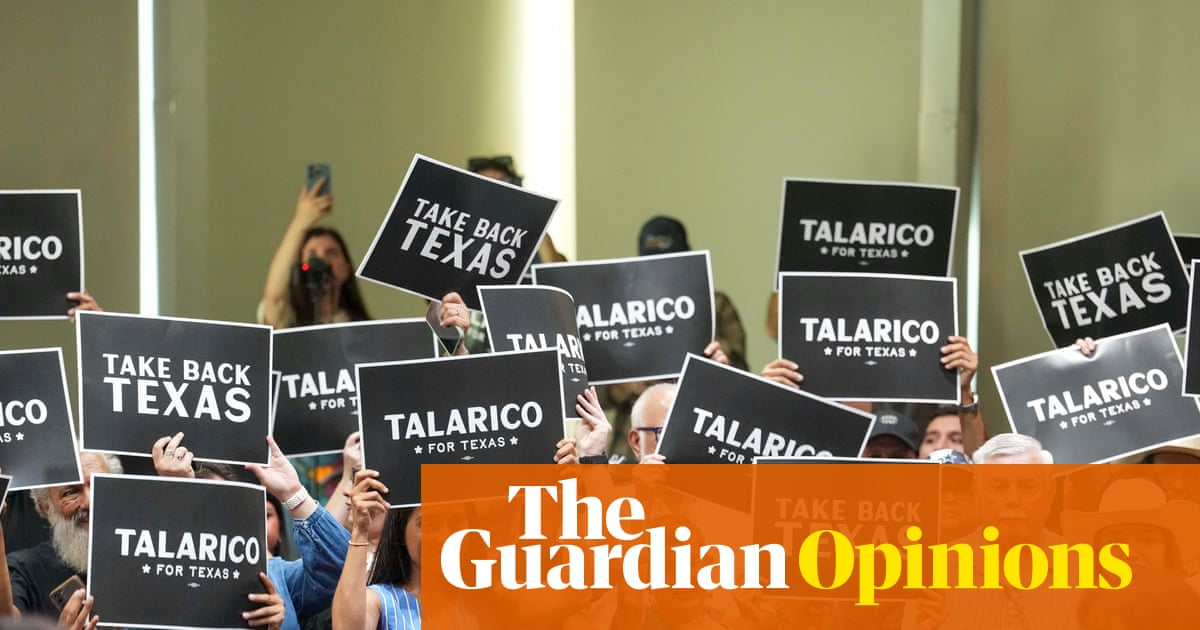
And we should say that the marquee race there, as you see on the picture here, on the video here, is James Talarico, the Democrat, running against Ken Paxton, the Republican, for a Senate seat, which once upon a time it would be almost inconceivable to think that a Democrat would be competitive for this seat.
framing: assertive · carried by 1 article(s) · first seen 2026-10-09
🔮 Might such synergy be happening in the United States?
2026-10-09 · Mother Jones
The Midterm Spending Bonanza Is Threatening Democracy Like Never Before · assertive framing

Claims (281 extracted, 10 hedged)

Big money has long dominated American politics, with wealthy donors, corporations, and special interests dumping tons of cash into presidential and congressional elections. asserted
donors → dominate → elections
But what’s different is that the quid pro quo of campaign money for preferential government treatment is more brazen than ever before and has become part of the cornucopia of corruption running through the Trump administration. asserted
quo → ’ → administration
In this new episode of Stress Test campaign finance reporter Russ Choma joins hosts David Corn and Garrison Hayes to analyze the $1.7 billion that has been poured into the election so far—including hundreds of millions from crypto and sports betting, industries that were barely on the political map in 2020. asserted
that → join → 2020
“There’s no sign of deceleration,” Russ says in the episode. asserted
Russ → ’ → episode
“There’s no sign of slowing down, it’s only acceleration.” asserted
it → ’ → ?
So much of what’s happening is hidden from public scrutiny, because super PACs can obscure donors, and issue ads and targeted turnout operations can go unreported. asserted
ads → happen → donors
It’s like “dark matter in the universe that you can’t see,” David observes. asserted
David → ’ → that
The threat to democracy is real, because donors get to cash in by having the administration align with their deregulatory goals, or, in the case of Elon Musk, can gain control of an agency or decimate whole sections of government. asserted
administration → get → government
“They’re getting more than total access,” Russ explains. asserted
Russ → get → access
“They’re getting inclusion.” asserted
They → get → inclusion
“There have always been a lot of people who believe that the government was corrupt,” Russ says. asserted
Russ → believe → people
“But the problem is that now they’re right.” asserted
they → ’re → ?
It’s a goal. asserted
It → ’ → ?
After all, the most effective thing a campaign can buy, Russ notes, is a negative ad, designed “to make you not vote. asserted
you → buy → ?
Voters are telling pollsters they see more corruption these days, and when that collides with a sour economy, apathy can curdle into anger. asserted
apathy → tell → anger
Might such synergy be happening in the United States? uncertain
synergy → happen → States
That’s all in today’s episode of Stress Test. asserted
That → ’ → Test
And want more on how money is warping American politics? asserted
money → want → politics
Russ Choma covers Trump’s crypto fortune, his financial conflicts, and the cash behind the midterms. asserted
Choma → cover → midterms
This transcript was generated with automated tools and may contain errors. uncertain
transcript → generate → errors
I’m David Corn. asserted
I → ’m → ?
And I’m Garrison Hayes. asserted
I → ’m → ?
How are you doing today? asserted
you → do → ?
It’s great to be back with you. asserted
It → ’ → you
And I hear that when I was gone, you did a great show with Tim Murphy about the backlash to data centers and how that’s become a bipartisan issue during this campaign. asserted
that → hear → campaign
We had a great conversation about how this is a rare bipartisan issue where you’re seeing backlash and pushback and real anger from both Democrats and Republicans and really everyone in between and beyond, especially in the state of Texas. asserted
you → have → Texas
Our colleague Tim Murphy has been out in Texas a few times, and he has another trip upcoming, where he’s been reporting from the ground on the way that these data centers and the backlash to them are really shaping the political atmosphere there. asserted
centers → have → atmosphere
In fact, he told me about how the governor, Greg Abbott, has made this huge 180 kind of turn from being a champion of data centers to being against them. asserted
governor → tell → them
You know, he actually invited, you know, Google. asserted
you → know → Google
They had this big press conference where Google’s spending $40 billion on multiple campuses across the state. asserted
Google → have → state
There are other huge projects out there, and none of those projects are actually coming to an end, even though the governor is talking about a pause or a moratorium on data centers going forward. asserted
governor → be → centers
If you missed that episode, I really encourage you to go back and watch it. asserted
I → miss → it
It’s such an important issue during these midterms. asserted
It → ’ → midterms
You can catch it on our YouTube channel. asserted
You → catch → channel
That’s the Mother Jones YouTube channel. asserted
That → ’ → ?
Make sure you subscribe to our channel so you don’t miss any of the episodes coming up. asserted
you → make → episodes
Okay, listen, today’s gonna be a good show. asserted
today → listen → ?
We’re talking about money in politics, specifically campaign money—in other words, what you can and cannot buy in American politics. asserted
you → talk → politics
And we’re gonna talk about some of the big spenders, some of the big receivers of that money, who wishes they had more money, perhaps, who has more money than they need. asserted
they → go → money
Okay, so that’s an inclusive list. asserted
that → ’ → ?
…and 241 more, not listed.

💬Give feedback
🕘History 🎫Support