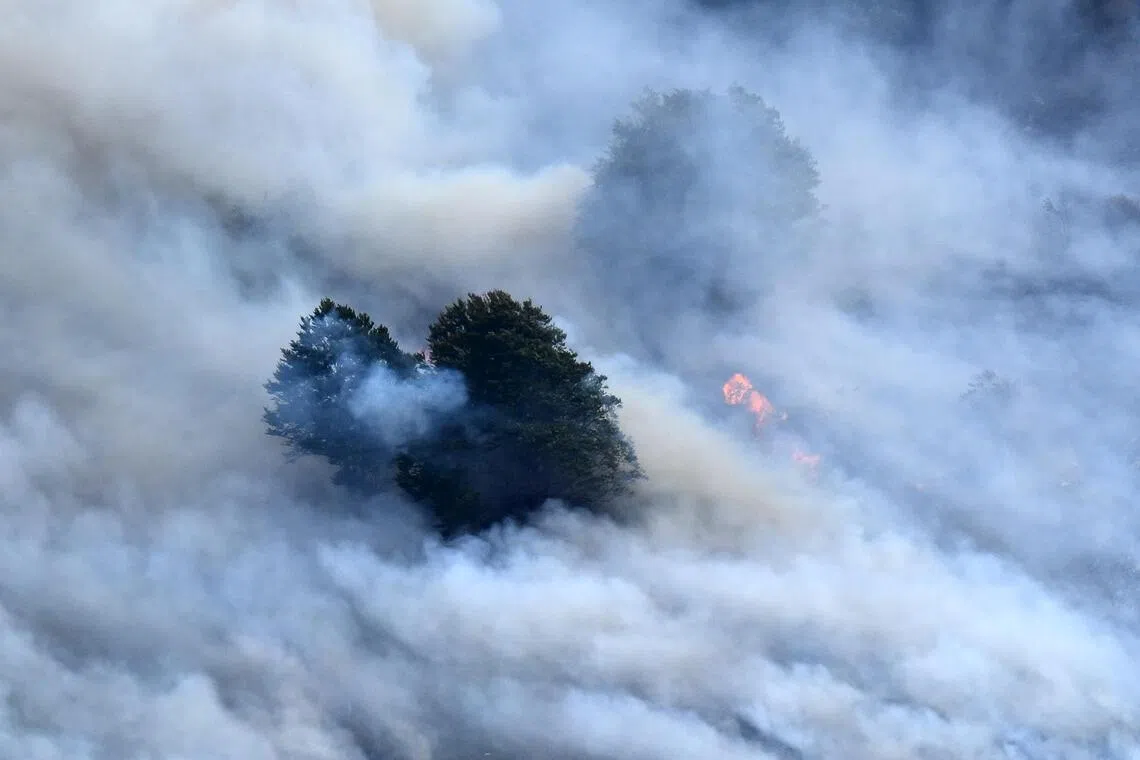
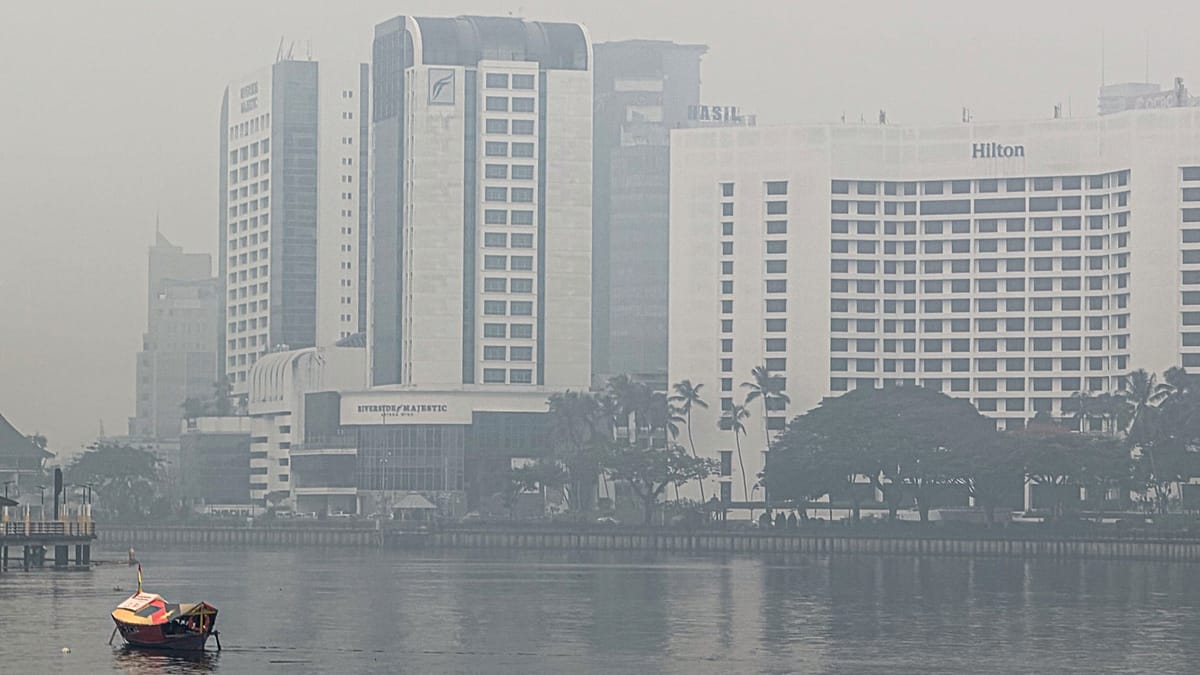
Wildfires and heatwaves, which generate microscopic airborne pollutants, risk undermining international efforts to improve air quality, protect human health and safeguard nature, the World Meteorological Organization (WMO) said on Monday (September 7, 2026).
asserted
Organization → generate → Monday
The United Nations’ weather and climate agency underlined the links between air pollution and climate change, which scientists say is leading to more frequent and more intense heatwaves and wildfires.
asserted
scientists → underline → heatwaves
“Extreme wildfires are increasing, leading to big health consequences because of the high toxicity of smoke,” the WMO said in a statement accompanying its latest annual Air Quality and Climate Bulletin.
asserted
WMO → increase → Bulletin
“Whilst regulations in Europe and North America have reduced industrial and transport PM2.5 emissions, exposure to fire-related PM2.5 has increased.” the statement added.
asserted
statement → reduce → PM2.5
Particulate matter PM2.5 is composed of microscopic particles and droplets of less than 2.5 micrometres in diameter, which is a health hazard because it can penetrate deep into the lungs and bloodstream.
asserted
it → compose → lungs
It is emitted by fossil fuel-driven industrial activities, farming, domestic heating and transport, as well as by wildfires and dust storms.
asserted
It → emit → wildfires
The report said the world needs to better monitor air pollutants such as aerosol, including black carbon and microplastics, fine particles and ground-level ozone.
asserted
world → say → carbon
These pollutants “are not sufficiently monitored even though they are widespread and are potentially harmful to ecosystems”, the WMO said.
asserted
WMO → monitor → ecosystems
“(We need) complementary and coordinated policies on air quality and climate because they cannot be dealt with in isolation.”
asserted
they → need → isolation
Toxic wildfire smoke
“Air quality and climate change can’t be dealt with separately.
asserted
quality → deal → smoke
If one worsens, the other does too,” Lorenzo Labrador, from the WMO’s Global Atmosphere Watch network of scientists, told AFP.
asserted
Labrador → worsen → AFP
“In places where there are relatively powerful forest fires, we find a lot of fine particle pollution,” he said.
asserted
he → be → pollution
“Microparticles generated by burning vegetation are much more toxic than those emitted by other sources, even car exhaust,” he stressed.
asserted
he → generate → sources
“They damage the health of people and wildlife living far from the fire itself because they are carried by the wind, but their poisonous effect is not sufficiently taken into account in air quality assessments,” Labrador said.
“Conventional risk models based on total PM2.5 concentrations may underestimate wildfire-attributable mortality by up to 93%,” the WMO said.
uncertain
WMO → damage → %
One study cited in the WMO Bulletin says extreme fire-smoke events have tripled globally since the 1990s, contributing to nearly 100,000 additional deaths per year between 2010 and 2018, although this may be an underestimate.
uncertain
this → cite → 2010
Ozone, microplastics
Another source of air pollution that carries major health risks is ground-level ozone, which accumulates when temperatures rise, atmospheric conditions stagnate and solar radiation is intense, as seen during recent heatwaves in China, Europe and the southeastern United States.
asserted
radiation → carry → China
“This increased exposure to ozone pollution has the potential to lead to tens of thousands of additional premature deaths,” particularly due to respiratory diseases, the WMO warned.
asserted
WMO → increase → diseases
Another growing concern is aerosol particles, which can also travel to oceans and continents far from their source.
asserted
which → grow → source
They can alter the way the atmosphere reflects sunlight, change the chemical properties of land and water, and pollute otherwise clean environments.
“One example is the deposition of black carbon, or soot, on snow and ice, which reduces the amount of sunlight reflected by these surfaces and in turn can hasten the melting process,” the WMO explained.
asserted
WMO → alter → process
Another example is microplastics, formed when plastics break down because of sunlight or other factors, and found virtually everywhere, in the air, the soil and the oceans.
asserted
plastics → form → air
One simulation in the WMO Bulletin estimates there are “51 million tonnes for land and 22 million tonnes for the ocean, which are in turn a source of microplastics for the atmosphere”.
asserted
which → estimate → atmosphere
“As plastic production and, critically, mismanaged plastic waste continues to increase, monitoring the airborne paths that carry microplastics from their source and dump them in remote environments will be crucial”, the report said.
asserted
report → mismanage → environments
 The Aporia