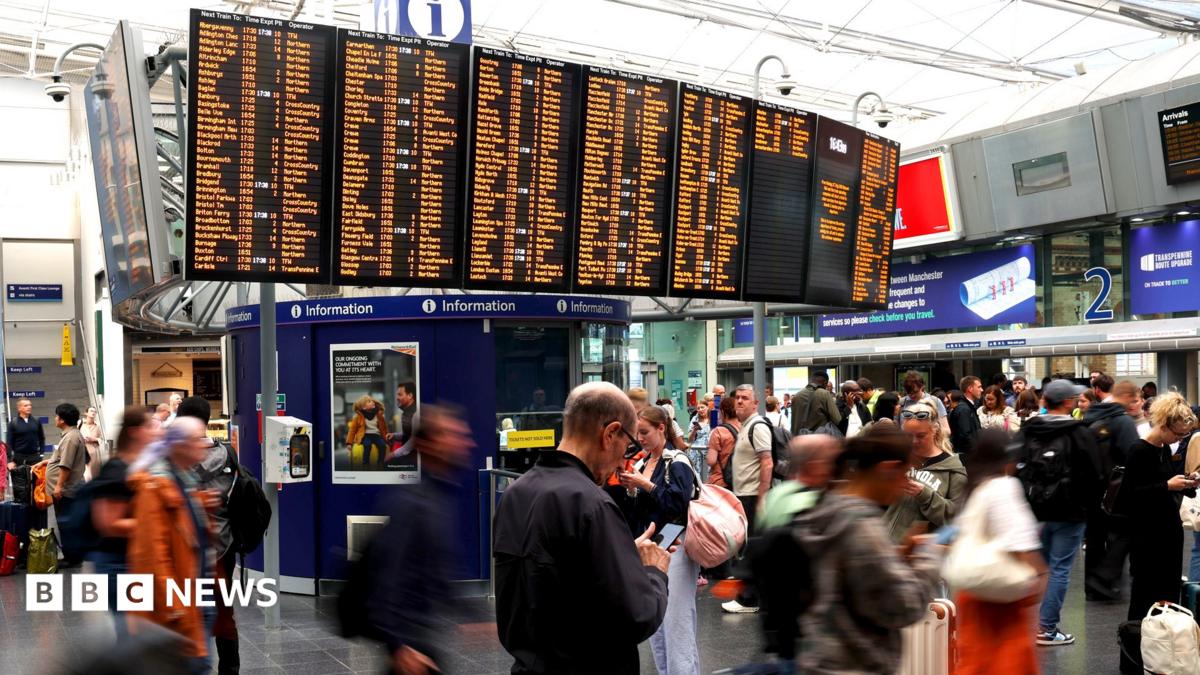
When I step out of Southampton Central railway station, it takes me just seconds to spot an e-scooter.
asserted
it → step → scooter
In this city, these devices have become a normal part of the transport ecosystem, along with e-bikes.
asserted
devices → become → bikes
"It's just the most convenient way to commute from home to the station and back," says Keith Reed, who I speak to as he arrives at the station to catch a train to London.
asserted
he → commute → London
Keith says uses rental e-scooters twice a week.
asserted
Keith → say → scooters
His alternative option would be his bike, but he'd then have to worry about where to leave it.
asserted
he → have → it
Around the city, there are parking areas for bright orange rental devices everywhere - but they're not necessarily a permanent feature.
asserted
they → be → devices
Southampton hosts one of the numerous government-backed trials around England.
asserted
Southampton → host → England
This one has been going on since 2021.
asserted
one → go → 2021
It also doesn't take long to find e-scooters which aren't part of the trial, but instead are owned by individuals.
asserted
which → take → individuals
I see a man riding one along the pavement outside a parade of shops.
asserted
man → see → shops
He doesn't want to stop and talk.
asserted
He → want → ?
These privately owned e-scooters are illegal to ride on public roads across the UK, but they've proliferated regardless.
asserted
they → own → UK
One expert told me the situation was a "Wild West".
asserted
situation → tell → me
Among people I spoke to in Southampton, the same concerns came up time and time again: "They're a blinking nuisance," says elderly pedestrian Fred.
asserted
Fred → speak → Southampton
Another shopper, Martin, says he's "very concerned" whenever he sees them racing through precincts: "An accident's almost inevitable."
asserted
accident → say → precincts
The endgame of the trials is to reach a decision on whether to make permanent hired e-scooter schemes such as the one Keith uses - and whether to bring in legislation that would legalise and regulate privately owned e-scooters too.
asserted
that → reach → scooters
But six years since the trials started around England, there's still no conclusion - and as the UK government has responsibility for road traffic legislation across Great Britain, officials in Scotland and Wales say they are waiting on Westminster to act.
asserted
they → start → Westminster
So why is it taking so long for the government to decide what to do, and what are the consequences of delay?
asserted
consequences → take → delay
What does the evidence tell us about how safe these things are?
asserted
things → tell → us
And why are people using them in the first place - are they here to stay as a useful part of the transport offer, or will they end up being viewed as a pest on our streets?
asserted
they → use → streets
What are e-scooters - and who rides them?
asserted
who → rid → them
You'd recognise an e-scooter if you saw one.
asserted
you → recognise → one
The Department for Transport's (DfT's) definition of an e-scooter includes no pedals, two wheels and a maximum continuous power rating of 500W.
And so far, the trials around England appear to have proved popular.
asserted
trials → include → England
According to DfT research, fom January 2022 to May 2024, 36.9 million trips were made across 30 trial areas outside of London.
uncertain
trips → accord → London
On average, nearly 19,500 e-scooters were available to hire every day.
asserted
scooters → hire → ?
Dr Yasir Ali, a reader in Transport Modelling at Loughborough University, says e-scooters are "complementary" to other modes of transport, rather than replacing them.
asserted
scooters → say → them
Due to factors such as range and being exposed to the elements, they are less suitable for longer trips, rural areas with less infrastructure or in bad weather.
asserted
they → expose → weather
They work best as "a first- and last-mile solution" in urban areas, to reduce reliance on cars for short trips.
asserted
They → work → trips
Shared mobility charity CoMoUK's 2025 report suggests that for more than half of the people using rental e-scooters, the most common use was travelling to work or school.
uncertain
use → share → work
Its analysis of DfT data suggests the majority of people using hired e-scooters are male and under 35.
uncertain
majority → suggest → 35
"Sometimes it's a bit difficult to take the bus from dot to dot", says Yan Zhang, who works at Southampton university and doesn't drive, "so for shorter distances, I'll take the scooter."
asserted
I → take → scooter
Around half of respondents to CoMoUK's online survey used it in conjunction with another mode of transport - such as riding to a railway station, like Keith.
asserted
half → use → Keith
Earlier evidence from a national evaluation of the trials published in 2022 found that although some users would have driven instead had they not had access to an e-scooter, the biggest "modal shift" - meaning switch in ways of getting around - to e-scooters was from walking.
asserted
shift → publish → scooters
Given walking is an active mode of travel, this has raised questions over how significant the public health impact of e-scooter use really is.
asserted
impact → give → use
And the usage of privately owned e-scooters isn't reflected in this research.
asserted
usage → own → research
The DfT has said between 760,000 and 1.2 million people in England aged 16 and over own one - despite the fact that it remains illegal to ride them in public.
asserted
it → say → public
In the eyes of the law, e-scooters are classed as motor vehicles.
asserted
scooters → class → vehicles
Outside of the trials, they can't be insured, and thus can only legally be ridden on private land, with the owner's permission.
asserted
they → insure → permission
The trials themselves are bound by strict rules.
asserted
trials → bind → rules
Businesses who operate the pilots must insure them.
asserted
who → operate → them
…and 51 more, not listed.
 The Aporia