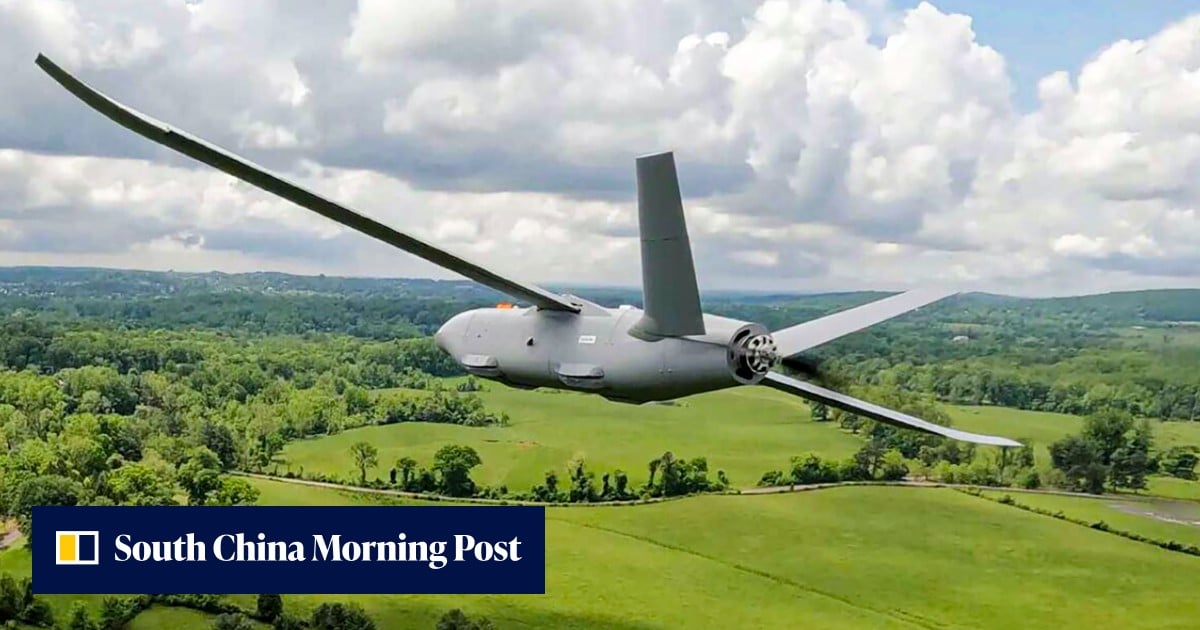
Taiwan sets up US-backed cyber unit to hunt hidden military threats

Read the original at South China Morning Post ↗
Cite

Chung, L. (2026, September 7). Taiwan sets up US-backed cyber unit to hunt hidden military threats. South China Morning Post. https://www.scmp.com/news/china/military/article/3366658/taiwan-sets-us-backed-cyber-unit-hunt-hidden-military-threats?utm_source=rss_feed

Dated when The Aporia collected the article, usually within hours of publication. Check the original for its exact date and byline.

South China Morning Post · collected 2026-09-07 · by Lawrence Chung

Quick Summary

Taiwan's Defence Minister has announced that a US-backed cyber unit will be established to hunt for hidden military threats. The programme, which still needs legislative approval, would focus on "proactive cyber threat hunting" and would be introduced by foreign instructors, likely from the United States. According to reports, the team would be trained to search military networks and critical infrastructure during peacetime for hostile hackers concealing themselves inside systems. The plan comes as Taiwan and Washington expand their military exchanges beyond arms sales.
Written locally by qwen2.5:14b on 2026-09-07, using this article's own text rather than the other coverage of the same event (that is the story summary below).

AI analysis runs on qwen2.5:14b, locally

Story summary

Taiwan has set up a cyber unit to detect hidden military threats, with the help of the United States. The new unit will focus on "proactive cyber threat hunting", going beyond conventional defenses such as firewalls and post-attack remediation. The program is still pending legislative approval, but it's expected to be staffed by foreign instructors, mainly from the US, who will introduce advanced training methods similar to those used in the US military's Cyber Flag exercises. This training will enable team members to search for hostile hackers hiding inside systems during peacetime. The unit is part of Taiwan's Information, Communications and Electronic Force Command, an independent branch of the military responsible for digital warfare.
Written for “Taiwan Cybersecurity Unit” on 2026-10-22, grounded in this article and the 0 other(s) covering the same event.

Story

📰 Taiwan Cybersecurity Unit
World · 1 article(s) covering the same event.

Compared with similar articles

This article reads leans right and hedges 44% of its claims. Each row says how that neighbour differs.
South China Morning Post
⚖️ leaning not scored 🔴 0% hedged 0 of 6 📰 publisher trust 64
“The articles cover different topics and events: one about Ukraine's wartime PR campaign and the other about Taiwan setting up a US-backed cyber unit”
National Post
⚖️ leaning not scored 🔴 4% hedged 1 of 27 📰 publisher trust 60
“The articles mention different countries and events, with Taiwan setting up a US-backed cyber unit and Canada participating in a defence dialogue with China”
How this article was measured signals, leaning charts, publisher record, byline, topics and claims

Signals How these are calculated →

Claims extracted
9
sentences that state something as happening or true
Uncertain
44%
4 of 9 hedged ("reportedly", "may", "according to")
Leaning
Leans right
of the writing, not the subject · beta estimate
Publisher signals
64/100
South China Morning Post's corrections and hedging, across everything collected from it. Not a measure of accuracy.
Outlets on this story
1
World
Same framing elsewhere
1
articles that frame the event the way this one does
Analyzed 2026-09-07 · how these are computed

How this is being covered How these are calculated →

Article leaning vs. publisher reliability
Source leaning vs. consistency

Publisher

South China Morning Post · 2870 article(s) · 6 correction(s) detected
Running correction rate · 6 correction(s)

Who wrote this

Lawrence Chung
16 article(s) here · 1 carrying a prediction
🔮 Under the plan, pilots could serve until 58 – up from about 48 for lieutenant colonels and 52 for colonels – extending their current service limits of 26 and 30 years, respectively.
🔮 How Taiwan’s military manpower shortage is undermining its ability to fight Concerns are mounting over its ability to recruit elite troops and whether it will be able to operate its new US equipment
🔮 Move would mark a key upgrade in military ties but sparks domestic concern over budget growth and loss of strategic autonomy According to Taiwanese media reports at the weekend, the Pentagon plans to send one official from the Office of the Under Secretary of Defence for Policy and one expert from the Institute for Defence Analyses (IDA) to work on a long-term basis at the defence ministry’s headquarters in Taipei.
🔮 Taipei’s dilemma over history deepens with Xi-Trump praise of WWII Flying Tigers Taiwan’s ruling party uneasy that what could have been a valuable historical connection with the US has ended up benefiting Beijing’s ties Trump described China and the US as World War II allies and praised the Flying Tigers – a unit of American military personnel who helped defend mainland China against Japanese air attacks – while Xi recalled the two countries fighting “side by side” against Japanese militarism.
🔮 The programme is expected to cost NT$27.59 billion, with NT$7.3 billion allocated this year through a supplementary budget.
🔮 Two years ago, 49 per cent believed the US would send troops to help defend Taiwan, compared with 42 per cent who thought it would not.
🔮 How will Beijing receive most senior Taiwan official to attend Apec events this year?
🔮 Taiwanese defence minister says exchanges with the US are ‘even more extensive than you might imagine’
🔮 Taiwan’s opposition parties split over mayoral race, threatening 2028 election alliance
🔮 Extra funds push Taiwan’s defence spending past NT$1 trillion for the first time The island’s cabinet approves supplementary budget, with heavy investment in missiles, drones and classified programmes Taiwan’s cabinet approved a supplementary defence budget of NT$145.7 billion (US$4.6 billion) on Thursday, pushing the island’s total defence-related spending for this year above NT$1 trillion for the first time. The additional funding is expected to raise this year’s overall defence spending from 3.32 per cent of gross domestic product (GDP) to about 3.83 per cent, the highest level in decades.
Also by Lawrence Chung
Nothing else under this byline is closely related to this article, so these are simply their most recent.
All 16 articles by Lawrence Chung →

Topics

Liberty Times Taipei Taiwan Taiwanese the United States

Subjects

Taiwan GPE · 4× Taipei GPE · 2× American NORP · 1× Liberty Times ORG · 1× Taiwanese NORP · 1× The Information, Communications and Electronic Force Command ORG · 1× Washington GPE · 1× the United States GPE · 1×

Narrative

The Information, Communications and Electronic Force Command is an independent branch of Taiwan’s military specialising in digital warfare, with responsibilities that include cyber operations, electronic warfare, military communications resilience and the protection of critical infrastructure.
framing: mixed · carried by 1 article(s) · first seen 2026-09-07
🔮 Taiwanese defence minister says exchanges with the US are ‘even more extensive than you might imagine’
2026-09-07 · South China Morning Post
Taiwan sets up US-backed cyber unit to hunt hidden military threats · mixed framing

Claims (9 extracted, 4 hedged)

Taiwan sets up US-backed cyber unit to hunt hidden military threats asserted
Taiwan → set → threats
Taiwanese defence minister says exchanges with the US are ‘even more extensive than you might imagine’ uncertain
you → say → US
According to the budget plan, which still needs legislative approval, the programme would focus on “proactive cyber threat hunting”, moving the military beyond conventional defences, such as firewalls and post-attack remediation, towards actively searching networks for hidden threats. uncertain
programme → accord → threats
Taiwan’s defence ministry did not identify where the foreign instructors would come from, but local media reports suggest they would mainly be from the United States. asserted
they → identify → States
The instructors are expected to introduce realistic adversarial training comparable to the US military’s Cyber Flag exercises, according to the Taipei-based Liberty Times. uncertain
instructors → expect → Times
Like detectives following clues, team members would be trained to search military networks and critical infrastructure during peacetime for hostile hackers bypassing existing defences and concealing themselves inside systems, the outlet said. asserted
outlet → follow → systems
The Information, Communications and Electronic Force Command is an independent branch of Taiwan’s military specialising in digital warfare, with responsibilities that include cyber operations, electronic warfare, military communications resilience and the protection of critical infrastructure. asserted
that → specialise → infrastructure
The planned threat-hunting team would identify and eliminate hidden intruders and back doors before an adversary launched an attack, while bringing Taiwan’s cyber capabilities more in line with international practices, according to the report. uncertain
adversary → hunt → report
The plan comes as Taipei and Washington expand military exchanges well beyond arms sales, with American military personnel, civilian defence officials and contractors increasingly involved in advising, training and observing forces from the island. asserted
personnel → come → island
💬Give feedback
🕘History 🎫Support