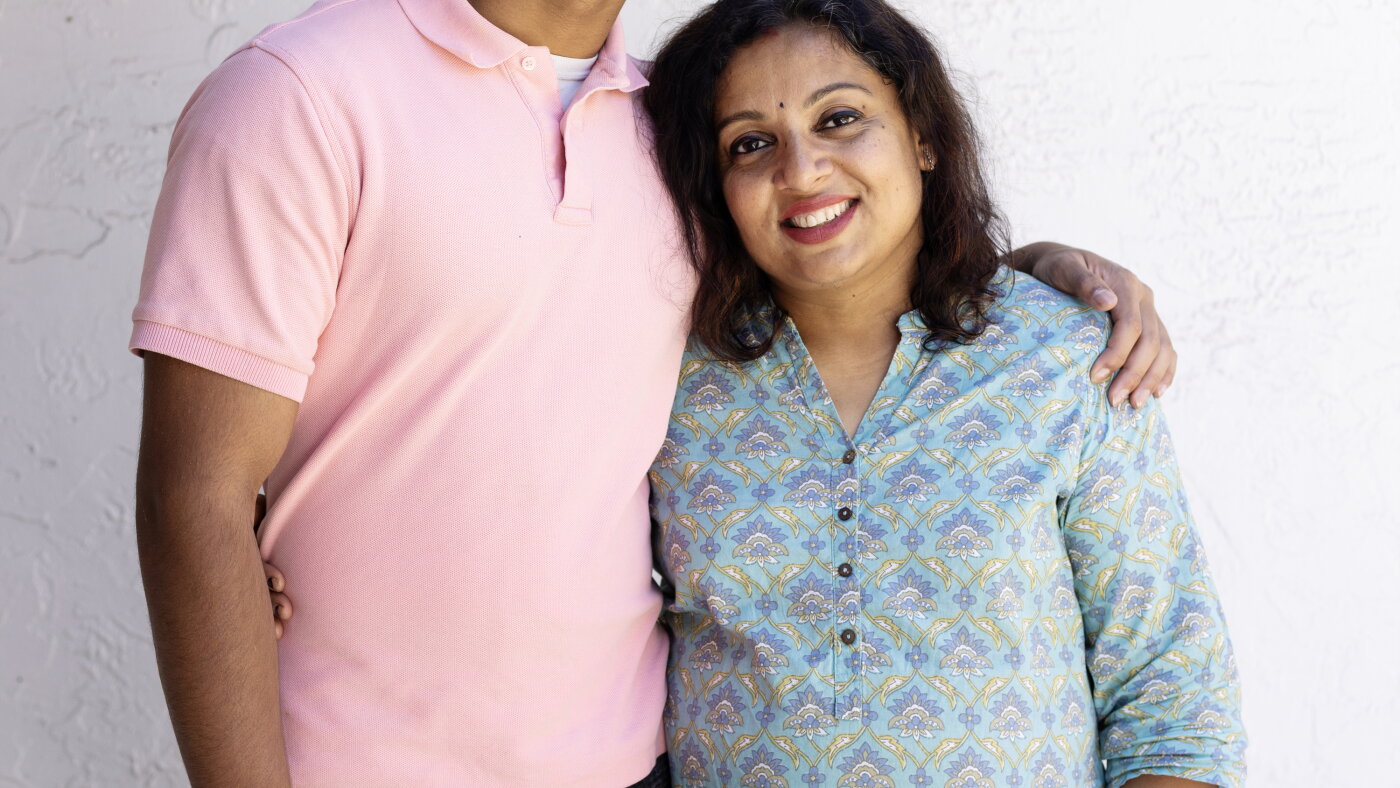
Amit Biligiri, a junior at Evergreen Valley High School, discusses his journey into understanding memory with his mother, Kalyani Urs. The conversation revolves around Amit's tendency to stay up late and forget daily tasks but vividly remember small moments like sharing fries with his great-grandfather Scooter Muttha years ago in Bangalore. Inspired by this debate, Amit created a podcast for NPR’s Student Podcast Challenge, exploring the nature of memory. His entry, "What Happens to Memories," won first prize among approximately 1,500 competitors.
Written locally by qwen2.5:14b on 2026-10-09,
using this article's own text rather than the other coverage of the
same event (that is the story summary below).
Why we remember: One student's journey into memory
asserted
we → remember → memory
Amit Biligiri, a junior at Evergreen Valley High School in San Jose, Calif., sits on a big, right-angle couch in his living room alongside his mom, Kalyani Urs.
asserted
Biligiri → sit → mom
They're recounting the story of a fight they've often had — that every teenager has with their parents.
asserted
teenager → recount → parents
Amit says he's often up late, and his mom, who tends to work late, "would be mad at me and say, 'Hey Amit, why are you going to sleep so late?'"
Urs laughs.
asserted
Urs → say → me
Getting Amit to go to sleep, she says, has been "a constant battle."
asserted
she → get → sleep
"I was like, 'I'm not really sleepy,'" Amit remembers telling her.
asserted
Amit → tell → her
"And I looked into this, and I found out that the sleep cycle for teenagers is actually delayed by a few hours.
asserted
cycle → look → hours
And that means that teenagers — it's healthier for them to sleep later and then also wake up later.
asserted
them → mean → ?
Still, Urs remembers telling her son: "You need more sleep, you're forgetting things."
asserted
you → tell → things
"I keep asking you, 'Did you submit this?
asserted
you → ask → this
Did you submit that?'
asserted
you → submit → that
You forget.
asserted
You → forget → ?
And so it clearly shows your memory is affected," Urs remembers telling Amit.
asserted
Urs → show → Amit
But recently, her son surprised her.
asserted
son → surprise → her
He said, "I remember when I had fries with Scooter Muttha."
asserted
I → say → Muttha
The man known as Scooter Muttha is Amit's great-grandfather — Urs' grandfather — who died many years ago.
asserted
who → know → Muttha
Urs was raised by her grandparents, and the man remains a beloved figure in their family.
asserted
man → raise → family
Amit's point to his mother that day was, if he is so forgetful, why does he still vividly remember such a small moment: being 6 and sharing fries with Scooter Muttha at a Burger King in Bangalore?
asserted
he → remember → Bangalore
Urs didn't know what to say.
asserted
Urs → know → what
In fact, this debate got Amit thinking: How does memory work?
asserted
memory → get → fact
And Urs, an avid NPR listener, encouraged him to explore the question for NPR's annual Student Podcast Challenge.
asserted
Urs → encourage → Challenge
Good thing she did, and he did.
asserted
he → do → thing
This year, some 1,500 students competed in the eighth year of the annual competition, and Amit's What Happens to Memories won the top prize.
asserted
What → compete → prize
"There were entire weeks of my life I barely remember," so begins Amit's winning podcast.
asserted
podcast → be → life
"What I ate for lunch last Monday, what assignments I turned in, what someone said to me in the hallway three Tuesdays ago.
asserted
someone → eat → hallway
As a busy 16-year-old, Amit says in the podcast, he was struck by how much of his daily life simply disappears from his memory.
asserted
much → say → memory
He was also intrigued by the moments that do last.
asserted
that → intrigue → moments
"I'm sitting across from Scooter Muttha, as I fondly call my great-grandpa.
asserted
I → sit → grandpa
We are both wearing flimsy gold paper crowns and we're sharing a plate of french fries.
asserted
we → wear → fries
An old photo captures the two kings, one at the beginning of his life, the other nearing the end of his.
asserted
other → capture → his
But Amit didn't know his father had taken the picture until he began working on his podcast.
asserted
he → know → podcast
This memory has outlasted so many others, Amit says, even though nothing really happens.
asserted
nothing → outlast → others
"I don't remember what we talked about, but I remember the salt on the fries, the energy of the room and the way his crown sat slightly crooked on his head."
asserted
crown → remember → head
Amit says in the podcast that he started wondering, "Why does my brain let go of a math lecture from yesterday but hold onto a paper crown from a decade ago?"
asserted
brain → say → crown
In his seven-minute audio story, Amit offers a few different answers.
asserted
Amit → offer → answers
"It turns out, memory isn't a filing cabinet.
asserted
memory → turn → ?
It's during sleep that our brains clean up that construction site, saving some memories and throwing out others.
asserted
brains → clean → others
So his mom was right: Without enough sleep, the cleaning crew can't do its job.
asserted
crew → do → job
It also doesn't help, Amit says, that teens often let phones muddy their memory-making.
asserted
phones → help → making
"When we experience life through a screen, hunting for the right filter, the perfect caption, we experience it halfway: half-online, half-distracted, half-present.
asserted
we → experience → it
…and 7 more, not listed.
 The Aporia