A day after the October 7, 2023, attack on Israel and the beginning of Israel’s genocidal war on Gaza, Hezbollah made the decision to join the war, in what it said was support of the Palestinian people.
asserted
it → make → people
It is a decision that analysts say has forever shaped Lebanese politics.
asserted
analysts → say → politics
Experts said the group had underestimated the depth of Israel’s intelligence penetration in the run-up to the war, which later manifested in the bloody September 2024 pager attack and the assassination of much of Hezbollah’s leadership, including Secretary-General Hassan Nasrallah.
asserted
which → say → Nasrallah
Recommended Stories
list of 3 items- list 1 of 3King David Hotel bombing to consulate row: A timeline of UK-Israel tension
- list 2 of 3Gaza war sped up India’s shift towards Israel under Modi
- list 3 of 3October 7 redrew the map of the Middle East, opening new faultlines
“Hezbollah got sucked into a vortex which culminated in the decapitation of their leadership and the invasion of south Lebanon,” Nicholas Blanford, a non-resident senior fellow at the Atlantic Council and author of a book about Hezbollah, told Al Jazeera.
asserted
Blanford → speed → Jazeera
“That dealt Hezbollah a major blow to their popular standing and galvanised the election of Joseph Aoun as president and the formation of a new government that took a much stronger line against [the group].
asserted
that → deal → group
Hezbollah’s decisions have left the group politically weakened.
asserted
decisions → leave → group
And while analysts say the group has not been defeated, despite claims to the contrary from some critics, it is no longer the political or military hegemon in Lebanon it once was.
uncertain
it → say → Lebanon
Before October 7, Hezbollah – a group representing Lebanon’s large Shia community – was the strongest political and military actor inside the country.
asserted
Hezbollah → represent → country
The Iranian-backed group’s influence stretched across the region.
asserted
influence → back → region
Hezbollah was a key ally of the al-Assad regime in Syria and helped it retake territory from anti-Assad opposition groups.
asserted
Hezbollah → help → groups
It also had connections with allies in places such as Iraq and Yemen.
asserted
It → have → Iraq
Hezbollah had key electoral influence in Lebanon, where it often wielded its power to elect or collapse governments.
asserted
it → have → governments
It was also not against deploying its supporters against movements opposed to it, as in 2019 when they took to the streets of Beirut to beat back protesters calling for political reform of the country’s sectarian system, in which Hezbollah has become a key player in the years since the end of Lebanon’s 15-year civil war in 1990.
asserted
Hezbollah → deploy → 1990
In the months leading up to October 2023, Hezbollah’s confidence was on clear display.
asserted
confidence → lead → display
Blanford pointed to examples such as a military parade in south Lebanon conducted by Hezbollah, and the group erecting tents in the Shebaa Farms – on territory that Lebanon considers occupied by Israel.
asserted
Lebanon → point → Israel
At the time, Israel was roiled by protests, and Nasrallah was delivering speeches predicting the imminent doom of Israel.
asserted
Nasrallah → roil → Israel
The decision to join the fight against Israel in what became known in Lebanon as the War of Support came on October 8, 2023.
asserted
what → join → October
“October 7 set in motion a chain of events that Lebanon’s political system was not properly prepared to manage,” Jad Dilati, a political analyst from Nabatieh in southern Lebanon, told Al Jazeera.
asserted
Dilati → set → Jazeera
“Hezbollah opened its support front for Gaza on October 8 completely unilaterally, without any cabinet decision or governmental consensus or even taking into account the positions of the southern [Lebanese] residents who were most affected and still are most affected by these actions.”
asserted
who → open → actions
“Hezbollah opened the support front on October 8, genuinely believing that it was operating from a position of strength,” Dilati said.
asserted
Dilati → open → strength
“Most of the South believed that Hezbollah was operating from a position of strength after it had spent years building precision missile capabilities, an elaborate tunnel network and these missiles that we were told can hit every building in Tel Aviv.”
asserted
we → believe → Aviv
For the next 11 months, Israel and Hezbollah traded attacks, albeit with Israel hitting Lebanon more than five times for every Hezbollah attack.
asserted
Israel → trade → attack
Tens of thousands from southern Lebanon and northern Israel fled their homes.
asserted
thousands → flee → homes
But in September 2024, Israel unilaterally intensified attacks.
asserted
Israel → intensify → attacks
The Israeli-induced carnage came quickly and heavily, with nearly 500 people killed on September 23 alone.
asserted
people → induce → September
When Nasrallah was said to have accepted a ceasefire – according to Lebanese officials quoted in media reports – Israel ordered his assassination and the evacuation of areas of Beirut’s southern suburbs.
uncertain
Israel → say → suburbs
“When Nasrallah was amenable to a ceasefire, Israel was on the offensive and wasn’t going to return to the previous status quo,” Blanford said.
asserted
Blanford → go → quo
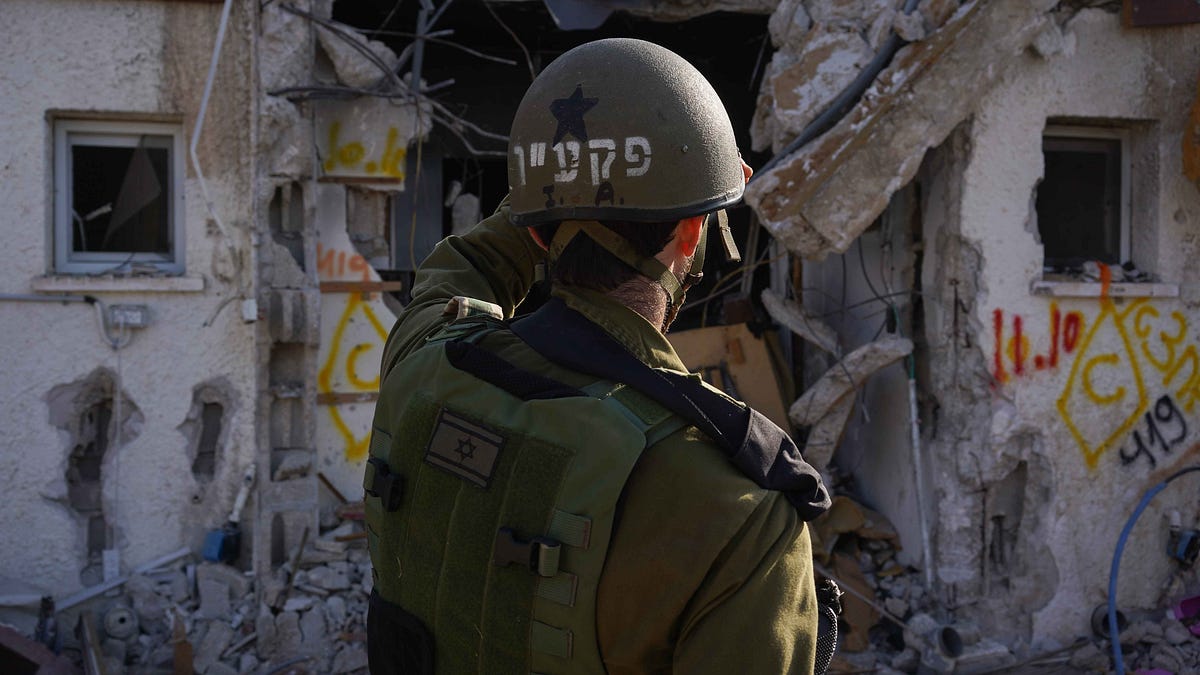
Israel invaded southern Lebanon in October 2024 and stayed in Lebanese territory for more than two months after a ceasefire was agreed in November.
asserted
ceasefire → invade → November
Despite the ceasefire, Israel continued to destroy homes and infrastructure in southern Lebanon and refused to pull its troops out of five locations on Lebanese territory.
asserted
Israel → continue → territory
Next door in Syria, the fall of the al-Assad regime in December 2024 also dealt a blow to the group, as its land routes to receive weapons and funding from Iran were disrupted.
asserted
routes → deal → Iran
Over the next 14 months, Israel violated the ceasefire more than 10,000 times.
asserted
Israel → violate → ceasefire
Then in March 2026, Israel reintensified its war on Lebanon.
asserted
Israel → reintensifie → Lebanon
The attacks came after Hezbollah fired rockets at Israel for the first time in more than a year as a response to the myriad ceasefire violations and the assassination of Iran’s Supreme Leader Ayatollah Ali Khamenei, whom Hezbollah viewed as a religious and political leader.
asserted
Hezbollah → come → leader
Israel then invaded Lebanon again and launched widespread attacks on the country.
asserted
Israel → invade → country
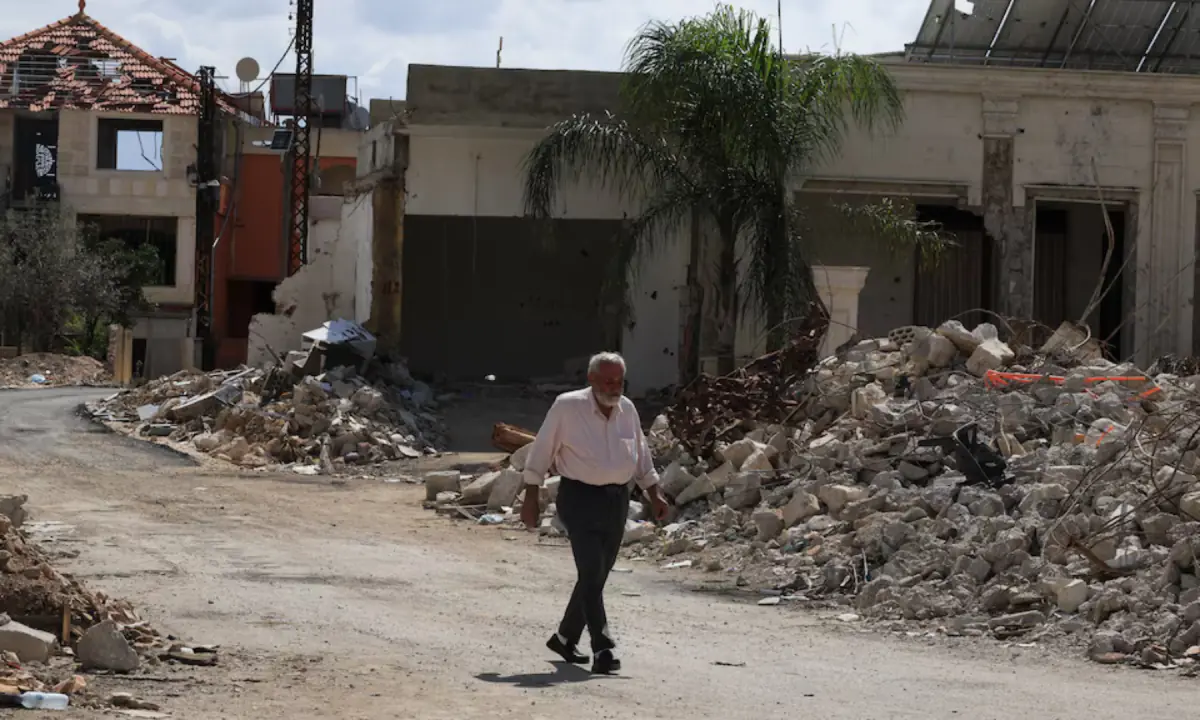
It has killed more than 9,000 people in Lebanon since 2024 and displaced more than 1.2 million people, emptying entire regions of the country.
asserted
It → kill → country
Israel now occupies large swathes of Lebanese territory, stretching up to 10 kilometres (more than 6 miles) from the border at some points.
asserted
Israel → occupy → points
Dozens of villages, once filled with agriculture and people, are now uninhabited piles of dust and rubble.
asserted
Dozens → fill → dust
Hundreds of thousands remain displaced.
asserted
Hundreds → remain → thousands
This has had a massive impact on Lebanon.
asserted
This → have → Lebanon
The World Bank says the country’s economy has contracted by more than 6 percent in 2026.
asserted
economy → say → 2026
…and 14 more, not listed.
 The Aporia