The Guardian
· collected 2026-10-09 · by Pippa Neill Environment reporter
A photograph shared on Instagram led to the discovery of a new species of giant waterlily in Colombia's Guainía region, near the Inírida River. The plant, named Victoria colombiana, is critically endangered due to its limited habitat. Carlos Magdalena, a botanist at Kew Gardens, identified the plant as unusual after seeing Jeremiah Harris’s photo and organized an expedition that nearly failed before locating the waterlilies just hours before departure.
Written locally by qwen2.5:14b on 2026-10-09,
using this article's own text rather than the other coverage of the
same event (that is the story summary below).
A chance social media encounter has led to the race-against-time discovery of a new species of giant waterlily that has until now been hidden in the depths of Colombia’s jungle.
asserted
that → lead → jungle
But the plant, which is so huge it is visible from space, is already considered critically endangered.
asserted
it → consider → space
Giant waterlilies, which can measure up to three metres across and carry the weight of a small child, are one of the oldest flowering plants in the world still alive today.
asserted
which → measure → world
They existed before the continents split apart and are present throughout culture, from the Egyptians to Monet.
asserted
continents → exist → Monet
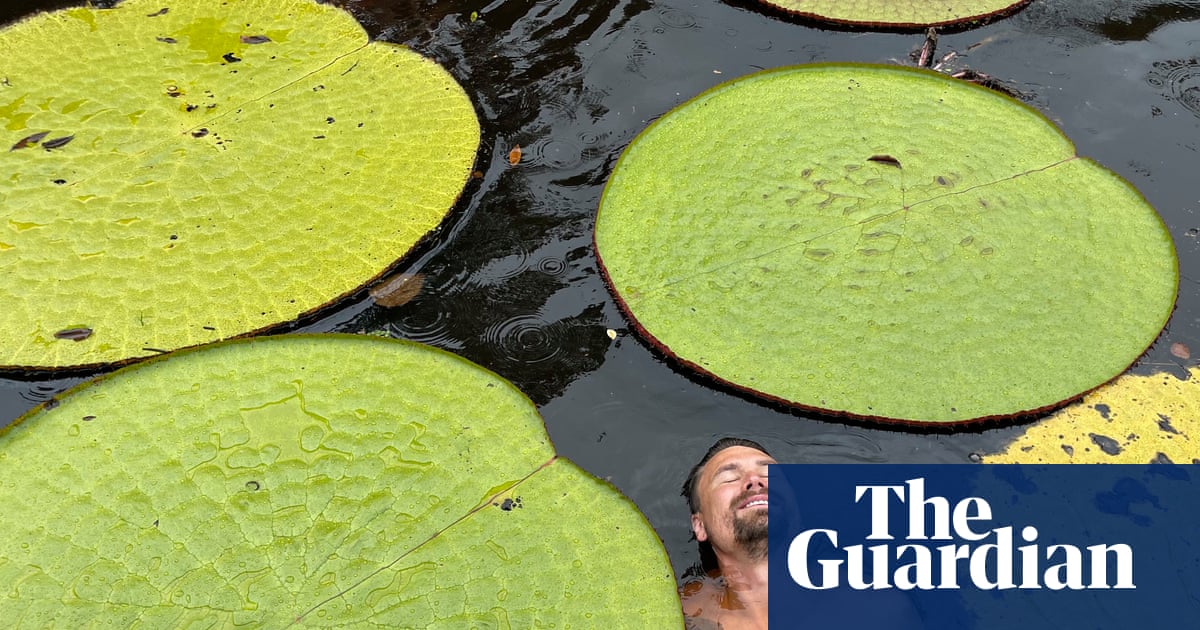
Three years ago, while scrolling through Instagram, Carlos Magdalena, a world-renowned waterlily expert at the Royal Botanic Gardens, Kew, came across a photo of someone swimming among several giant waterlilies in the Inírida River in Guainía, Colombia.
asserted
Magdalena → scroll → Guainía
Jeremiah Harris, who took the photo and who runs a carnivorous plant nursery in the US, was not aware of its significance, having mistakenly identified the waterlily as the more common Victoria amazonica.
However, when Magdalena saw the photo, he “immediately suspected” something was unusual as the natural range of the Victoria amazonica does not extend to the Inírida River.
He messaged Harris to track down the exact location and spent several years analysing satellite imagery and securing the funds and necessary permits to allow him to verify the presence of the waterlily for himself.
Along with a team from the Jardín Botánico in Bogotá and members of the local indigenous reserves, Magdalena went on a five-day expedition deep into the rainforest.
asserted
Magdalena → take → rainforest
They spent several days exploring the flooded jungle with no luck, until, at the last moment, their driver advised them where to look.
asserted
driver → spend → them
With only 10 hours left until their return flight, the team sailed overnight in total darkness to a small lake deep in the flooded rainforest, where they located a population of the waterlilies.
asserted
they → leave → waterlilies
“It was so emotional I shed a tear, it was one of those moments that will remain with me for life,” Magdalena said.
asserted
Magdalena → shed → life
“Coming across something like this is absolutely totally fascinating, it’s jaw dropping.
asserted
it → come → this
“Giant waterlilies give away their secrets slowly,” he said.
asserted
he → give → secrets
“It’s remarkable.
asserted
It → ’ → ?
We believe we know everything but the reality is we don’t, there’s lots of things still to be discovered and protected.”
asserted
we → believe → things
The team collected the material needed to begin a formal identification, with a paper published on Friday in the journal Phytotaxa confirming it as a new species to science.
asserted
paper → collect → science
The waterlily has been given the official name Victoria colombiana.
asserted
waterlily → give → name
Harris, who is an author of the study, said his friends always teased him for taking selfies with plants, but the fact this one ended in the discovery of a new species was “incredible”.
asserted
one → say → species
“I was just so excited, absolutely elated,” he said.
asserted
he → say → ?
Magdalena said: “This is one of those extraordinary stories where indigenous and horticultural knowledge with the help of social media and technology came together to uncover a truly extraordinary botanical achievement.”
asserted
knowledge → say → achievement
The team estimates there are between 30 and 50 of the Victoria colombiana waterlilies in the wild, making them extremely rare and at risk of extinction.
asserted
them → estimate → extinction
Maarten Christenhusz, a plant taxonomist who analysed the sample, said new species were found all the time, but few were as “large, spectacular and emblematic as this one.
asserted
few → analyse → one
This new giant waterlily can even be seen from space, which is a striking reminder of how much we still don’t know about life on our planet.”
asserted
we → see → planet
The team is working towards an official International Union for Conservation of Nature (IUCN) Red List designation.
asserted
team → work → designation
Efforts are also under way to support the long-term conservation of the waterlily, including the possibility of establishing a naturalised population in a more accessible lake within indigenous territory.
asserted
Efforts → support → territory
The researchers hope to continue efforts to collect the plant’s seed, with the aim of cultivating it in Bogotá.
asserted
researchers → hope → Bogotá
If these efforts are successful, there is a chance the waterlily may be grown at Kew Gardens.
uncertain
waterlily → be → Gardens
 The Aporia