The copper peptide trend has gone from creams to injections — ahead of the science
Copper peptides have become the darling of social media skin care hacks.
asserted
peptides → go → hacks
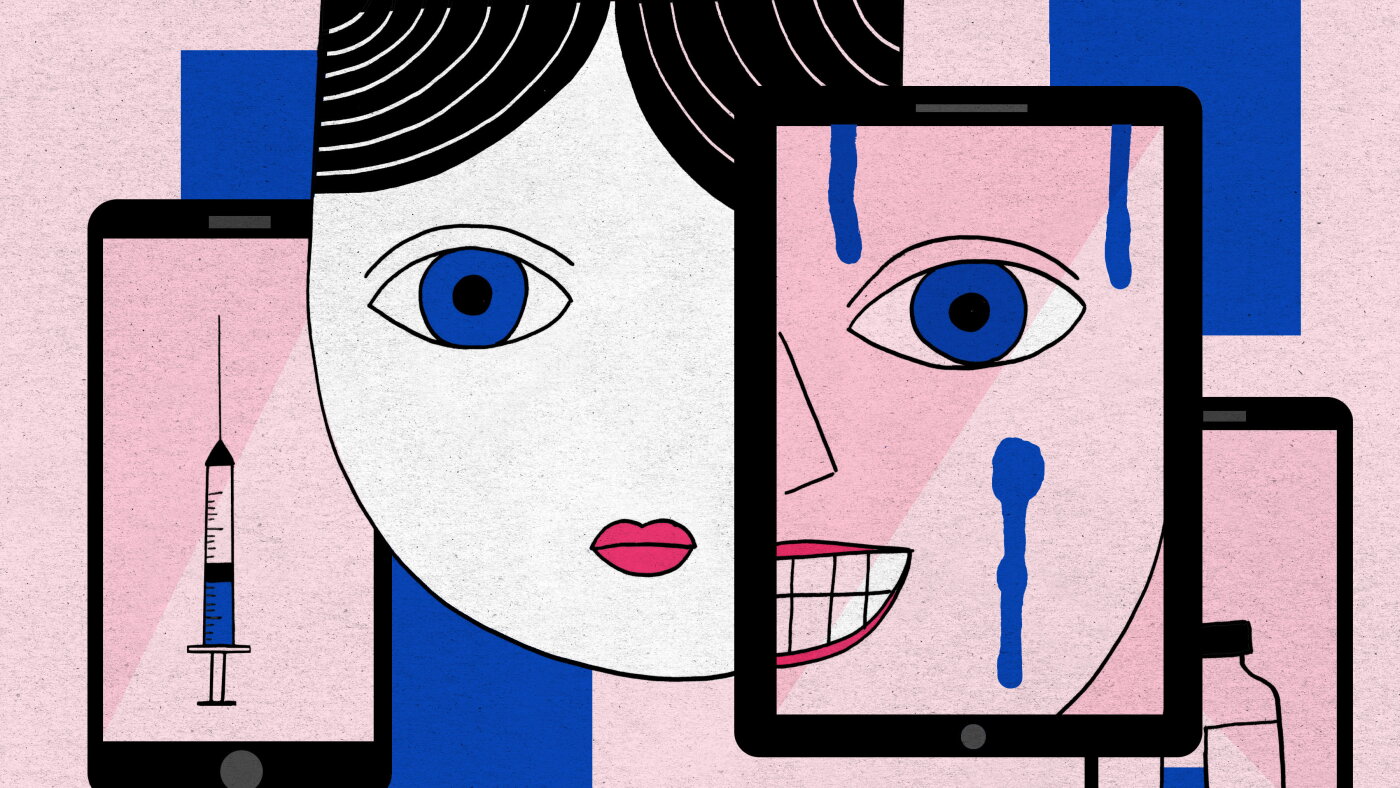
People are smearing the electric-blue tincture on their face or drawing the concoction up in syringes.
asserted
People → smear → syringes
The compound, known as GHK-Copper, or simply GHK-Cu, has gained a massive following because of claims it can deliver firm and wrinkle-free skin, better hair and other anti-aging benefits.
uncertain
it → know → skin
The interest, in part, reflects the broader peptide-craze that has increasingly entered the mainstream wellness and longevity space.
asserted
that → reflect → space
As with many of these trendy peptides, GHK-Cu isn't an approved drug, but it does have considerable scientific research behind it.
asserted
it → approve → it
Topical copper peptide serums and creams have been on the market for decades and studied in human trials.
asserted
serums → study → trials
What has changed recently is how people are administering this peptide: Instead of slathering it on their face, many are opting to take it as a subcutaneous injection.
asserted
many → change → injection
Sometimes it's "stacked" with other peptides that are promoted for tissue repair and anti-aging.
asserted
that → stack → repair
There is no data from published human studies to show this practice is safe and effective.
asserted
practice → be → studies
And the risks are compounded by the fact that many people are sourcing the injectable formulations from a grey market of online sellers.
asserted
people → compound → sellers
"I think GHK can have a major role in helping enhance longevity," says Dr. Warren Ladiges, a professor at the University of Washington School of Medicine who has been involved in studying the peptide for many years.
asserted
who → think → years
"But injecting yourself without really knowing what it's going to do?
asserted
it → inject → what
I wouldn't do that to myself," he adds.
asserted
he → do → myself
Despite the recent surge in popularity, the peptide has a history that stretches back more than fifty years.
asserted
that → have → years
In the early 1970s, a chemist named Loren Pickart first isolated GHK – a string of three amino acids Glycyl-L-histidyl-L-lysine – after noticing that bathing liver cells in the lab with plasma from younger adults helped revive them.
asserted
bathing → name → them
By collecting blood from medical students and comparing it to their older professors, he also established that levels decline as people age.
asserted
people → collect → professors
Since then, studies have found that GHK-Cu stimulates collagen production and other compounds involved in skin remodeling, triggers the growth of new blood vessels and has anti-inflammatory effects.
asserted
Cu → find → effects
The controlled studies in humans have focused almost exclusively on skin health and aesthetics, and to a lesser extent on wound healing and hair growth.
asserted
studies → focus → healing
These are generally small trials funded by the cosmetic industry showing GHK-Cu as a serum or cream improves thickness and elasticity, decreases wrinkles, promotes hair growth and delivers other benefits for damaged skin.
asserted
Cu → fund → skin
"The science behind this is very solid," says Dr. David Goldberg, director of cosmetic dermatology for the Schweiger Dermatology Group and a clinical professor at the Icahn School of Medicine at Mount Sinai in New York.
asserted
Goldberg → say → York
He says GHK-Cu helps bolster collagen, part of the "scaffolding of the skin," and is on par with other topicals, like those containing Vitamin C and antioxidants.
asserted
Cu → say → C
However, pre-clinical research (not in humans) suggests the peptide holds promise beyond skin health.
uncertain
peptide → suggest → health
For example, in animal studies, GHK-Cu was able to speed up wound healing and help repair organs, including fibrosis in the lungs.
asserted
Cu → speed → lungs
Ladiges' experiments have also shown the "peptide stimulates a number of pathways that are associated with aging" and can alleviate some symptoms of Alzheimer's in mouse models.
asserted
that → show → models
Efforts to move this work on longevity into human trials – and get buy-in from drug companies – have proven fruitless, though.
GHK-Cu is a naturally-occurring molecule.
asserted
Cu → move → companies
That means it would be difficult for drug companies to patent it without creating a unique version and then paying for human trials.
asserted
companies → mean → trials
Ladiges says it would require huge investment, meaning "it's probably never going to get FDA approval."
asserted
it → say → approval
The emergence of GHK-Cu as a "beauty peptide" – and a staple of looksmaxxing content on social media – has fed a stream of peptide-curious patients who are now asking their doctors for guidance.
asserted
who → feed → guidance
Does injecting it actually work better?
asserted
injecting → inject → it
Goldberg says it's possible there are added benefits – in part because the molecule doesn't easily penetrate deeper into the skin when applied as a topical.
asserted
molecule → say → topical
But he and other dermatologists tell NPR they're advising patients to hold off from injecting anything.
asserted
they → tell → anything
"I'm not going to sleep well at night, until the human studies are actually done," he says.
asserted
he → go → night
According to Ladiges, GHK-Cu is generally quite safe, based on animal studies.
uncertain
Cu → accord → studies
Much of the worry centers on the fact that consumers are largely sourcing injectable formulations from unregulated suppliers, with no assurance about quality or dosage, says Dr. Marisa Garshick, at MDCS Dermatology.
asserted
Garshick → center → Dermatology
"Whether or not it's even a copper peptide is always a concern," she says.
asserted
she → say → ?
"The stakes are much higher when you're injecting something."
asserted
you → inject → something
Like other wellness peptides being taken as injectables, GHK-Cu currently exists in confusing regulatory limbo.
Compounding pharmacies in the U.S. aren't technically allowed to offer it for injection in humans, though the Trump administration has signaled that could soon change.
Earlier this summer, a panel that advises the Food and Drug Administration recommended the government reclassify half a dozen of these peptides.
uncertain
government → take → peptides
The group will meet again in February to review the evidence for GHK-Cu as an injectable among other peptides.
asserted
group → meet → peptides
In the field
But for now it remains widely available on the grey market – and the risks of unsupervised use are abundantly clear to Erik Marks, a doctor of nursing practice who runs a wellness and longevity clinic in the Seattle area called Vitality Medical PNW.
asserted
who → remain → area
He says most of his consults about GHK-Cu are with patients who've already purchased it from an online seller and injected it on their own, only to then worry about the safety.
asserted
who → say → safety
…and 8 more, not listed.
 The Aporia