64,000 shades of grey: How dentists, running coaches and restaurants are using AI

Read the original at The Sydney Morning Herald ↗
The Sydney Morning Herald · collected 2026-10-09 · by Millie Muroi

Quick Summary

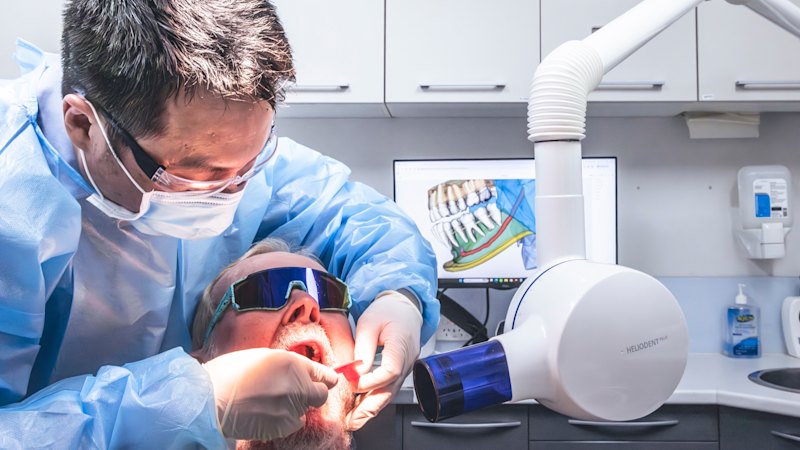
Dentist Sen Le discusses how artificial intelligence (AI) is enhancing dental diagnostics by identifying issues that are undetectable to the human eye, such as subtle changes in tooth anatomy and disease. The AI tool, called Eyes of AI, can distinguish about 64,000 shades of grey compared to a human's 40, allowing it to spot problems earlier than traditional methods. Le emphasizes that while AI improves accuracy and efficiency, it still requires human oversight and will not replace dentists entirely. The technology is set to be approved for wider use in Australia after partnering with research institutions like the CSIRO and University of Sydney.
Written locally by qwen2.5:14b on 2026-10-09, using this article's own text rather than the other coverage of the same event (that is the story summary below).

AI analysis runs on qwen2.5:14b, locally

Story summary

Sen Le, a Sydney-based dentist who also practices in Canberra, has been using an AI technology called "Eyes of AI" over the past three years to improve patient care. Developed by Le himself, this software can detect dental issues such as defective fillings and infected abscesses, which human dentists often miss due to their limited ability to distinguish between shades of grey—only about 40 compared to AI's capability to discern around 64,000 shades. This technology also identifies calcification in areas beyond just the teeth.

While concerns exist over AI potentially replacing human jobs, Le believes it enhances his practice rather than diminishes it, highlighting how AI aids in making more accurate and consistent diagnoses while saving dentists' time. The use of AI extends beyond dentistry into other professions like running coaching and restaurant management, where professionals are leveraging the technology to improve service quality without fearing job displacement.

Written for “AI In Everyday Life” on 2026-10-09, grounded in this article and the 0 other(s) covering the same event.
Why this leaning score
This article does not take a side on a contested political question, so it has no leaning score. That is an answer rather than a gap: a match report or a rescue can be warmly or critically written without being left or right, and scoring it anyway is how approval of a subject gets recorded as a political position.
No political leaning scored for article 67321 · logged 2026-10-09

Signals How these are calculated →

Claims extracted
51
claim-shaped sentences
Uncertain
4%
2 of 51 hedged
Leaning
not political
takes no side on a contested political question
Correction & hedging signals
61.0
corrections and hedging in what we collected; not a measure of accuracy
Outlets on this story
1
Technology
Narrative spread
1
articles carrying this framing
Analyzed 2026-10-09 · how these are computed

Story

📰 AI In Everyday Life
Technology · 1 article(s) covering the same event.

How this is being covered How these are calculated →

Article leaning vs. publisher reliability
Source leaning vs. consistency

Compared with similar articles

This article reads unscored and hedges 4% of its claims. Each row says how that neighbour differs.
CBS News
⚖️ leaning not scored 🔴 no claims extracted 📰 publisher trust 66
“The articles discuss different topics related to AI, with Article A focusing on a broader discussion about job transformation due to AI and Article B detailing specific applications of AI in various professions.”

Publisher

The Sydney Morning Herald · 2913 article(s) · 7 correction(s) detected
Running correction rate · 7 correction(s)
2026-10-09
P-plater accused of horror Newcastle car crash bailed to family home in Sydney’s eastern suburbs
2026-10-08
Snowtown murderer seen leaving correctional facility
2026-10-08
Oliver Curtis’ transformation from jailbird to corporate kingpin has gone awry
2026-10-03
Tennessee’s prisons chief to resign after failed execution of Christa Pike
2026-09-28
Inside the prison left abandoned for years – now set to reopen as DV offenders weigh on system
2026-09-19
What will happen to your most cherished possessions when you die? You don’t want to know
2026-09-18
What will happen to your most cherished possessions when you die? You don’t want to know

Who wrote this

Millie Muroi
4 article(s) here · 1 carrying a prediction
🔮 Dentist Sen Le says he is not afraid of losing his job to AI: a technology he has helped to develop, and one which he says can detect problems in a patient’s mouth that most human dentists would miss.
🔮 On Thursday, Commonwealth Bank announced it would extend its regional banking moratorium – which was due to end in July next year – for a further three years.
🔮 Reserve Bank governor Michele Bullock warned last week the jobless rate may need to rise as high as 5 per cent to ease pressure on inflation.
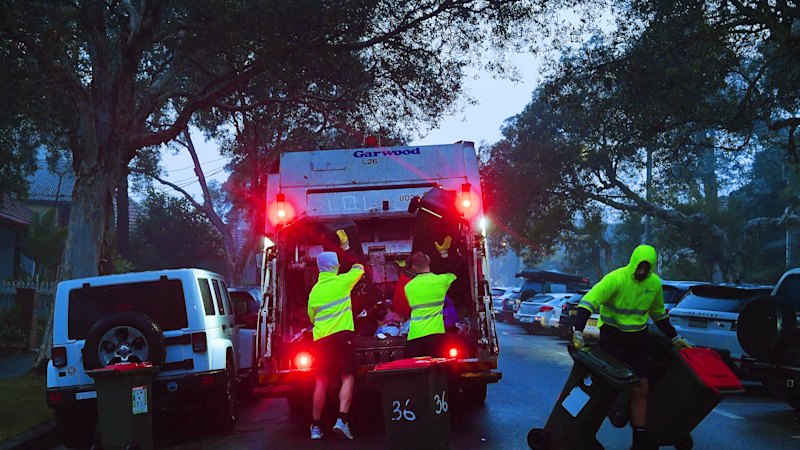
🔮 The female casual garbage truck driver was applying for a permanent role with Sydney’s Inner West Council, but was only told at 4am that she would be interviewed at 10.30am the same day, with a shift in between, preventing her from preparing or changing out of her work clothes.
Also by Millie Muroi
RBA hikes interest rates to 4.6 per cent in 15-year high
2026-09-29 · The Sydney Morning Herald
Nothing else under this byline is closely related to this article, so these are simply their most recent.

Topics

CSIRO Canberra Eyes of AI Sydney the University of Sydney

Subjects

Daniels PERSON · 2× Sydney GPE · 2× Ash Daniels PERSON · 1× Australia GPE · 1× CSIRO ORG · 1× Canberra GPE · 1× Sen Le PERSON · 1× the University of Sydney ORG · 1×

Narrative

The Sydney-based dentist, who also works in Canberra, has used the technology over the past three years with his patients and says it can identify issues ranging from defective fillings to infected abscesses and calcification – the build-up of excess calcium – in places not just isolated to the teeth.
framing: assertive · carried by 1 article(s) · first seen 2026-10-09
🔮 Dentist Sen Le says he is not afraid of losing his job to AI: a technology he has helped to develop, and one which he says can detect problems in a patient’s mouth that most human dentists would miss.
2026-10-09 · The Sydney Morning Herald
64,000 shades of grey: How dentists, running coaches and restaurants are using AI · assertive framing

Claims (51 extracted, 2 hedged)

Dentist Sen Le says he is not afraid of losing his job to AI: a technology he has helped to develop, and one which he says can detect problems in a patient’s mouth that most human dentists would miss. asserted
dentists → say → that
“The human eye can only see about 40 shades of grey, but the AI can see about 64,000,” he says. asserted
he → see → 64,000
“That means it’s able to see things that we can’t: subtle changes in anatomy and subtle changes in disease. asserted
we → mean → disease
Often, it will find something that I didn’t even notice was there.” asserted
I → find → something
While there is debate about the extent to which AI could destroy human jobs or create new ones, the technology is already well documented to be changing the nature of roles in various industries including administration, law and media. uncertain
technology → be → administration
But it is also being used – and developed – by people in more hands-on professions ranging from dentistry to run coaching and restaurant management, some of whom say AI is improving the services they offer to customers but will never replace them. asserted
they → use → them
Giving diagnostics teeth Le started working on software called Eyes of AI six years ago to save dentists time and help them make more consistent and accurate diagnoses. asserted
them → give → diagnoses
“Dentists and dental professionals are very time poor,” he says. asserted
he → say → ?
“There’s also a lot of variability in our diagnostics: if you go to five different dentists, you get five different diagnoses, and then the treatments they recommend could range from $300 up to $36,000.” uncertain
they → ’ → 36,000
The Sydney-based dentist, who also works in Canberra, has used the technology over the past three years with his patients and says it can identify issues ranging from defective fillings to infected abscesses and calcification – the build-up of excess calcium – in places not just isolated to the teeth. asserted
it → base → teeth
The AI tool can work with as little information as a single X-ray to make basic findings, but can also consider other clinical information fed into it. asserted
tool → work → it
“It’ll detect issues such as tooth decay early so that we can address it very conservatively rather than drilling into the patient,” he says. asserted
he → detect → patient
“I also use AI as a second set of eyes – like a spell check – to make sure that I haven’t missed anything, especially if I’m busy or running late.” asserted
I → use → anything
Le and his team have been partnered with the CSIRO and the University of Sydney, and while tighter regulation has made the approval process less straightforward, he says the business is on the verge of getting the technology approved for release to other clinics around Australia. asserted
technology → partner → Australia
AI can also enhance patients’ understanding, Le says, helping them to take more ownership over their treatments. asserted
them → enhance → treatments
“Often, patients are just taking the dentist’s word for what’s there,” he says. asserted
he → take → word
“But the colour overlays generated by the AI, and the things it flags, can help patients look after their oral health better.” asserted
patients → generate → health
While Le believes AI will increasingly play a supporting role in dentistry in years to come, he says it will not dampen demand for dentists. asserted
it → believe → dentists
“It’s a very human thing to go into someone’s mouth,” he says. asserted
he → ’ → mouth
“And at the end of the day, AI requires human oversight because it can’t be held responsible for decisions. asserted
it → require → decisions
I don’t believe it’s possible for AI to replace dentists.” asserted
AI → believe → dentists
Running the numbers Sydney-based trail and ultra-running coach Ash Daniels started experimenting with AI two years ago. asserted
Daniels → run → AI
“It was like a new employee at first,” he says. asserted
he → say → employee
“I had to check the output, but I gave it more and more tasks and built trust over time. asserted
I → have → time
Now, it’s like having an assistant.” asserted
it → ’ → assistant
While apps are increasingly being used to generate training plans for athletes, Daniels says some of them can lead to people overtraining and getting injured. asserted
people → use → them
“What they lack is a feedback loop,” he says. asserted
he → lack → What
AI can feed back some data, but it lacks empathy, and if you’ve had a real tough week at work, or your kids haven’t slept, AI can’t adapt to that.” asserted
AI → feed → that
Daniels says he is not worried about AI taking his job, and that he has so far seen no drop-off in the number of people he coaches. asserted
he → say → people
“Huge amounts of people are coming into the sport and looking for guidance,” he says. asserted
he → come → guidance
“They want to speak to me, not a machine.” asserted
They → want → me
AI is useful for doing repetitive administrative work, Daniels says, as well as analysing, identifying patterns, and concisely presenting findings from huge amounts of data. asserted
Daniels → do → data
“Before, I would have to trawl my way through data files from running watches and other digital devices,” he says. asserted
he → have → watches
“Now, I can do that more quickly, and AI will pump it out into a digestible PDF format people can easily understand rather than a spreadsheet with a load of data. asserted
people → do → data
It also means I’m more available to chat through things with athletes.” asserted
I → mean → athletes
But Daniels says coaching is about more than just generating a plan, or analysing data, and that things such as lived experience and shared moments cannot be substituted by AI. asserted
things → say → AI
“My mantra is that a plan will get you to the start line, but I’ll be waiting for you at the finish line,” he says. asserted
I → get → line
“You’re never going to get that from a machine.” asserted
You → go → machine
Serving up AJ Eserjose, co-owner of Charcoal & Crisp in the Sydney suburb of Crows Nest, says AI is helping businesses like his save time on tasks such as rostering and preparing marketing. asserted
businesses → serve → marketing
“Most of our time is consumed by repetitive admin work,” he says. asserted
he → consume → work
…and 11 more, not listed.

💬Give feedback
🕘History 🎫Support