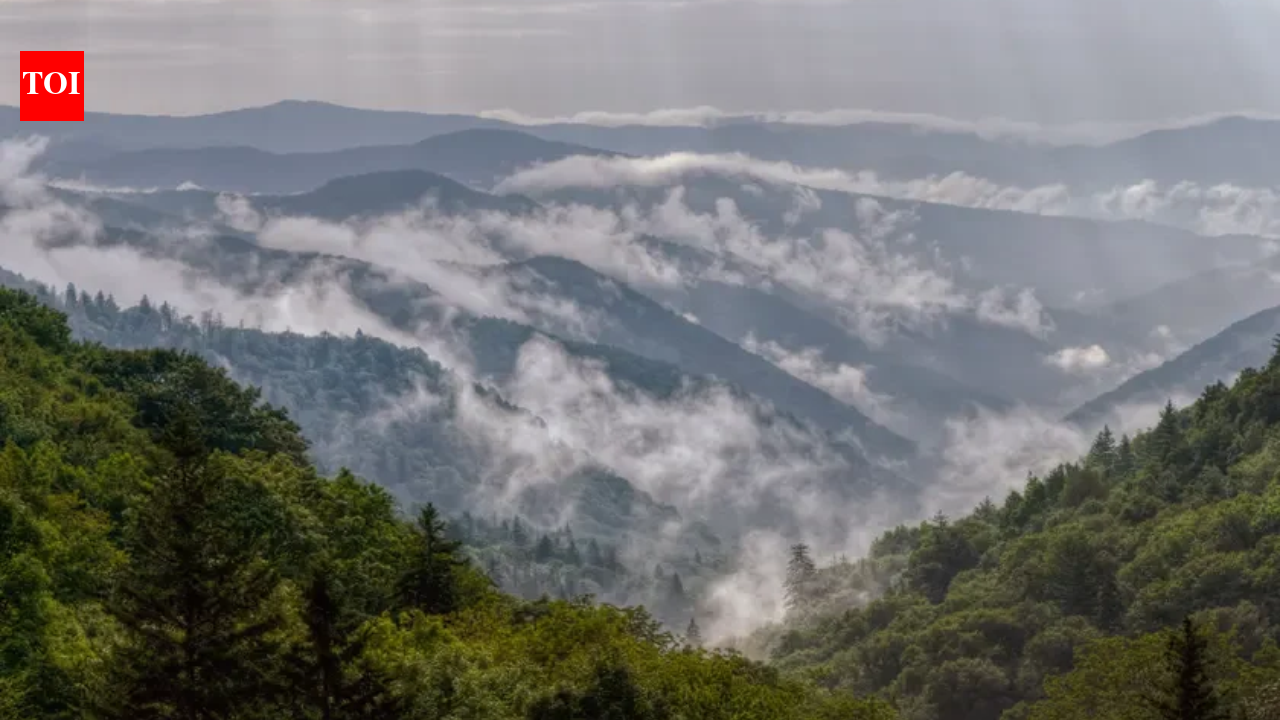
Great Smoky Mountains National Park's establishment faced a funding crisis when land prices doubled, making the initially raised $5 million insufficient to purchase all necessary property. In 1928, the Laura Spelman Rockefeller Memorial Fund donated another $5 million, matching the amount already raised and enabling supporters to acquire the remaining land required for the park's creation. This donation bridged the funding gap and facilitated the park’s realization along the Tennessee-North Carolina border.
Written locally by qwen2.5:14b on 2026-10-08,
using this article's own text rather than the other coverage of the
same event (that is the story summary below).
Story summary
Great Smoky Mountains National Park, spanning over 522,000 acres along the Tennessee-North Carolina border, faced significant challenges in its establishment due to rising land prices. By 1928, supporters had raised $5 million but found that costs had doubled, halting progress. A critical breakthrough occurred when the Laura Spelman Rockefeller Memorial Fund donated another $5 million, matching the funds already raised and enabling the acquisition of the remaining land needed for the park’s creation. The initiative aimed to protect the forests and mountains of the Southern Appalachians from commercial exploitation by timber and paper companies, which owned vast areas of forest, while also preserving the region's natural beauty and heritage for future generations.
Written for “Great Smoky Mountains National Park F…” on 2026-10-08,
grounded in this article and the 0 other(s) covering the same event.
Great Smoky Mountains National Park stretches across more than 522,000 acres along the Tennessee-North Carolina border.
asserted
Park → stretch → border
But its creation faced a major hurdle when rising land prices pushed the cost of acquiring the forest beyond what supporters had raised.
asserted
supporters → face → what
By 1928, supporters had raised $5 million to purchase land for the proposed park.
asserted
supporters → raise → park
But land prices had risen sharply, doubling the cost of the property and bringing the campaign to a standstill.
asserted
prices → rise → standstill
The breakthrough came when the Laura Spelman Rockefeller Memorial Fund donated another $5 million.
asserted
Fund → come → million
The gift matched the money already raised and helped supporters buy the remaining land needed to establish the park.
asserted
supporters → match → park
A park that had to be bought
The idea of creating a national park in the Great Smoky Mountains had been around since the late 1890s.
asserted
idea → have → 1890s
Supporters wanted to protect the forests and mountains of the Southern Appalachians for future generations.
asserted
Supporters → want → generations
But unlike some of the older national parks in the western US, the government did not already own the land.
asserted
government → own → land
The Smokies were home to hundreds of farmers, while large timber and paper companies controlled huge areas of forest.
asserted
companies → control → forest
Buying the land meant convincing families to sell their farms and companies to give up forests, rail tracks, logging equipment, and other property.
asserted
farms → buy → forests
There was also a debate over whether the area should become a national forest or a national park.
asserted
area → be → ?
A national forest could allow activities such as timber cutting and grazing, while a national park would give greater priority to protecting the landscape and natural resources.
uncertain
park → allow → landscape
Motorists helped drive the campaign
The campaign gained momentum in the 1920s, with major support coming from Knoxville, Tennessee, and Asheville, North Carolina.
asserted
support → help → Knoxville
The two cities had competed over where the park should be located, but eventually backed a plan to protect a large area between them.
Car owners also became important supporters.
asserted
owners → compete → them
Automobile clubs wanted better roads through scenic parts of the country, and the growing popularity of cars made the mountains easier for visitors to reach.
asserted
visitors → want → cars
In May 1926, President Calvin Coolidge signed legislation providing for the creation of Great Smoky Mountains National Park and Shenandoah National Park, as per the National Park Service (NPS).
uncertain
Coolidge → sign → Service
The law said the Interior Department could take responsibility for the Smokies once 150,000 acres had been purchased.
uncertain
acres → say → Smokies
Because the government could not simply buy the land for the proposed park, supporters had to raise the money themselves.
uncertain
supporters → buy → money
$5 million was not enough
Tennessee and North Carolina each contributed $2 million towards buying the land.
asserted
Tennessee → contribute → land
Individuals, private groups and even schoolchildren also contributed.
asserted
Individuals → contribute → ?
By 1928, the campaign had collected $5 million.
asserted
campaign → collect → million
Land prices had doubled, leaving supporters without enough funds to complete the purchases.
asserted
prices → double → purchases
That was when the Rockefeller family stepped in.
John D. Rockefeller Jr., who had supported the creation of parks in the eastern United States, suggested that the Laura Spelman Rockefeller Memorial Fund donate $5 million in memory of his mother.
uncertain
Fund → step → mother
The donation matched the $5 million already raised and helped the campaign purchase the remaining land.
asserted
campaign → match → land
About 85% of the park's land was eventually bought from 18 logging companies.
asserted
% → buy → companies
The rest came from about 1,200 individual landowners.
asserted
rest → come → landowners
Some people were allowed to continue living on their former properties under lifetime leases.
asserted
people → allow → leases
 The Aporia