That is 0 articles you have read today.
The Aporia is free and carries no advertising, so readers are the only
thing paying for it. If you are getting this much out of it, a small
donation is what keeps it independent.
Daily limit reached
You have read 0 articles today.
That is more than the 15 a day The Aporia gives away,
and well past what it can carry on nothing. Your allowance resets at
midnight.
There is no advertising here and nothing about you is sold, so readers
are the only thing paying for it. If the site is worth this much of
your day, it is worth a few dollars.
Everything else stays open: the
maps, the
directory and
search do
not count against this, and neither does re-opening something you have
already read today.
A London judge ruled that search warrants used by Thames Valley Police to investigate former Prince Andrew's properties were unlawful. The police and lawyers agreed before the hearing on Thursday to invalidate these warrants following Andrew Mountbatten-Windsor’s arrest in February for misconduct related to his connections with Jeffrey Epstein. This invalidation is part of a legal strategy to challenge evidence obtained during the searches, potentially affecting any future criminal trial against him.
Written locally by qwen2.5:14b on 2026-10-08,
using this article's own text rather than the other coverage of the
same event (that is the story summary below).
Story summary
Andrew Mountbatten-Windsor, formerly Prince Andrew, has launched a legal challenge against Thames Valley Police (TVP) over search warrants issued for raids of his homes in Sandringham Estate and Royal Lodge in Windsor. The former Duke was arrested on suspicion of misconduct in public office at Marsh Farm in Norfolk on February 17, his 66th birthday, following the publication of documents suggesting he shared sensitive information with convicted sex offender Jeffrey Epstein during his tenure as UK’s trade envoy from 2001 to 2011. Andrew spent over 11 hours in police custody before being released under investigation. He now seeks a judge's assessment on whether TVP acted lawfully in obtaining the search warrants, marking the first time a royal has challenged criminal proceedings since the trial of Charles I in 1649.
Written for “Andrew Sues Police Over Epstein Files…” on 2026-10-08,
grounded in this article and the 32 other(s) covering the same event.
Why this leaning score
This article does not take a side on a contested political
question, so it has no leaning score. That is an
answer rather than a gap: a match report or a rescue can be warmly
or critically written without being left or right, and scoring it
anyway is how approval of a subject gets recorded as a political
position.
No political leaning scored for article 65866 · logged 2026-10-08
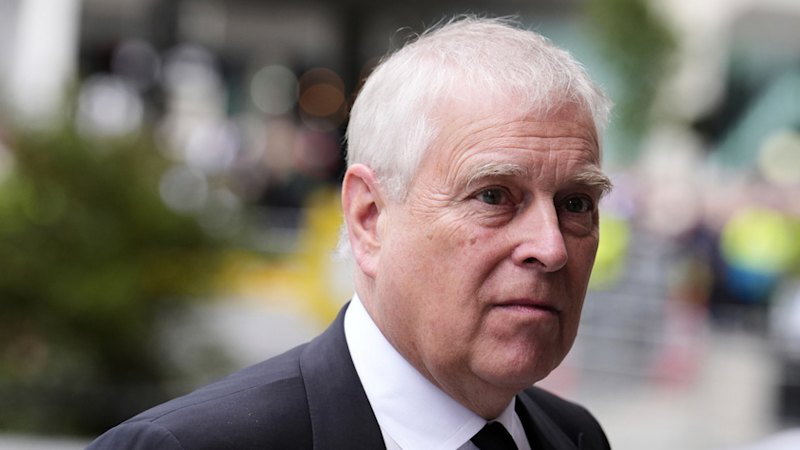
Police who searched the properties of the former Prince Andrew and seized his property in the investigation into his links to the late sex offender Jeffrey Epstein have agreed the search warrants were unlawful, a London judge said Thursday.
asserted
judge → search → offender
Justice Nicholas Hilliard said that the Thames Valley Police had made a significant error in applying for the warrant when they searched the properties of the former prince now known as Andrew Mountbatten-Windsor.
asserted
they → say → Windsor
Mountbatten-Windsor was arrested on Feb. 19 on suspicion of misconduct in public office and police searched two of his homes.
asserted
police → arrest → homes
His lawyers asked the High Court judge to invalidate the warrants under which those searches were conducted.
asserted
searches → ask → which
Hilliard said the parties had agreed to invalidate the warrants before the hearing Thursday.
asserted
parties → say → hearing
Get breaking National news
Mountbatten-Windsor was not in court for the hearing.
asserted
Windsor → get → hearing
Stephens, of the Howard Kennedy firm in London, described the hearing as a preliminary skirmish in the broader legal battle.
asserted
Stephens → describe → battle
“It’s the first step of Prince Andrew and his lawyers saying, ‘Actually, this is tainted evidence.
asserted
this → ’ → ?
It was obtained inappropriately,'” Stephens said.
asserted
Stephens → obtain → ?
“Therefore it should be excluded from any criminal trial.”
asserted
it → exclude → trial
King Charles III stripped Mountbatten-Windsor of his princely title last year as he sought to shield the rest of the royal family from the continuing fallout from his younger brother’s links to Epstein.
asserted
he → strip → Epstein
While Mountbatten-Windsor, 66, continues to receive a stipend from the king’s private funds, Buckingham Palace has made it clear that those funds may not be used to fund his effort to challenge the search warrants.
uncertain
funds → continue → warrants
The police investigation initially focused on allegations that Mountbatten-Windsor shared sensitive information with Epstein when the former prince was a U.K. trade envoy, but police later said they could also consider other matters.
uncertain
they → focus → matters
Police questioned Mountbatten-Windsor for 11 hours before releasing him under investigation, meaning he was neither charged nor exonerated.
asserted
he → question → investigation
It was the first time in nearly four centuries that a senior British royal was placed under arrest.
asserted
royal → place → arrest
The allegations against Mountbatten-Windsor came to light when the U.S. Justice Department released millions of pages of documents from its investigation into sex trafficking by Epstein and his connections to a network of wealthy, powerful men around the world.
asserted
Department → come → world
Lawmakers questioned the relationship as far back as 2011, when the then-prince was forced to give up his globetrotting role as the U.K.’s special trade envoy.
asserted
prince → question → envoy
Eight years later, he failed to explain his continuing ties to Epstein in a disastrous interview with the BBC, ending his career as a working member of the royal family.
asserted
he → fail → family
 The Aporia