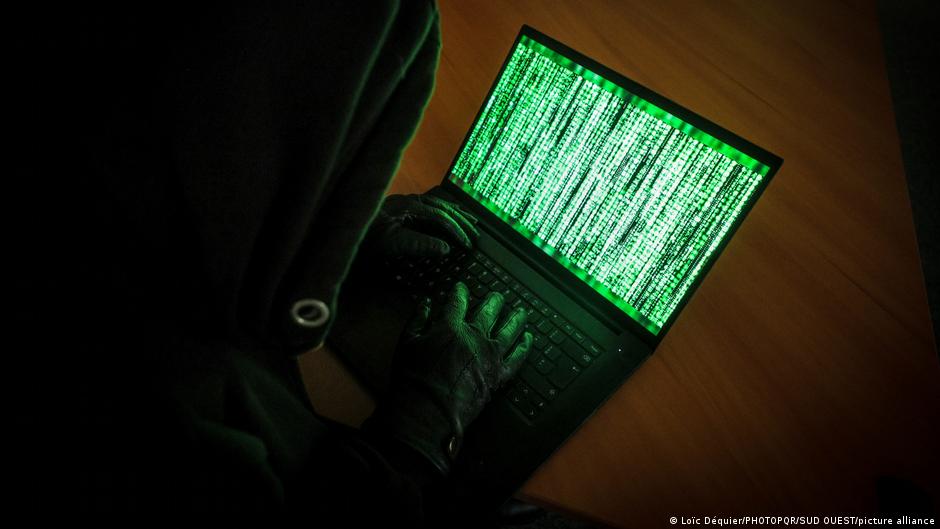
Companies in Japan, South Korea hit by major cyberattacks

Read the original at Semafor ↗
Semafor · collected 2026-10-08 · by Jeronimo Gonzalez

Quick Summary

Recent cyberattacks in Japan and South Korea exposed millions of customer records, highlighting concerns about advanced hacking techniques possibly enhanced by artificial intelligence. These incidents follow another large-scale breach where hackers used Chinese and US AI models to steal credit card details from hundreds of thousands of individuals. Corporate leaders are increasingly worried that industrial-scale AI hacking poses a significant threat to businesses, prompting many to accelerate their adoption of AI technologies as protection. Experts warn that some companies may already be behind in the race against AI-driven cyber threats.
Written locally by qwen2.5:14b on 2026-10-08, using this article's own text rather than the other coverage of the same event (that is the story summary below).

AI analysis runs on qwen2.5:14b, locally

Story summary

Companies in Japan and South Korea recently faced major cyberattacks, resulting in the exposure of millions of customer records. This incident has heightened concerns about the potential use of artificial intelligence (AI) to enhance hacking efforts on an industrial scale. Just days before these attacks, Chinese and US AI models were reportedly used to steal hundreds of thousands of credit card details, described by analysts as one of the most severe abuses of AI for malicious purposes ever recorded. Corporate leaders, particularly in finance, view such threats from AI-driven cyberattacks as a critical danger to their businesses. Many companies are now urgently adopting AI technologies themselves, seeing them as the only effective countermeasure against these sophisticated attacks. Experts warn that some firms may already be behind in the race to protect against AI-powered hacking vulnerabilities.

Written for “Cyber Attacks In Asia” on 2026-10-08, grounded in this article and the 0 other(s) covering the same event.
Why this leaning score
The article's own words the score was based on. Each is quoted verbatim and was checked against the article text before being stored, so you can find it in the original.
Reading Leans left (beta estimate) Confidence high
Leaning: leans left for article 65421 (high confidence, 1 verified quote) · logged 2026-10-08

Signals How these are calculated →

Claims extracted
4
claim-shaped sentences
Uncertain
50%
2 of 4 hedged
Leaning
Leans left
of the writing, not the subject · beta estimate
Correction & hedging signals
95.1
corrections and hedging in what we collected; not a measure of accuracy
Outlets on this story
1
Technology
Narrative spread
1
articles carrying this framing
Analyzed 2026-10-08 · how these are computed

Story

📰 Cyber Attacks In Asia
Technology · 1 article(s) covering the same event.

How this is being covered How these are calculated →

Article leaning vs. publisher reliability
Source leaning vs. consistency

Compared with similar articles

This article reads leans left and hedges 50% of its claims. Each row says how that neighbour differs.
Deutsche Welle
⚖️ leaning not scored 🔴 21% hedged 6 of 29 📰 publisher trust 95
“While both articles discuss cyberattacks in South Korea, they do not specify the exact same incident with the same time and place.”
The Hindu
⚖️ leaning not scored 🔴 12% hedged 1 of 8 📰 publisher trust 60
“Article A focuses on South Korea's President Lee Jae Myung's statements about AI being used in hacking incidents against banks, while Article B mentions broader cyberattacks affecting companies in both Japan and South Korea.”

Publisher

Semafor · 863 article(s) · 0 correction(s) detected
No corrections detected for this publisher. That may mean careful reporting, or simply that nothing has been checked.

Who wrote this

Jeronimo Gonzalez
39 article(s) here · 1 carrying a prediction
🔮 The company — led by Nobel Prize winner and former Google DeepMind CEO Demis Hassabis — hopes the new investment will accelerate its push to develop new drugs.
🔮 Companies in Japan and South Korea were hit with major cyberattacks, exposing millions of customer records and feeding fears that AI may be turbo-charging hacking efforts.
🔮 British Airways announced what it said will be the world’s biggest business class section on its Airbus A380s, underscoring how airlines are racing to adapt to a growing premium sector.
🔮 Experts fear a renewed conflict between Ethiopia and the Tigray People’s Liberation Front could lead to a severe humanitarian crisis, after hundreds of thousands of people died during the 2020-2022 civil war.
🔮 US President Donald Trump reiterated his threat to ban diesel exports in order to tame soaring domestic prices, though analysts warned such a move could have devastating consequences elsewhere.
2026-09-28 · speculative framing · Trump threatens diesel export ban again
🔮 Chinese cars will inevitably enter the US market despite Washington’s efforts to stop them, analysts said.
🔮 A global bond selloff sent long-term borrowing rates still higher on Friday as traders bet that inflation will remain elevated.
2026-09-25 · assertive framing · Global bond selloff pushes borrowing rates higher
🔮 The EU told Ukraine that it needed to show democratic progress before the bloc could disburse more of a $103 billion loan, piling pressure on President Volodymyr Zelenskyy.
2026-09-23 · mixed framing · EU presses Ukraine on democratic reform
🔮 Global demand is expected to rise around 50% by 2050, though analysts predict producers will struggle to keep up, raising fears of a massive shortfall.
🔮 US efforts to sway African countries could be undone by fallout from the Iran war, however, which has dealt a harsh blow to economies across the continent by driving up fuel and fertilizer prices.
Also by Jeronimo Gonzalez
Nothing else under this byline is closely related to this article, so these are simply their most recent.
All 39 articles by Jeronimo Gonzalez →

Topics

Chinese Google Japan South Korea

Subjects

Chinese NORP · 1× Google ORG · 1× Japan GPE · 1× South Korea GPE · 1×

Narrative

The revelations come days after Chinese and US models were used to steal hundreds of thousands of credit card details, a breach an analyst called one of the “most severe abuses of AI for exploitation” on record. Corporate leaders, especially in finance, say industrial-scale AI hacking represents a severe threat to business, with many racing to adopt the technology themselves as the only antidote.
framing: mixed · carried by 1 article(s) · first seen 2026-10-08
🔮 Companies in Japan and South Korea were hit with major cyberattacks, exposing millions of customer records and feeding fears that AI may be turbo-charging hacking efforts.
2026-10-08 · Semafor
Companies in Japan, South Korea hit by major cyberattacks · mixed framing

Claims (4 extracted, 2 hedged)

Companies in Japan and South Korea were hit with major cyberattacks, exposing millions of customer records and feeding fears that AI may be turbo-charging hacking efforts. uncertain
AI → hit → efforts
The revelations come days after Chinese and US models were used to steal hundreds of thousands of credit card details, a breach an analyst called one of the “most severe abuses of AI for exploitation” on record. Corporate leaders, especially in finance, say industrial-scale AI hacking represents a severe threat to business, with many racing to adopt the technology themselves as the only antidote. asserted
many → come → antidote
Some may already be too late: “There’s a misconception that the AI vulnerability race is imminent,” an expert at Google said. uncertain
expert → ’ → Google
“The reality is that it’s already begun.” asserted
it → begin → ?
💬Give feedback
🕘History 🎫Support