Police departments across the U.S. are increasingly using real-time crime centers powered by AI software like Fusus from Axon, which integrates various types of surveillance data into one system. While automated license plate readers (ALPRs) like Flock have faced significant criticism for privacy concerns, experts argue that these tools represent just a fraction of the broader police surveillance capabilities. The article highlights how real-time crime centers use AI to synthesize data from body cameras, dashcams, and private business cameras, significantly enhancing law enforcement's ability to monitor and respond to incidents efficiently.
Written locally by qwen2.5:14b on 2026-10-08,
using this article's own text rather than the other coverage of the
same event (that is the story summary below).
Flock is catching flak.
asserted
Flock → catch → flak
Experts say other police surveillance tools are more worrisome
Flock is catching flak.
asserted
Flock → say → flak
Experts say other police surveillance tools are more worrisome
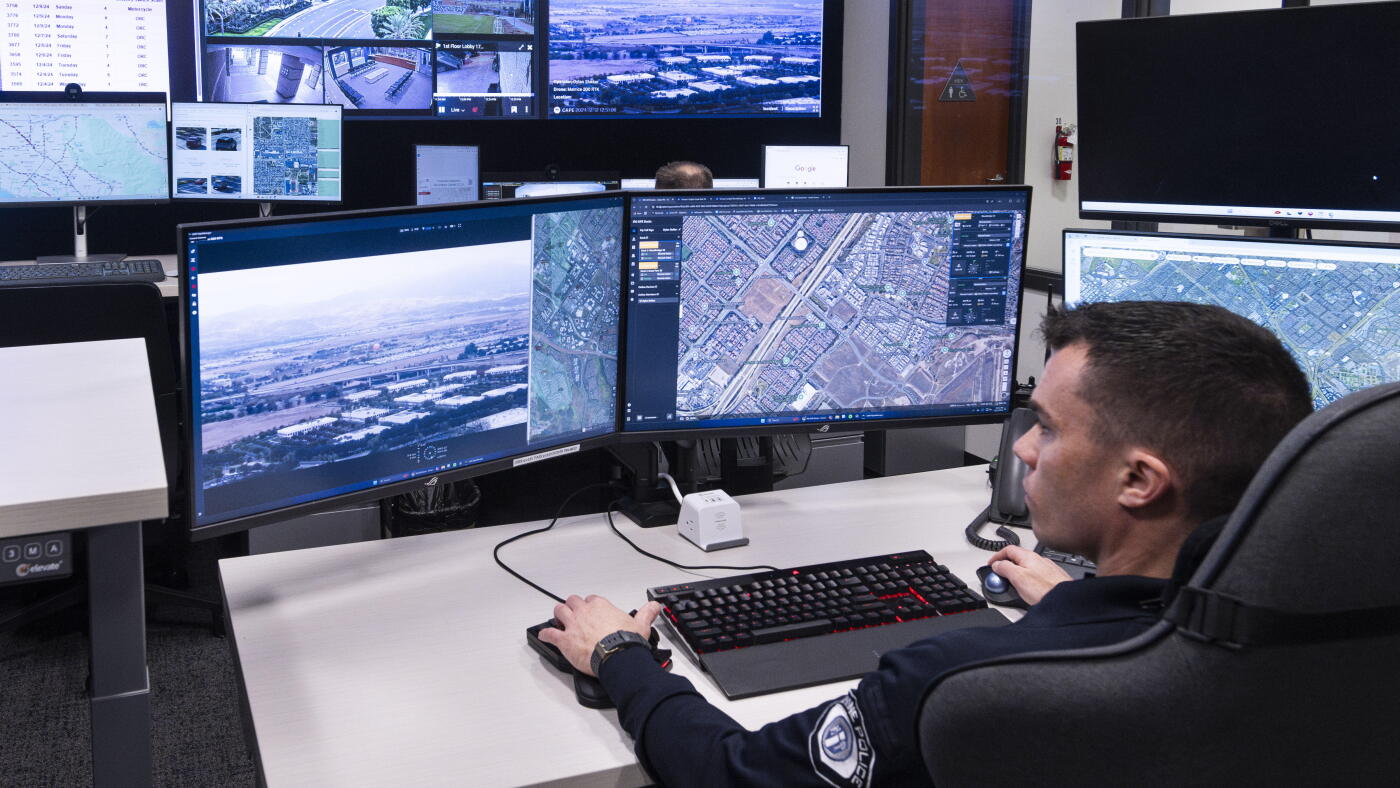
Police officers in cities across the U.S. are quick to extol the virtues of real-time crime centers as a game changer that helps them find missing children, monitor large events from the skies and scope out dangerous scenes before putting an officer in harm's way.
Hundreds of police departments have one of these central hubs, which have existed for years.
asserted
which → say → years
But many are now being powered with AI software, such as Fusus, from the public-safety technology giant Axon.
asserted
many → power → giant
It functions like the brain of a crime center, synthesizing the data it pulls in and allowing police command centers to watch an entire city from one place.
asserted
centers → function → place
Flock cameras, the automated license plate readers (ALPRs), have faced intense backlash in recent months amid stories of abuse.
asserted
cameras → automate → abuse
Yet privacy experts say they're just the tip of the iceberg when it comes to police surveillance.
asserted
it → say → surveillance
"I have been watching the debate about Flock with a little bit of puzzlement," says Andrew Guthrie Ferguson, a law professor at George Washington University.
asserted
Ferguson → watch → University
"Because real-time crime centers have not just ALPR cameras and sensors, but video analytics and drones and essentially a way to create a visual single-pane-of-glass vision of what's going on in a city, with time machine capabilities where you can go back and investigate crime.
asserted
you → have → crime
"
How AI-powered software fuels real-time crime centers
Tools like Axon Fusus, which is a leader in this type of software, also pull in footage and data from police body cameras, law enforcement dashcams, 911 dispatch, gunshot detectors and surveillance cameras, including sometimes those of private businesses that opt in.
asserted
that → power → businesses
Its use is growing fast.
asserted
use → grow → ?
In 2024, the technology news site 404 Media reported that just over 100 law enforcement agencies had deployed Fusus, which was then its own company and was acquired by Axon that year.
asserted
which → report → Axon
The number of law enforcement agencies using the tool has more than doubled since then, according to Axon.
uncertain
number → use → Axon
Police officers in departments that use Fusus told NPR that the tool serves as a time-saver and a force multiplier for their agencies.
asserted
tool → use → agencies
"We could put analysts in a room and have them access 40 different systems," says Benjamin Weir, a captain with the Oklahoma City Police Department.
uncertain
Weir → put → Department
"But that slows them down.
asserted
that → slow → them
So the biggest leveraging factor for a real-time information center to be productive is to have software that can incorporate all these things into one usable area."
asserted
that → leverage → area
Quincy Whitner, a lieutenant with the Greenville County Sheriff's Office in South Carolina, says Fusus helped his department find a man who shot a police officer and fled the scene, by combining city surveillance footage with license plate data.
asserted
who → say → data
"Instead of having to go to a million different systems, a million different places to find answers, we can get it in one platform in one place somewhat instantaneously," says Whitner.
asserted
Whitner → have → place
But that push-of-a-button mentality is exactly what makes privacy experts nervous.
asserted
experts → push → button
Rachel Levinson-Waldman, director of the Liberty and National Security Program at New York University's Brennan Center for Justice, says even a few decades ago, there were more hurdles to overcome when police officers wanted to surveil members of the community.
asserted
officers → say → community
They might have to physically follow someone or do a stakeout.
uncertain
They → have → stakeout
It took time, staffing and resources.
asserted
It → take → time
"In addition to all of the things that you would want in place requiring some kind of criminal predicate to launch it, there is just this kind of organic friction that imposes some constraints," she says.
asserted
she → want → constraints
"As that friction gets lifted, it becomes easier and easier to do investigations, to look at people and even to pull up broad-scale information."
asserted
it → lift → information
Police told NPR that they understand those concerns but that the good — the potential for stopping and solving crime — outweighs the bad — the potential for misuse and mass surveillance.
asserted
good → tell → misuse
"I understand people's concerns, but if you're not up to no good, we're not looking at you.
asserted
we → understand → you
We are looking at people who are committing crimes," says Michelle Iezzi, deputy director of the Operational Intelligence Division at the Montgomery County Police Department in Maryland.
asserted
Iezzi → look → Maryland
Axon did not respond to multiple requests for comment.
asserted
Axon → respond → comment
But CEO Rick Smith said on the latest earnings call that the company strongly values privacy: "We just have to be thoughtful and understand those concerns and say, 'Look, this is a tool to amplify human ability, not to replace human judgment.
asserted
this → say → judgment
"
But there is broad potential for abuse when a police department is always watching, privacy experts say; surveillance technology can sweep up innocent people by mistake, and it can enable targeting.
asserted
it → be → targeting
"What happens if there is a government that wants to silence a particular group or even a particular person?
asserted
that → happen → group
And you just built the architecture of surveillance that makes that super-easy," says Ferguson, the George Washington University law professor.
asserted
Ferguson → build → surveillance
Courts are moving slowly in deciding when or if this kind of surveillance crosses a constitutional line.
asserted
kind → move → line
In the meantime, Ferguson says, lawmakers could act by limiting how long data is stored, for instance, mandating regular audits or restricting surveillance near sensitive sites like abortion clinics or immigration courts.
uncertain
data → say → clinics
He says those conversations should be happening before a tool ever is used.
asserted
tool → say → ?
 The Aporia