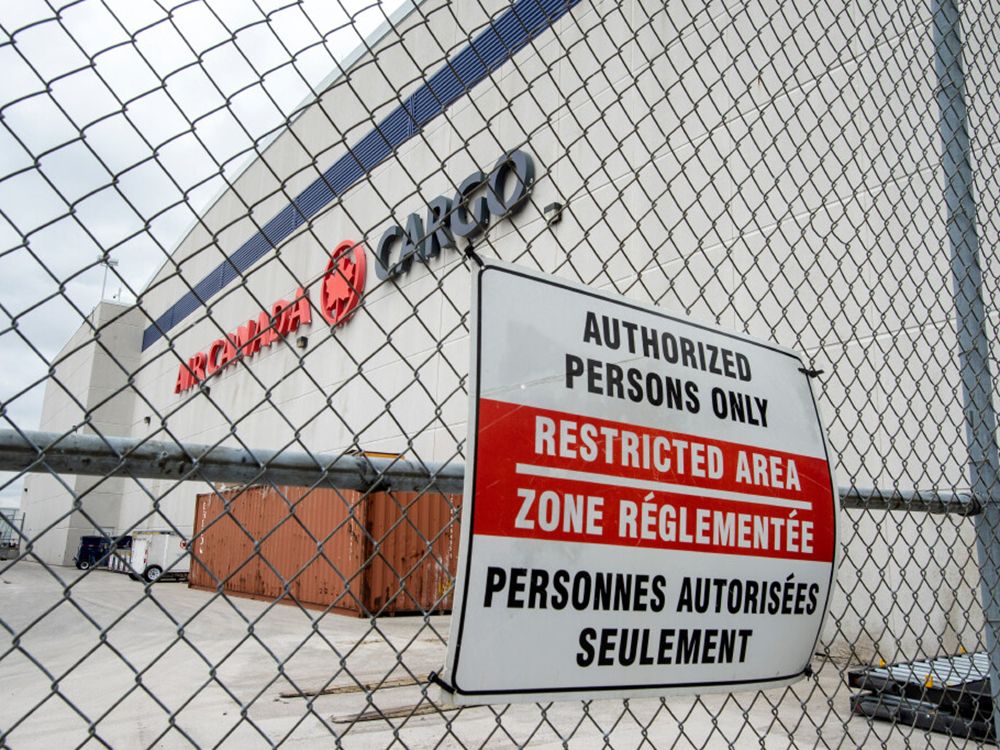
Shortly before a large shipping crate of gold bars and cash worth more than $22 million was stolen from Toronto’s Pearson airport, a worker inside the Air Canada cargo warehouse where it was stored received two mysterious phone calls.
asserted
it → steal → calls
They seem mysterious now, when revealed in court and knowing what was about to happen — the largest gold heist in Canadian history — at the time, though, it all seemed normal, the employee testified.
asserted
employee → seem → time
Court heard on Wednesday from several staff who moved the crate stuffed with gold and cash — seemingly unknowingly — around the large facility without anything seeming suspicious.
asserted
who → hear → anything
It was business as usual, cargo workers said.
asserted
workers → say → ?
So much so that nobody realized the crate of gold and cash had been stolen until hours later when the real customer — armed Brink’s guards in an armoured truck — arrived to collect it, and no one could find it for them.
uncertain
one → realize → them
“It was just a regular day, doing the duties, like day to day, whatever was required of me,” said Vatsal Vaid, who helped run the computer end of facility’s automated sorting and moving machinery.
asserted
who → do → machinery
Vaid was one of several workers at the warehouse testifying on the third day of the trial for Parmpal Sidhu, one of those accused of pulling off the notorious Pearson airport gold heist on April 17, 2023.
asserted
Vaid → testify → April
At the time of the heist, Vaid, 27, was working inside Air Canada’s cargo warehouse for Katlyn International, a third-party contractor to the airline that provided the automation equipment to manage the movement of freight through the facility at Canada’s busiest airport.
asserted
that → work → airport
The system allows cargo to move around the warehouse on a device not unlike an enormous baggage carousel for passengers at the airport terminal.
asserted
cargo → allow → terminal
Vaid was a controls technologist working in the Hub Operations Control Centre, known as HOCC, which is the control centre for incoming and outgoing cargo.
asserted
which → work → cargo
He sat in an office with Air Canada cargo managers providing system assistance and solving problems that came up to ensure containers kept moving to where he was told they should go.
asserted
they → sit → problems
“They would reach out me if there’s any technical problem, otherwise, everything worked automatically most of the times,” Vaid said.
asserted
Vaid → reach → times
The system was automated to take cargo that is specially tagged to the appropriate pit, a staging area for containers where they are unpacked into their component packages, if that’s what the codes told the workers to do, and moved into a storage space until picked up by a client.
asserted
codes → automate → client
Cargo that must be kept cold, such as food, flowers or pharmaceuticals, goes to one place, called the cool-chain; cargo marked high-value goes to a secure area; those marked priority go to a pit where they are dealt with first by warehouse workers.
asserted
they → keep → workers
Containers that aren’t specially coded wait their turn and are distributed randomly to one of five pit areas, court heard.
asserted
court → cod → areas
Vaid testified that after he learned of the gold heist, he thought back to the day before.
asserted
he → testify → day
Police investigators asked him to tell them what he remembered, he said.
asserted
he → ask → what
He said he got a phone call from inside the building, from a container processing area called Pit 5, sometime after 6 p.m.
asserted
he → say → p.m.
It seemed a routine call.
asserted
It → seem → ?
The caller said a shipment was going into the system in about half an hour — there “were a couple units ahead of it,” he recalled him saying.
asserted
him → go → it
The caller said something like “this is a high value cargo going into the system.
asserted
this → say → system
About half an hour later, he received a second phone call, Vaid said.
asserted
Vaid → receive → call
This one appeared to come from the cargo manager’s office phone saying that an import manager required a unit to go down to Pit 1 and told him to generate the appropriate command in the conveyer system, “because the customer is here to pick that unit up, and it’s a priority unit.”
asserted
it → appear → unit
Vaid told court he didn’t know who was on the phone.
asserted
who → tell → phone
It was a male voice, he said.
asserted
he → say → ?
The caller, he said, “knew what they were doing, or they had an idea of the system and everything, like how to approach or do some certain stuff within the system, so I was just following the orders in my job.”
asserted
I → say → job
The specific impact of those phone calls on the gold heist was left hanging by court by the end of the day.
asserted
impact → leave → day
It was not even said whether the phone calls were legitimate or nefarious, but Vaid said he wanted police to know about them.
asserted
police → say → them
John Iheme, who worked as a station attendant within the cool-chain, testified about his unfortunate position of unknowingly delivering the crate of gold to the driver of the heist crew and even helped him load it onto the truck that hauled it away, never to be seen again.
asserted
that → work → it
He didn’t know of his role until he was called in to speak with Peel Regional Police investigators.
asserted
he → know → investigators
“When I was called to the police station to go give a statement, I was shown a video and that’s when I realized that I had served the driver that came in to pick up the shipment,” he told court.
asserted
he → call → court
“If someone needs help, I just step up and help… the gentleman came to the back and needed help, so, I just got up and went and helped,” he said of the man who came to collect the shipping crate.
asserted
who → need → crate
Court watched video of Iheme, wearing a bright orange safety vest and a ball cap, striding through the loading bay to a man standing beside the open back of a truck that had backed into one of the loading docks.
asserted
that → watch → docks
In the video, he greets the driver with a fist bump.
asserted
he → greet → bump
The driver’s face is covered.
asserted
face → cover → ?
“I can’t even remember dealing with the gentleman to be honest, but on the video, I can see myself serving him.”
asserted
myself → remember → him
It could suggest familiarity.
uncertain
It → suggest → familiarity
Iheme said he was just being friendly.
asserted
he → say → ?
“I do it with everyone,” he said.
asserted
he → do → everyone
“I’ve never seen them before.”
asserted
I → see → them
…and 15 more, not listed.
 The Aporia