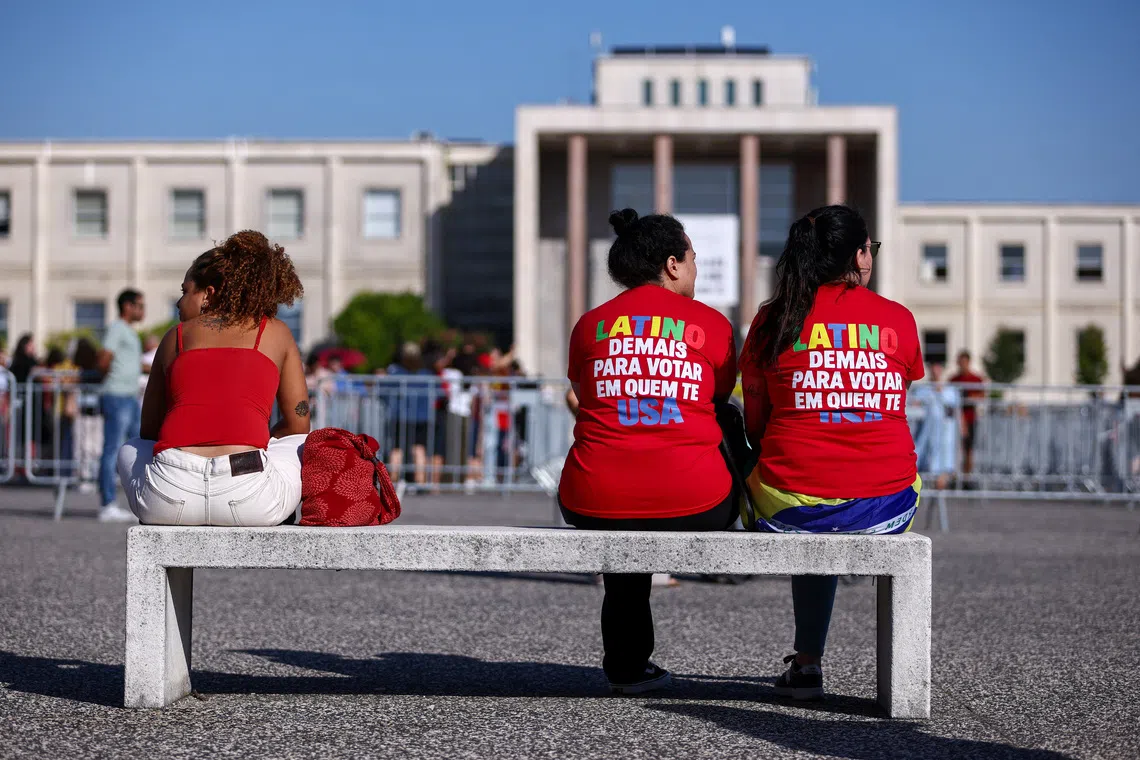
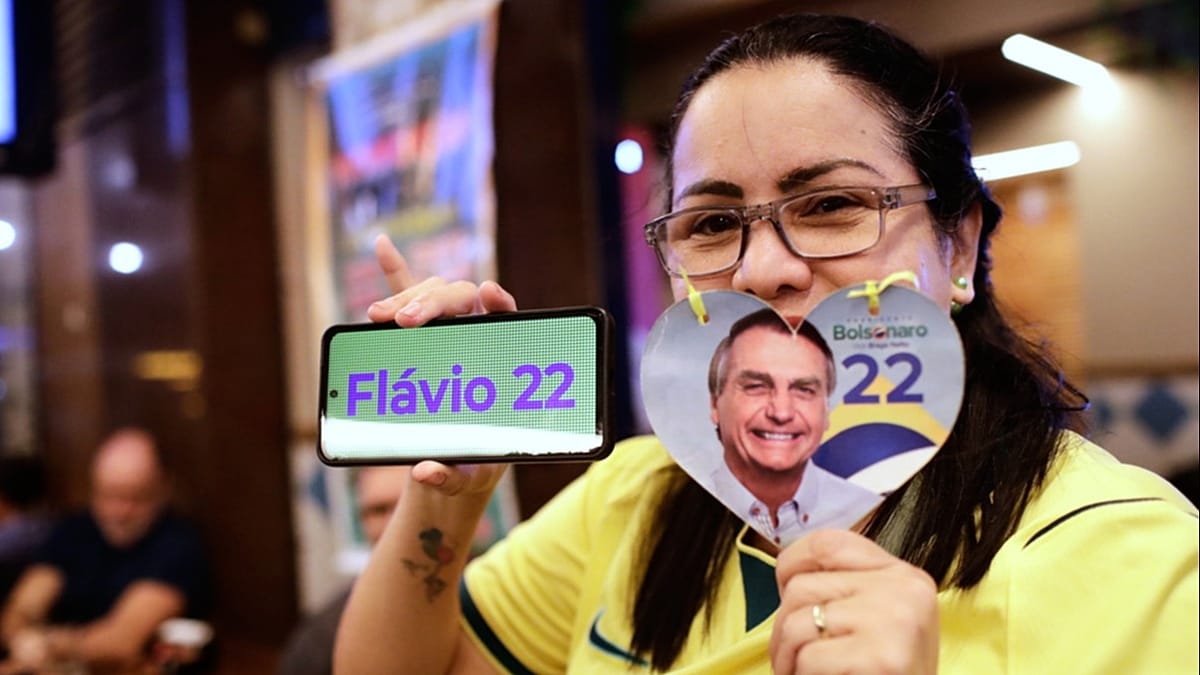
Thousands of people marched in Rio de Janeiro to protest against Flavio Bolsonaro, the son of former president Jair Bolsonaro, after he received the most votes in Brazil’s first round of presidential elections on Sunday. The march took place on Wednesday as part of growing opposition to the resurgence of far-right influence in Brazil ahead of a runoff election scheduled for October 25. Protesters carried signs denouncing both Flavio and his father, expressing concerns over democratic rights and personal safety under a potential far-right government.
Written locally by qwen2.5:14b on 2026-10-07,
using this article's own text rather than the other coverage of the
same event (that is the story summary below).
Story summary
Thousands of people marched through downtown Rio de Janeiro on Wednesday to protest against presidential candidate Flavio Bolsonaro, son of former President Jair Bolsonaro. The march was student-led and aimed at opposing both Flavio and the growing influence of Brazil’s far right. This occurred just days after Flavio secured 47 percent in the first round of Brazil's presidential race, followed closely by incumbent left-wing president Luiz Inacio Lula da Silva with 45 percent, setting up a runoff election on October 25. Protesters carried signs reading “Never again Bolsonaro” and “No to the father, no to the son,” expressing their fear of a return to right-wing governance in Latin America.
Written for “Protests Against Bolsonaro” on 2026-10-08,
grounded in this article and the 0 other(s) covering the same event.
Why this leaning score
The article's own words the score was based on. Each is quoted
verbatim and was checked against the article text before being
stored, so you can find it in the original.
-
Thousands of people have taken to the streets of Rio de Janeiro in a student-led protest against presidential candidate Flavio Bolsonaro and the growing influence of Brazil’s far right.
left frames opposition to far-right governance as widespread
-
The results have triggered fears that Brazil could become the latest Latin American country to see its presidency switch from left to right.
left expresses concern about shift towards far-right governance
-
Jair Bolsonaro, the former president, led the country from 2019 to 2023. But his single-term tenure was marked by a series of controversies related to his far-right policies.
left criticizes past far-right governance
-
He voiced support for Brazil’s past military dictatorship, which was responsible for the disappearance and murder of hundreds of perceived dissidents.
left links current political figures to historical authoritarianism
Leaning: leans strongly left for article 64212 (high confidence, 4 verified quotes) · logged 2026-10-07
Thousands of people have taken to the streets of Rio de Janeiro in a student-led protest against presidential candidate Flavio Bolsonaro and the growing influence of Brazil’s far right.
asserted
Thousands → take → right
The march happened on Wednesday, just days after far-right Senator Flavio Bolsonaro, the son of former President Jair Bolsonaro, earned the most votes in the first round of the country’s presidential race.
asserted
Bolsonaro → happen → race
Bolsonaro won 47 percent, ahead of his closest rival, incumbent left-wing President Luiz Inacio Lula da Silva, who gained 45 percent support.
asserted
who → win → support
Since neither candidate surpassed the 50 percent threshold, they will face each other in a run-off on October 25.
asserted
they → surpass → October
The results have triggered fears that Brazil could become the latest Latin American country to see its presidency switch from left to right.
uncertain
presidency → trigger → right
Protesters marched through downtown Rio carrying signs reading “Never again Bolsonaro” and “No to the father, no to the son”.
asserted
Protesters → march → son
Others held banners reading “Dictatorship never again” and “Get out Bolsonaro”.
asserted
Others → hold → Bolsonaro
“I’m here because I believe in democracy.
asserted
I → ’m → democracy
Because I’m scared,” said Alice Carneiro, 25, an administrator in maritime shipping who participated in the protests.
asserted
who → ’m → protests
She explained that, under a far-right government, she feared a backlash against her wife, who is transgender.
asserted
who → explain → wife
Jair Bolsonaro, the former president, led the country from 2019 to 2023.
asserted
Bolsonaro → lead → 2023
But his single-term tenure was marked by a series of controversies related to his far-right policies.
asserted
tenure → mark → policies
He voiced support for Brazil’s past military dictatorship, which was responsible for the disappearance and murder of hundreds of perceived dissidents.
asserted
which → voice → dissidents
He also spread unfounded claims about the accuracy of Brazil’s election system, leading to a court ruling that barred him from holding office for eight years.
uncertain
that → spread → years
Currently, the former president is serving a 27-year sentence after being convicted of plotting to overturn his 2022 election defeat.
asserted
president → serve → defeat
After Lula’s inauguration in 2023, Bolsonaro’s supporters stormed government buildings in the capital, reportedly hoping to trigger a military uprising.
uncertain
supporters → storm → uprising
Critics have framed Jair Bolsonaro’s actions as a threat to Brazil’s democracy.
asserted
Critics → frame → democracy
But Senator Flavio Bolsonaro has received his father’s endorsement, and he has backed amnesty for his father, a prospect that has raised concerns among protesters.
asserted
that → receive → protesters
“I find this rise of the far right and the rise of Bolsonarism in Brazil very, very sad,” said Emmanuel Araujo, 19, who is preparing for university entrance exams.
asserted
who → find → exams
“Lula might not be my preferred candidate,” Araujo added, “but amid this barbarism, we have to choose between someone we can keep criticising and someone who might take away our right to speak.”
uncertain
who → prefer → right
 The Aporia