The Sydney Morning Herald
· collected 2026-10-07 · by Catherine Strohfeldt
Queensland Catholic schools have proposed a reproductive leave policy that grants teachers and non-teaching staff up to five days annually for specific reproductive health conditions or procedures, such as endometriosis or IVF. This offer, released on Thursday, falls short of the union’s request for parity with public school employees who receive 10 days of leave covering broader reproductive issues. The Catholic Education Queensland chief executive emphasized that the policy aims to balance fairness for staff while maintaining financial sustainability for the schools. Union representatives criticized this proposal as inadequate and noted it fails to address other workplace concerns raised by educators.
Written locally by qwen2.5:14b on 2026-10-07,
using this article's own text rather than the other coverage of the
same event (that is the story summary below).
Why this leaning score
The model judged this article politically coded and scored it -0.35, but every quote it verified points right, so the score is not published.
Written under an earlier scoring contract, which gave a paragraph
rather than checkable quotes. Re-analysing this article replaces it.
Leaning score withheld for article 63691: score contradicts its own evidence · logged 2026-10-07
Queensland’s Catholic schools are ignoring union demands for a generous reproductive leave policy that would put private school teachers on equal footing with their state sector colleagues.
asserted
that → ignore → colleagues
The Independent Education Union began championing reproductive leave entitlements for private schools across the country after Queensland’s public sector was awarded 10 days of reproductive health leave in September 2024.
asserted
sector → begin → September
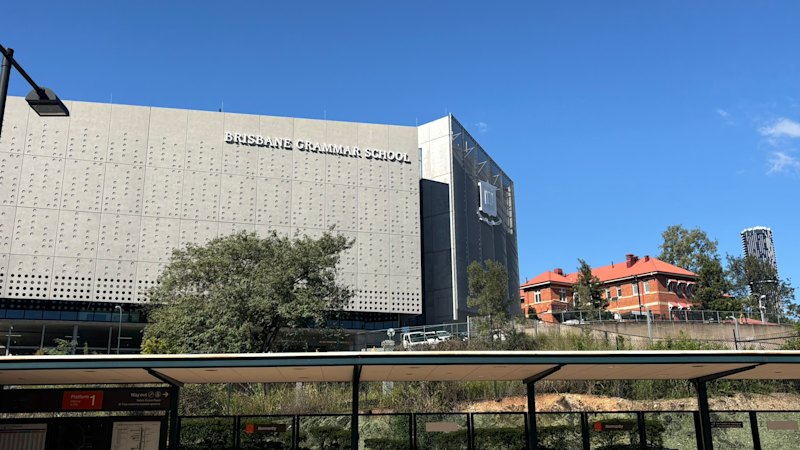
Under a fresh wage offer released on Thursday, teachers and non-teaching staff at hundreds of Catholic schools – including All Hallows’, St Joseph’s Gregory Terrace and Marist College Ashgrove – would be entitled to up to five days of reproductive leave annually, with strict caveats.
asserted
hundreds → release → caveats
An employee would need to suffer from “chronic symptoms” of one of eight approved reproductive health conditions or medical procedures, including endometriosis, polycystic ovarian syndrome (PCOS), menopause, or if undergoing a hysterectomy.
asserted
employee → need → hysterectomy
The leave would also only be accessible to staff members who had fewer than 10 days of personal leave remaining.
asserted
who → have → leave
In state schools, teachers and non-teaching staff can access their 10-day entitlement for circumstances spanning four categories: chronic conditions, fertility treatments, including IVF, preventative screenings, and treatments such as vasectomies or hysterectomies.
asserted
teachers → access → vasectomies
Eligible conditions and procedures for reproductive leave under Queensland Catholic schools’ proposed EBA
- Endometriosis
- Adenomyosis
- Dysmenorrhea
- Polycystic ovarian syndrome (PCOS)
- Hysterectomy
- Menopause
- Perimenopause
- Prostate disease
In a statement to a federal review last year, the union said workplace protections for reproductive health, including IVF, were essential.
asserted
protections → propose → IVF
“Lack of support in this area contributes to gender inequality, economic disadvantage, and workplace discrimination,” it said.
asserted
it → contribute → inequality
The Catholic Archdiocese of Brisbane, like other Catholic bodies around the world, opposes assisted reproductive technology treatments, including IVF.
asserted
Archdiocese → oppose → IVF
It also works with the Australian Catholic University’s Queensland Bioethics Centre, which provides advice on bioethical issues, including reproductive technologies, end-of-life treatments, and cloning.
asserted
which → work → life
Catholic Education Queensland chief executive Allan Blagaich said school staff were informed of its position throughout the bargaining experience, which began in late 2025.
asserted
which → say → 2025
“Employers have been guided by negotiating an outcome that is fair and reasonable for employees and that values their important contributions, while keeping Catholic education sustainable and accessible for families,” Blagaich said.
asserted
Blagaich → guide → families
Union officials were unimpressed with the offer, which they said skipped workload issues raised by staff and would, in some instances, worsen workplace conditions.
asserted
they → say → conditions
Logan Flexi School teacher Alex Patten, who is also an executive in the Independent Education Union’s Queensland branch, said the offer would leave non-teaching staff paid up to 25 per cent less than their NSW counterparts by the end of the deal.
asserted
offer → say → deal
Brisbane teacher Sam McKinnon also said the offer was unfair.
asserted
offer → say → ?
“It cuts existing conditions, it ignores most of what staff asked for, and it’s being put to a vote without in-principle agreement at the bargaining table,” she said.
asserted
she → cut → table
The schools’ deal promised backpay to the last deal’s expiration in June if an agreement is reached before the end of the month, with the voting window closing on October 29.
asserted
window → promise → October
Some 25,000 teaching and non-teaching staff members in Queensland will be covered by the collective agreement.
asserted
members → cover → agreement
They are employed within five diocesan zones and non-systemic Catholic schools, including those in Catholic education bodies such as Marist Schools Australia and Edmund Rice Education Australia.
asserted
They → employ → Australia
 The Aporia