On October 7, 2026, the French government suspended the use of stun grenades by police during student protests following an incident where a teenager lost his hand in Lens on October 5. This decision comes amid ongoing widespread protests and school closures, with more than 500 schools closed as unions plan further demonstrations. The protests have highlighted public dissatisfaction over poor educational conditions and alleged police brutality, culminating in Interior Minister Laurent Nunez's order to halt the use of stun grenades until an investigation is completed.
Written locally by qwen2.5:14b on 2026-10-07,
using this article's own text rather than the other coverage of the
same event (that is the story summary below).
Story summary
A 15-year-old student protesting against poor school conditions in France lost his hand on Monday after picking up a police stun grenade in Lens. The incident occurred as protests, demanding better classroom conditions due to teacher shortages, dilapidated buildings, and overcrowding, entered their third week. About 400 out of 3,700 high schools across the country remained closed or partially closed on Monday, with students setting up barricades and clashing with police in several cities.
Since late September, more than 250 protesters, including the injured teenager, have been hurling objects at police during demonstrations. The protests are occurring amid mounting pressure on the government to address a budget deficit, which has raised concerns among investors about state finances. Six months before an election to replace President Emmanuel Macron, his government and the far-right National Rally blame hard-left France Unbowed (LFI) lawmakers for stoking tensions; however, LFI denies these claims.
Education Minister Edouard Geffray acknowledged declining protest numbers but warned that student anger has been long-standing. The government plans to launch a platform for students to voice their concerns online, though this initiative is unlikely to satisfy protesters demanding immediate action on the ground.
Written for “France School Protests Hand Loss” on 2026-10-07,
grounded in this article and the 12 other(s) covering the same event.
Why this leaning score
The model judged this article politically coded and scored it -0.35, but all 2 of its quote(s) are attributed speech - words the article quotes from someone, not the article's own narration, so the score is not published.
Written under an earlier scoring contract, which gave a paragraph
rather than checkable quotes. Re-analysing this article replaces it.
Leaning score withheld for article 63331: attributed speech only · logged 2026-10-07
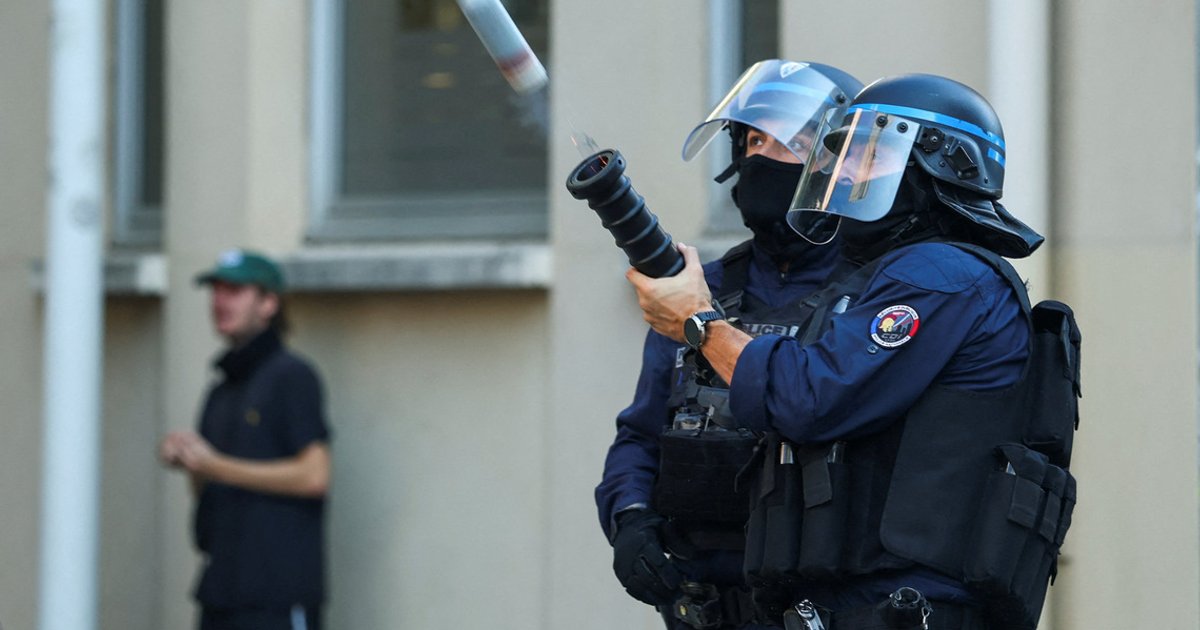
The French government said on Wednesday (October 7, 2026) it was pausing the use of stun grenades in its policing of student protests, after a 15-year-old boy’s hand was blown off during a clash with riot police, fuelling protesters’ accusations of police brutality.
asserted
hand → say → brutality
Protests showed no sign of easing, with more than 500 schools closed a day after demonstrations swept across the country, and unions representing high-school students, teachers and other workers planning more marches for Thursday (October 8, 2026).
asserted
unions → show → Thursday
The wave of protests has been going on for more than two weeks and has exposed widespread public anger six months ahead of an election to replace President Emmanuel Macron.
asserted
wave → go → Macron
At Lycee Lamartine, a high school in central Paris, protesters sang the Marseillaise, chanted slogans and performed Mexican waves as they blockaded the entrance to the school.
“We saw there were lots of crumbling walls, a shortage of teachers in public schools, absent teachers,” said Gabriel Fillieule, who used to attend a public school but now goes to a private one.
asserted
who → sing → one
He and others said they were protesting to demand better learning conditions for all.
asserted
they → say → all
Police’s use of force being investigated
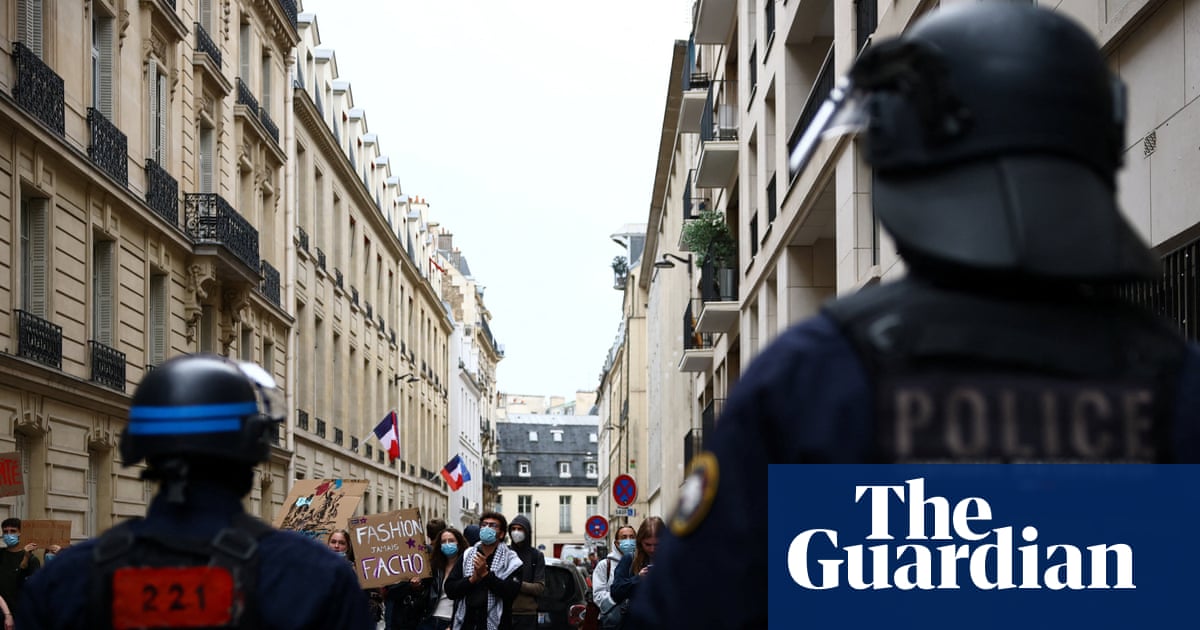
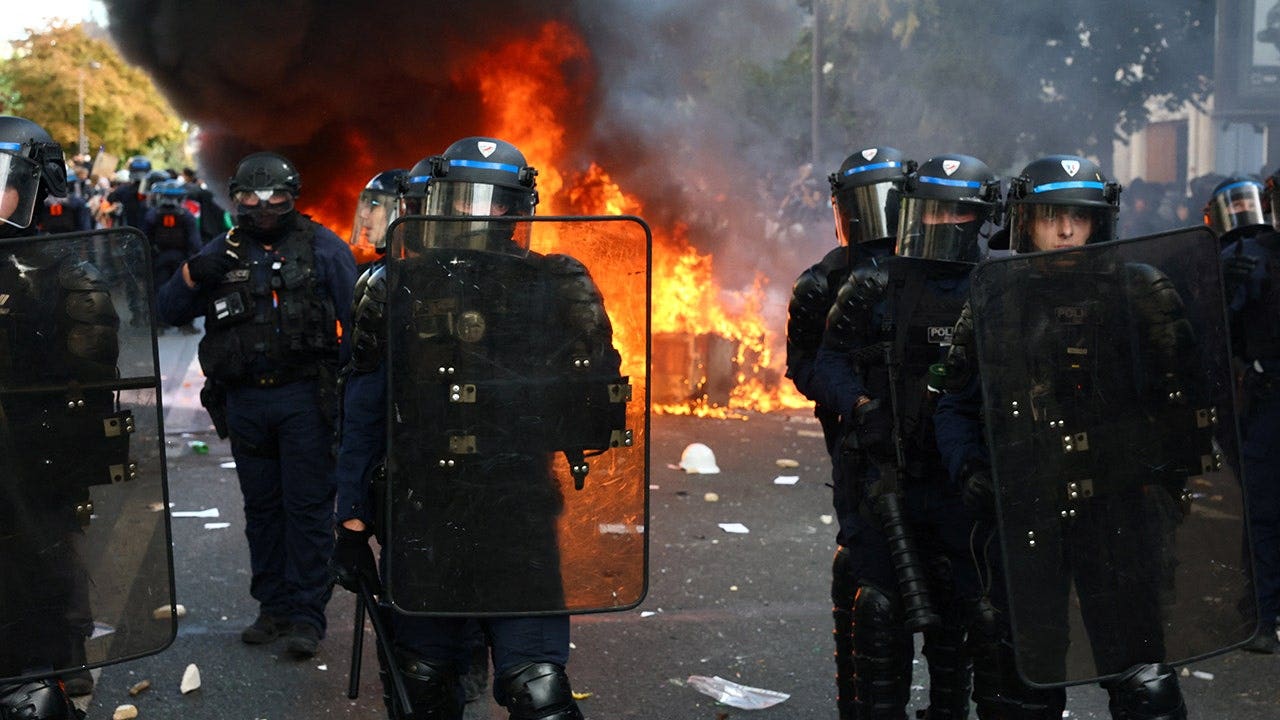
While most of Wednesday’s (October 6, 2026) blockades were peaceful, police used tear gas and pushed back protesters in a street barricaded by rubbish bins outside Sciences Po university in central Paris.
asserted
police → investigate → Paris
Rights groups, labour unions, students and some opposition politicians have accused the police of using disproportionate force to quell the wave of protests.
asserted
groups → accuse → protests
Interior Minister Laurent Nunez said he had ordered the suspension of the use of stun grenades following an incident in the northern city of Lens on Monday (October 5, 2026) in which there was a “strong possibility” the firing of a stun grenade had caused a teenager to lose his hand.
asserted
teenager → say → hand
“I am suspending their use for the high-school students’ movement until light has been shed on what happened in this case,” said the Minister, who added that 18 incidents in total had been referred to the police inspectorate for investigation.
asserted
incidents → suspend → investigation
Protesters have said they blame poor learning conditions for a sharp drop in French teenagers’ scores in reading and maths over the past decade.
asserted
they → say → decade
French 15-year-olds scored 43 points lower in reading in 2025 than in 2015, according to the OECD’s Programme for International Student Assessment, the biggest drop among the OECD countries.
uncertain
olds → score → countries
Their maths scores also dropped the most.
asserted
scores → drop → ?
But the government, under pressure to tame public debt amid weak growth, has little spare cash to address students’ complaints of teacher shortages, ageing school buildings and inequalities between schools in affluent and poor areas.
asserted
government → tame → areas
Twenty-four high schools damaged by fire or vandalism
Prime Minister Sebastien Lecornu has acknowledged the “legitimate” demands of France’s students but also described the unrest as the most violent student demonstrations in decades.
Education Minister Edouard Geffray told parliament that 24 high schools had been damaged by fire or vandalism to the extent that they would remain closed for weeks, meaning some 30,000 students would receive no in-person teaching until they reopened.
He estimated it would cost €20 million to €30 million ($22 million to $34 million) to fix the damage.
asserted
it → damage → damage
Far-right presidential candidate Marine Le Pen, the frontrunner according to opinion polls, said those who damaged schools should pay for the repairs rather than taxpayers.
uncertain
who → accord → taxpayers
The government has adopted a similar stance and has a bill going through parliament that aims to set up such a system.
asserted
that → adopt → system
Elsewhere in Europe, where budgets have been under pressure as governments respond to successive cost-of-living and energy crises, students in parts of Belgium staged similar protests.
asserted
students → respond → protests
In the Belgian city of Liege in the southern French-speaking Wallonia region, at least 107 people have been arrested in connection with student protests this month, the Belga news agency reported.
asserted
agency → speak → protests
In Portugal, the main teachers’ union FENPROF launched an indefinite strike in mid-September over working conditions, with teachers refusing to do any unpaid work beyond the 35 hours a week mandated by law.
And in Spain, teachers’ unions have been protesting conditions in state schools.
asserted
unions → launch → schools
Teachers in Madrid plan a strike on October 14 to press demands including a reduction in hours, smaller class sizes and higher salaries.
asserted
Teachers → plan → hours
 The Aporia