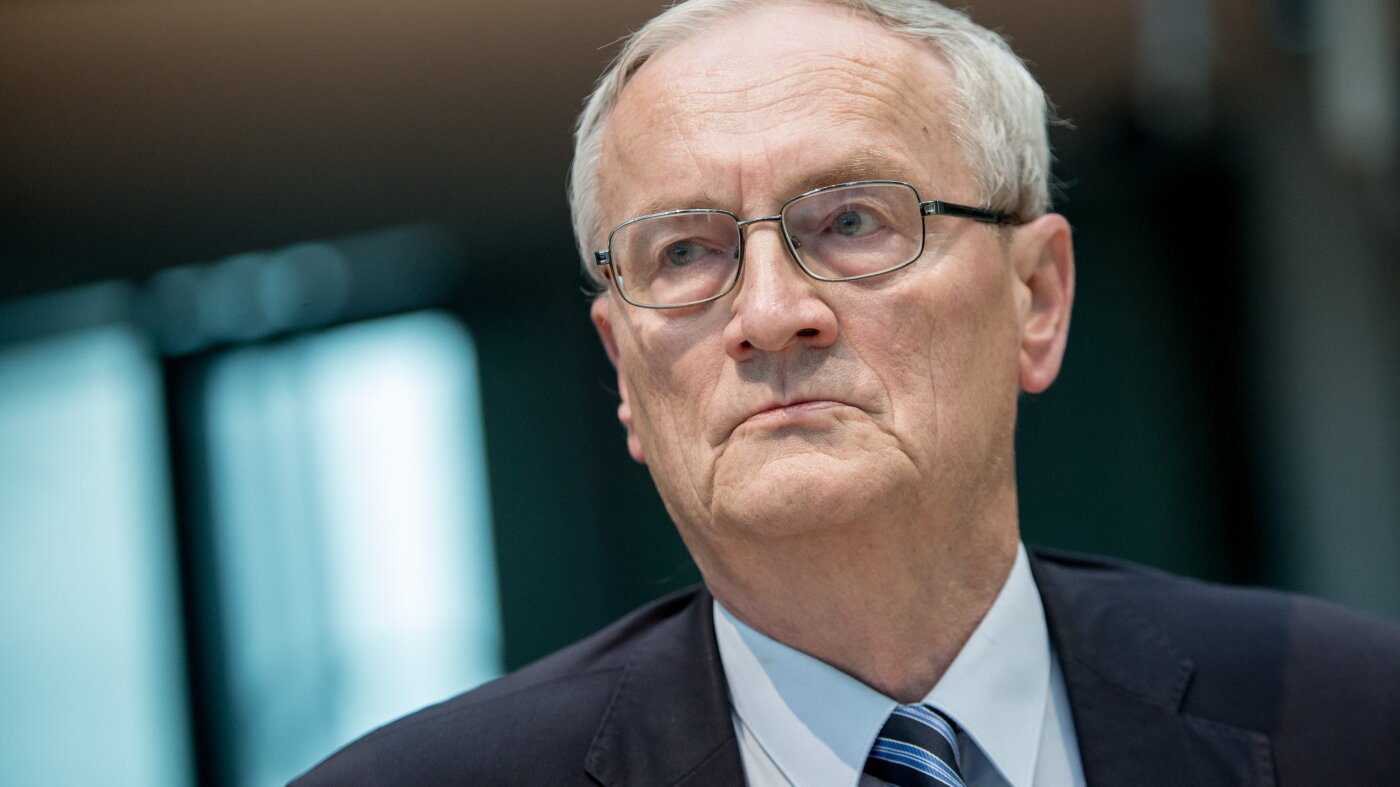
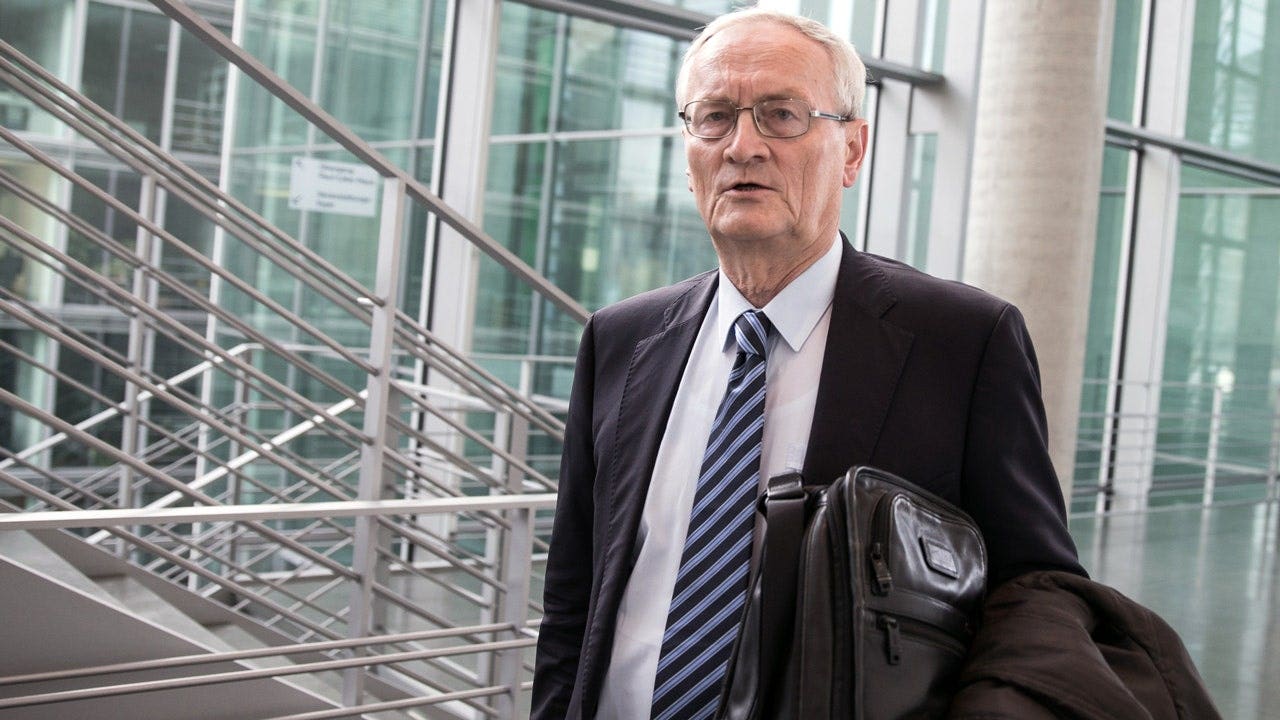
Germany’s former spy chief, August Hanning, has been arrested on suspicion of passing state secrets to a foreign intelligence service.
asserted
chief → arrest → service
Hanning, 80, headed up the Federal Intelligence Service, known by its German acronym BND, from 1998 to 2005.
A federal prosecutor’s statement said it strongly suspected him of “treasonous espionage, obtaining state secrets, attempted treason” through contact with foreign intelligence services since 2010, while working as a private consultant.
asserted
it → head → consultant
He is accused of obtaining around 2,000 sensitive documents from a former bureau chief who has also been arrested.
asserted
who → accuse → chief
But he isn’t the only high-ranking intelligence officer to have been discovered to have worked for foreign governments over the years.
asserted
he → rank → years
1940s to 1960s – Kim Philby and the ‘Cambridge Five’
Kim Philby was a British intelligence officer who secretly spent decades working for the Soviet Union during World War II and the early Cold War years.
asserted
who → spend → II
He was recruited by Soviet Intelligence while studying at Cambridge University in the 1930s.
asserted
He → recruit → 1930s
He was the most prominent member of the “Cambridge Five” – a spy ring that gave away British secrets to the Soviet Union.
asserted
that → give → Union
During the war, he joined MI6, where he rose to head its counter-Soviet division, and was later posted to Washington, DC.
asserted
he → join → DC
This gave him access to sensitive information through his close links to the CIA and FBI.
asserted
This → give → CIA
His tip-offs to his Soviet handlers are believed to have scuppered many Western operations and revealed the identities of agents.
asserted
offs → believe → agents
This included information operations to overthrow Albania’s communist leader Enver Hoxha as part of Western efforts to stop the spread of communism.
asserted
This → include → communism
Philby came under suspicion in 1951 and was forced out of MI6 when Guy Burgess and Donald Maclean, two other members of the Cambridge Five, defected to the Soviet Union.
asserted
Burgess → come → Union
Philby was suspected of having warned them that British intelligence officers were close to uncovering their identities as double agents for the Soviet Union, before being formally cleared of the allegations in 1955.
asserted
officers → suspect → 1955
Then, in 1963, aware that the net was closing in on him because of his own involvement with Soviet intelligence, he fled to Russia, where he lived with his wife since 1971, Rufina Pukhova, until his death in 1988.
asserted
he → close → 1988
Overall, he provided state secrets, the identities of agents, minutes from cabinet meetings, atomic research, diplomatic and military intelligence, and information about counter-intelligence operations to the Soviet Union for nearly 20 years.
asserted
he → provide → years
Philby is regarded as the most damaging spy in British history.
asserted
Philby → regard → history
According to the UK’s National Archives, one of the agents he unmasked to the Soviet Union was Constantin Volkov, a Soviet intelligence officer posted to Turkiye who wanted to defect to the UK in 1945.
uncertain
who → accord → 1945
Volkov and his wife were seized and executed in Moscow as a result.
asserted
Volkov → seize → result
The information he provided to the Soviet Union about a joint CIA-MI6 operation in communist Albania in the late 1940s and early 1950s resulted in the execution of hundreds of anti-communist agents.
asserted
he → provide → agents
1970s and 1980s – Oleg Gordievsky
Oleg Gordievsky was a KGB colonel who spied for British intelligence for more than a decade.
asserted
who → spy → decade
He was the son of an officer in the NKVD, which was the Soviet secret police and the direct predecessor to the KGB.
But he was recruited by MI6 in the early 1970s after becoming disillusioned by the Soviet crushing of mass protests during the Prague Spring in Czechoslovakia in 1968 and the building of the Berlin Wall.
asserted
he → recruit → Wall
While working for the KGB, he was stationed in Copenhagen and later in London, where he became KGB station chief in 1985.
asserted
he → work → 1985
The intelligence he provided to the British is thought to have revealed the KGB’s deep concerns that NATO’s 1983 Able Archer exercise might be cover for a real nuclear strike.
uncertain
exercise → provide → strike
This was invaluable for helping the West understand Soviet fears and to de-escalate.
asserted
West → help → fears
Gordievsky came under suspicion and was recalled to Moscow in 1985.
asserted
Gordievsky → come → 1985
He was drugged and interrogated but had not yet been charged when MI6 ran a daring operation to rescue him and smuggle him out of Russia in the boot of a car across the Finnish border.
asserted
MI6 → drug → border
Russia sentenced Gordievsky to death in absentia.
asserted
Russia → sentence → absentia
He lived in the UK under protection until his death in 2025.
asserted
He → live → 2025
Robert Hanssen was a high-ranking agent at the US Federal Bureau of Investigation (FBI) who spied for the Soviet Union and later for Russian intelligence services between 1979 and 2001.
asserted
who → rank → 1979
Hanssen initially studied dentistry at Northwestern University before switching courses and receiving a degree in accounting and information systems.
asserted
Hanssen → study → accounting
He worked as a police officer in Chicago before joining the FBI in 1976.
asserted
He → work → 1976
He approached Soviet military intelligence in 1979, eventually working with the KGB and its successor, the SVR.
asserted
He → approach → KGB
He operated using the alias “Ramon Garcia”.
asserted
He → operate → alias
Hanssen never met his handlers in person, instead using “dead drops” when he would leave classified documents in prearranged outdoor locations, including parks, wooded areas, under bridges and on street corners in the Washington, DC area, in exchange for cash or diamonds.
asserted
he → meet → cash
He handed over thousands of pages of classified material, including details about US nuclear war plans and the identities of Russian officials working for the US.
asserted
He → hand → US
At least two of those sources, including Dmitri Polyakov and Valery Marynov were executed.
asserted
two → include → Polyakov
The arrest in 1994 of Aldrich Ames, another US spy caught working for Russian intelligence, eventually led to his arrest in February 2001.
asserted
arrest → catch → February
He pleaded guilty to avoid the death penalty and died in prison in 2023.
2000s – Alexander Yuk Ching Ma
Alexander Yuk Ching Ma is a former CIA officer who was caught spying for China.
asserted
who → plead → China
He worked for the CIA from 1982 to 1989 and became a US citizen, living in Honolulu.
asserted
He → work → Honolulu
In March 2001, officers of China’s Shanghai State Security Bureau asked him to arrange a meeting with a now-deceased former CIA officer who served from 1967 to 1983.
asserted
who → ask → 1983
…and 5 more, not listed.
 The Aporia