Gut microbes followed migrating humans across continents, new study suggests
The Hadza people are hunter-gatherers who have roamed northern Tanzania for thousands of years.
uncertain
who → follow → years
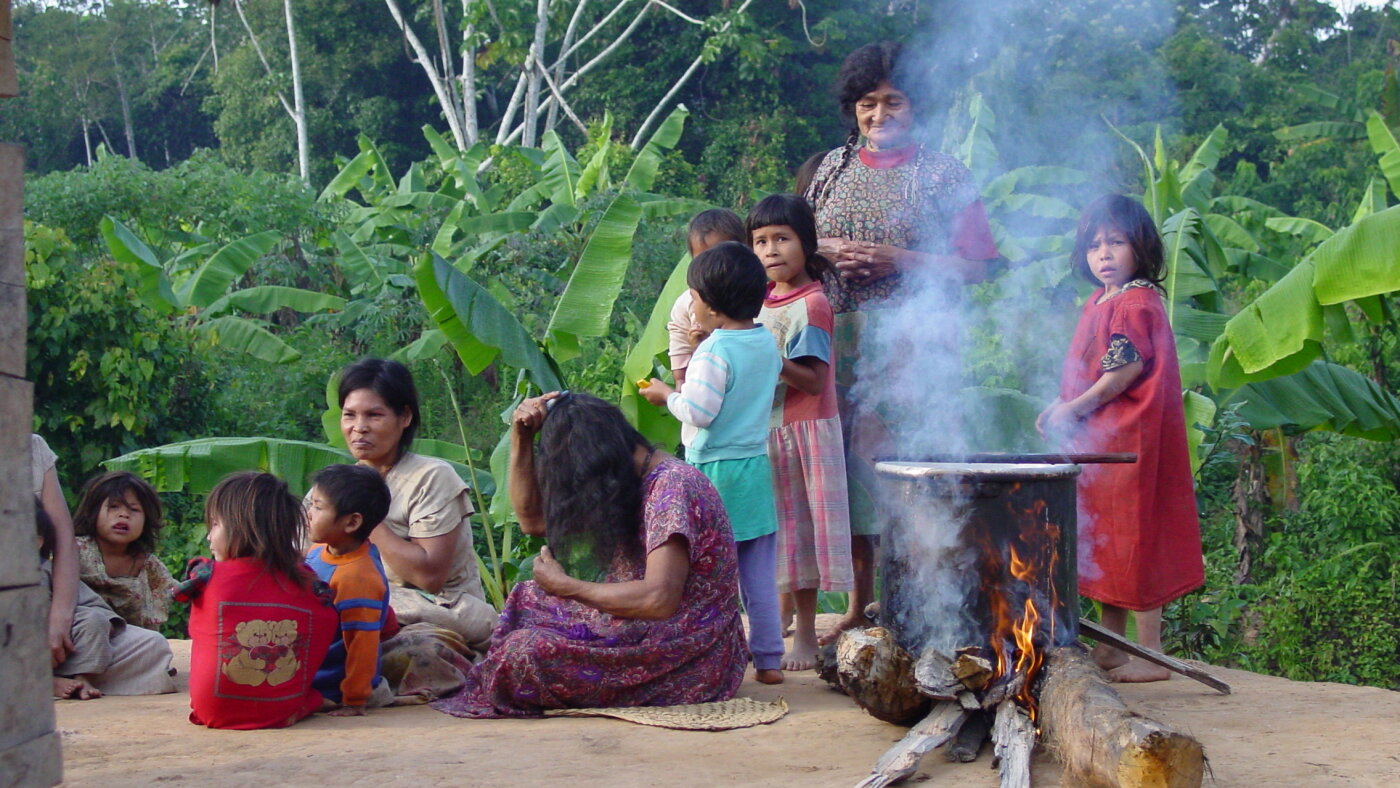
The indigenous Tsimane people forage, fish and hunt in the Bolivian Amazon, some 7,000 miles away.
asserted
people → forage → Amazon
These two rural communities, separated by an ocean, may appear to have little in common.
uncertain
communities → separate → little
But a new study shows that they share remarkable similarities when it comes to the bacteria in their guts.
asserted
it → show → guts
Experts say the new paper in the journal Nature suggests this microbial kinship may have taken shape long ago, before human migration split these groups' ancestors apart.
uncertain
migration → say → ancestors
The study, which relied on stool samples from both groups, also showed that both the Hadza and Tsimane microbiomes were markedly different from city folk, even those living nearby.
asserted
microbiomes → rely → folk
The findings suggest that some strains of gut bacteria have long coexisted with humans, possibly to their mutual benefit.
uncertain
strains → suggest → benefit
It's an idea that some scientists say raises questions about the impacts of losing those microbes to modern lifestyles.
asserted
scientists → say → lifestyles
"If we were inhabited by very similar microbes over a long period of time, it suggests that our human genomes may have come to expect a certain set of microbes and functions," says Justin Sonnenburg, a professor of microbiology and immunology at Stanford University and the study's senior author.
uncertain
Sonnenburg → inhabit → University
"When you start to lose biodiversity in your gut, there may be big issues for your human biology to adjust to and accommodate.
uncertain
biology → start → gut
"
Other researchers not affiliated with the paper say the hypothesis is intriguing, but not yet proven — and that perhaps there's a reason these microbes tend not to appear in city dwellers' guts.
asserted
microbes → affiliate → guts
"Another alternative is that the industrialized microbiome profile may actually be adapted to an industrialized lifestyle," says Andrew Moeller, an associate professor of evolutionary biology at Princeton University.
uncertain
Moeller → adapt → University
"From a health perspective, is it good or deleterious that industrialized humans have lost a lot of ancestral microbial taxa [groups]?
asserted
humans → lose → groups
We actually don't know.
asserted
We → know → ?
"
Documenting what's been kept and lost is a step towards figuring that out, he says.
asserted
he → document → that
Microbes hitchhiked on migrating humans
Sonnenburg has previously contrasted the microbiomes of the Hadza with those of industrialized people.
asserted
Sonnenburg → hitchhike → people
He and his colleagues wanted to compare these two communities with one another.
asserted
He → want → one
"They're living a lifestyle that's much more similar to the lifestyle our ancestors lived, and so therefore is more hospitable to microbes that were handed down through many generations over the course of human evolution," Sonnenburg says.
asserted
Sonnenburg → live → evolution
Still, the major overlap was "startling," he says.
asserted
he → say → ?
In comparing the genetic material in stool samples from dozens of individuals collected by the Tsimane Health and Life History Project, with previous analysis from the Hadza community, Sonnenburg and his colleagues found they had around 1,200 of the same bacterial species living in their guts — a near-90% overlap.
asserted
they → compare → guts
In a typical gut microbiome, hundreds to thousands of species interact with each other — mostly bacteria, along with some fungi and viruses.
asserted
thousands → interact → fungi
"The microbes are helping us digest foods in our gut, secreting molecules that get absorbed into the bloodstream," Sonnenburg says.
asserted
Sonnenburg → help → bloodstream
"And our blood, of course, circulates throughout our bodies."
asserted
blood → circulate → bodies
The gut bacteria can influence moods, behavior, and the body's response to infections, affecting fundamental parts of biology and health, he adds.
asserted
he → influence → biology
Microbiomes are dynamic — which means they can also change quickly, depending on what foods we eat and what medicines we take.
asserted
we → mean → medicines
So it's remarkable that the Hadza and the Tsimane — isolated communities living very far apart, eating different vegetables, fish and meats — have gut bacteria that are much the same, Sonnenburg says.
asserted
Sonnenburg → isolate → bacteria
He and his colleagues think Hadza and Tsimane peoples' shared microbial profile goes back to their common ancestors in Africa, before some of those humans left the continent, passed through Eurasia and crossed a land-bridge that once connected Russia with Alaska, and eventually settled in the Bolivian Amazon.
asserted
that → think → Amazon
Later, as sea levels rose, the land bridge disappeared.
asserted
bridge → rise → ?
"Once the land bridge went away, we had a clear picture that it was going to be very hard for them to exchange gut bacteria through traditional human contact means," says Ben Good, a theoretical biophysicist at Stanford and a study co-author.
asserted
Good → go → Stanford
Using dating techniques based on the rates at which bacteria change, they determined that on average, the microbial strains likely shared a common ancestor about 17,000 years ago — with some dating much further back.
asserted
some → use → ancestor
"That is consistent with the idea that these populations in South America, Africa and probably in other parts of the world are not just acquiring microbes from their environment that match their lifestyle, so much as transmitting microbes over generations," Sonnenburg says.
asserted
Sonnenburg → acquire → generations
Other researchers agree that the findings support the concept that large swaths of the gut microbiome migrated with humans — and likely evolved with them, too.
asserted
swaths → agree → them
"If the bacteria and the humans had a shared history for many, many generations, there are more opportunities for selection," says Taichi Suzuki, an assistant professor at Arizona State University not affiliated with this paper, who conducts microbiome research.
asserted
who → have → research
"We would expect more potential dependencies between [the co-evolved] gut microbes and our own genome, basically.
asserted
We → expect → microbes
"
How the microbiome develops
Babies are born with a blank slate microbiome, and start acquiring gut bacteria right away.
asserted
Babies → develop → bacteria
"We first get our microbes from our mother's vaginal canal, mother's skin," says Suzuki at Arizona State, "Then as we develop, we get microbes mostly from other individuals in the household and the community."
asserted
we → get → household
This human-to-human transmission occurs through the fecal-oral route — ingesting microscopic particles of poo in the air and dust — and serves the important function of passing along microbes that are specific to humans, says Moeller at Princeton.
asserted
Moeller → occur → Princeton
"Something that might make that less disgusting is realizing how tiny these things are," he says, "They're a micron or less in length, and in principle, you just need one cell to found a new population.
uncertain
you → make → population
"
The gut also picks up generalist microbes that exist in the environment by ingesting food, soil and water, Moeller says.
asserted
Moeller → pick → food
For instance, E. coli — a bacteria that's found in many places, and thrives in the bodies of humans and many animals.
asserted
that → find → humans
…and 12 more, not listed.
 The Aporia