Tesla and power giants revolt against Australia’s ‘EV charger tax’

Read the original at The Sydney Morning Herald ↗
The Sydney Morning Herald · collected 2026-10-06 · by Nick Toscano

Quick Summary

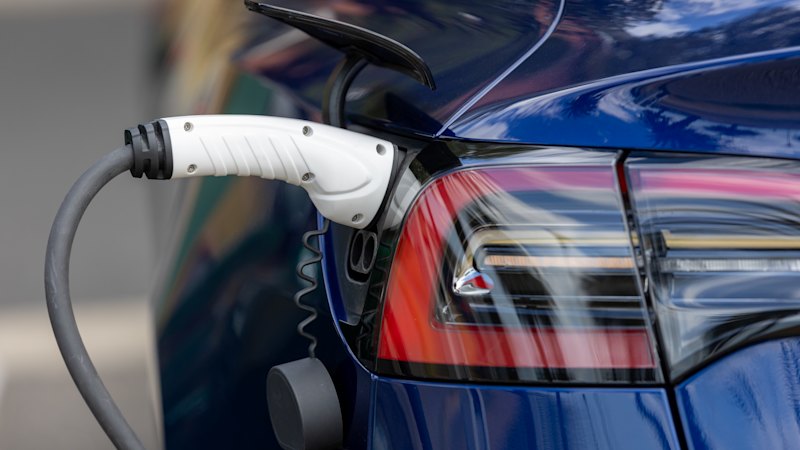
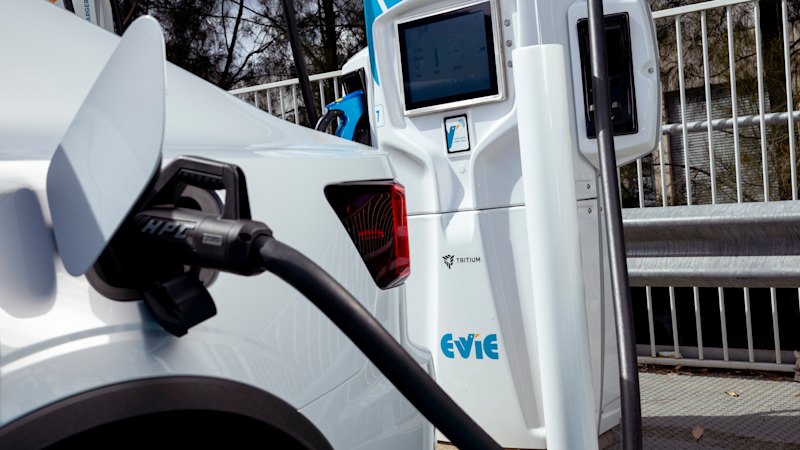
Tesla and major Australian power companies are protesting against a plan that would add costs related to public electric vehicle (EV) charger installation onto all household electricity bills, regardless of whether the households own an EVs. The proposed scheme allows monopoly power-grid owners to install up to 14,000 chargers on existing infrastructure over five years, with 70% of the costs recovered through increased electricity bills for all customers and the federal government covering the rest. Critics argue this could impose unfair financial burdens on households already facing higher living costs, while also potentially stifling competition from private charging networks.
Written locally by qwen2.5:14b on 2026-10-06, using this article's own text rather than the other coverage of the same event (that is the story summary below).

AI analysis runs on qwen2.5:14b, locally

Story summary

Tesla and over a dozen major Australian energy companies, including AGL, EnergyAustralia, Engie, and Evie Networks, have united against a government proposal that would charge all electricity consumers for the installation of public EV chargers. This plan allows monopoly power-grid owners to install 14,000 EV chargers on existing infrastructure, but the companies argue this will unfairly burden households with higher costs for uncertain benefits. Under the trial approved by the Australian Energy Market Commission (AEMC), these grid owners can recover 70% of installation costs through regulated charges added to electricity bills. With EVs now accounting for one in four new vehicle sales in Australia, the companies are concerned about the potential impact on consumers who do not own an electric vehicle.

Written for “Tesla EV Charger Tax” on 2026-10-06, grounded in this article and the 0 other(s) covering the same event.
Why this leaning score
The model judged this article politically coded and scored it -0.65, but every quote it verified points right, so the score is not published.
Written under an earlier scoring contract, which gave a paragraph rather than checkable quotes. Re-analysing this article replaces it.
Leaning score withheld for article 60818: score contradicts its own evidence · logged 2026-10-06

Signals How these are calculated →

Claims extracted
24
claim-shaped sentences
Uncertain
8%
2 of 24 hedged
Leaning
withheld
no quote in the article backed the model's score
Correction & hedging signals
61.2
corrections and hedging in what we collected; not a measure of accuracy
Outlets on this story
1
Technology
Narrative spread
1
articles carrying this framing
Analyzed 2026-10-06 · how these are computed

Story

📰 Tesla EV Charger Tax
Technology · 1 article(s) covering the same event.

How this is being covered How these are calculated →

Article leaning vs. publisher reliability
Source leaning vs. consistency

Compared with similar articles

Nothing to compare against. No article is close enough to this one for the pipeline to have linked or judged the pair.

Publisher

The Sydney Morning Herald · 2569 article(s) · 4 correction(s) detected
Running correction rate · 4 correction(s)
2026-10-03
Tennessee’s prisons chief to resign after failed execution of Christa Pike
2026-09-28
Inside the prison left abandoned for years – now set to reopen as DV offenders weigh on system
2026-09-19
What will happen to your most cherished possessions when you die? You don’t want to know
2026-09-18
What will happen to your most cherished possessions when you die? You don’t want to know

Who wrote this

Nick Toscano
8 article(s) here · 1 carrying a prediction
🔮 Under the trial, they will be allowed to recover 70 per cent of the costs through regulated charges paid by all electricity consumers on their power bills, with the federal government footing the remainder.
🔮 The war in the Middle East is delivering a huge windfall for Australian gas exporters, as new figures suggest soaring prices could add $23 billion to their combined revenue this year and reverse what was expected to be a period of decline.
🔮 Fuel giant Ampol has struck a deal to acquire one of Australia’s most extensive electric-vehicle charging networks, a move that will more than triple the number of charging bays it owns just as local sales of battery-powered cars surge to record highs.
🔮 There were also concerns among some motorists about whether car batteries could deliver the range and performance needed to travel the nation’s vast distances.
🔮 Petrol and diesel prices in Australia have climbed to their highest average levels since April amid doubts over whether Iran and the United States will agree to a truce any time soon.
🔮 However, a recent decision to extend the operation of Origin Energy’s massive Eraring power station in NSW by another two years – pushing its closure out to 2029 – has intensified concerns that more plants may end up running past their promised exit dates.
🔮 Now, US President Donald Trump is weighing a possible ban on American diesel exports, which could ease US fuel prices ahead of the midterm elections but send global prices sharply higher.
2026-09-23 · assertive framing · Fuel price fears for Australia as global buffers dry up
🔮 “I am still getting some from United, but not what I would normally get,” he said, accepting that it was well within the supplier’s rights to make its own commercial decisions.
Also by Nick Toscano
The Iran war is making Australia’s gas industry richer
2026-10-02 · The Sydney Morning Herald
Nothing else under this byline is closely related to this article, so these are simply their most recent.
All 8 articles by Nick Toscano →

Topics

AEMC AGL Australian EnergyAustralia Tesla

Subjects

AEMC ORG · 6× Australian NORP · 3× AGL ORG · 2× Tesla ORG · 2× Anna Collyer PERSON · 1× EnergyAustralia ORG · 1× Engie ORG · 1× Evie Networks ORG · 1× Stephanie Bashir PERSON · 1× the Australian Energy Market Commission ORG · 1×

Narrative

In a joint letter to local authorities, the electric car giant and more than a dozen industry players – including AGL, EnergyAustralia, Engie and private charge-point operators like Evie Networks – are warning that a recent decision allowing monopoly power-grid owners to expand into the EV-charging market risks saddling households with higher costs for uncertain benefits.
framing: assertive · carried by 1 article(s) · first seen 2026-10-06
🔮 Under the trial, they will be allowed to recover 70 per cent of the costs through regulated charges paid by all electricity consumers on their power bills, with the federal government footing the remainder.
2026-10-06 · The Sydney Morning Herald
Tesla and power giants revolt against Australia’s ‘EV charger tax’ · assertive framing

Claims (24 extracted, 2 hedged)

Tesla and some of the largest Australian power companies have united to fight a controversial plan to pass the cost of building public EV chargers onto all households through electricity bill increases, even if or those who do not own an EV. asserted
who → unite → EV
In a joint letter to local authorities, the electric car giant and more than a dozen industry players – including AGL, EnergyAustralia, Engie and private charge-point operators like Evie Networks – are warning that a recent decision allowing monopoly power-grid owners to expand into the EV-charging market risks saddling households with higher costs for uncertain benefits. asserted
owners → include → benefits
The clash comes as booming sales of EVs, which now account for one in four new vehicles sold across the country, are piling pressure on governments and the industry to urgently scale up public charging infrastructure to keep pace with demand. asserted
which → come → demand
To accelerate the rollout of kerbside chargers, Australian power distributors – owners of the grid’s poles-and-wires infrastructure – have secured preliminary approval from the Australian Energy Market Commission (AEMC) to mount 14,000 EV chargers on existing power poles in regional blackspots and other areas underserved by private companies. asserted
distributors → accelerate → companies
Under the trial, they will be allowed to recover 70 per cent of the costs through regulated charges paid by all electricity consumers on their power bills, with the federal government footing the remainder. asserted
government → allow → remainder
The AEMC estimates the initiative will add $1 a year to people’s bills over a five-year period – an increase it argues is outweighed by the broader economic and environmental benefits. asserted
it → estimate → benefits
“Having weighed all factors, the commission is satisfied the program’s likely benefits outweigh its costs to consumers, given its targeted and time-limited design,” AEMC chair Anna Collyer. asserted
benefits → weigh → design
“Lessons learned from the trial program will inform future commission decisions regarding EV infrastructure. asserted
Lessons → learn → infrastructure
However, energy retailers and private charging networks are demanding greater scrutiny of the program’s assumed costs and wider benefits. asserted
retailers → demand → costs
In the joint letter to the AEMC, they expressed concerns that the true bill for consumers could escalate beyond the estimated $1 annual charge and impose unfair burden on households already struggling with rising living costs, and said the commission’s own analysis had been unable to confirm whether each network-owned charger would lead to 1.5 to 3.8 new EV purchases – the number needed to justify the cost. uncertain
charger → express → cost
Their submission also argued that allowing government-regulated grid monopolies into the market will distort competition by undermining the private operators risking their own capital to build competing networks. asserted
allowing → argue → networks
Stephanie Bashir, founder of consultancy Nexa Advisory, which organised the letter, said the signatories supported the rollout of more EV charging. asserted
signatories → organise → charging
But the need for more chargers did not “establish a case for electricity networks to own them or for every electricity customer to help pay for them”, she said. asserted
she → establish → them
“This is potentially like an EV tax on electricity bills,” Bashir said. asserted
Bashir → say → bills
“People who cannot afford an EV, do not own a car or will never use these chargers would still contribute through their electricity bills – the AEMC must explain why that is justified.” asserted
that → afford → bills
Tesla, one of the world’s biggest EV makers, said a network operator’s job was to build, run and maintain the shared grid, “not to own, control, or rollout the batteries, chargers and other equipment sitting in people’s homes and driveways”. asserted
job → say → homes
“Networks should set the table, so competitive markets can do their work - they should not pull up a chair and play, while also owning the table, writing the rules for who gets a seat, and acting as umpire,” it said. asserted
it → set → umpire
AGL, the second-largest Australian power retailer, echoed those concerns, stressing that it was important for the rollout to deliver the best outcomes for customers at the lowest possible cost, and that the case for network ownership had “not yet been established”. asserted
case → echo → ownership
“The AEMC’s proposal would require all electricity consumers to fund charging infrastructure through their electricity bills, even those who may never use the service,” the spokesperson said. uncertain
spokesperson → require → service
“Allowing monopoly network businesses to lead the rollout risks higher costs and weaker service outcomes. asserted
businesses → allow → costs
Australia’s network companies such as Ausgrid, CitiPower, Powercor, and Essential Energy, said in a submission earlier this year that waiving “ring-fencing” rules and allowing them to enter the competitive public-charging market would help ensure greater access for those unable to charge EVs at home because they lived in apartments or did not have off-street parking. asserted
they → say → parking
“We do not have enough accessible, affordable public charging,” said Energy Networks Australia, an industry group. asserted
Australia → have → charging
“By enabling distribution networks to install, own and maintain kerbside electric vehicle charging using existing infrastructure, such as power poles, we can deliver faster, more affordable, and more widespread access to charging where people need it.” asserted
people → enable → it
The Business Briefing newsletter delivers major stories, exclusive coverage and expert opinion. asserted
newsletter → deliver → stories

💬Give feedback
🕘History 🎫Support