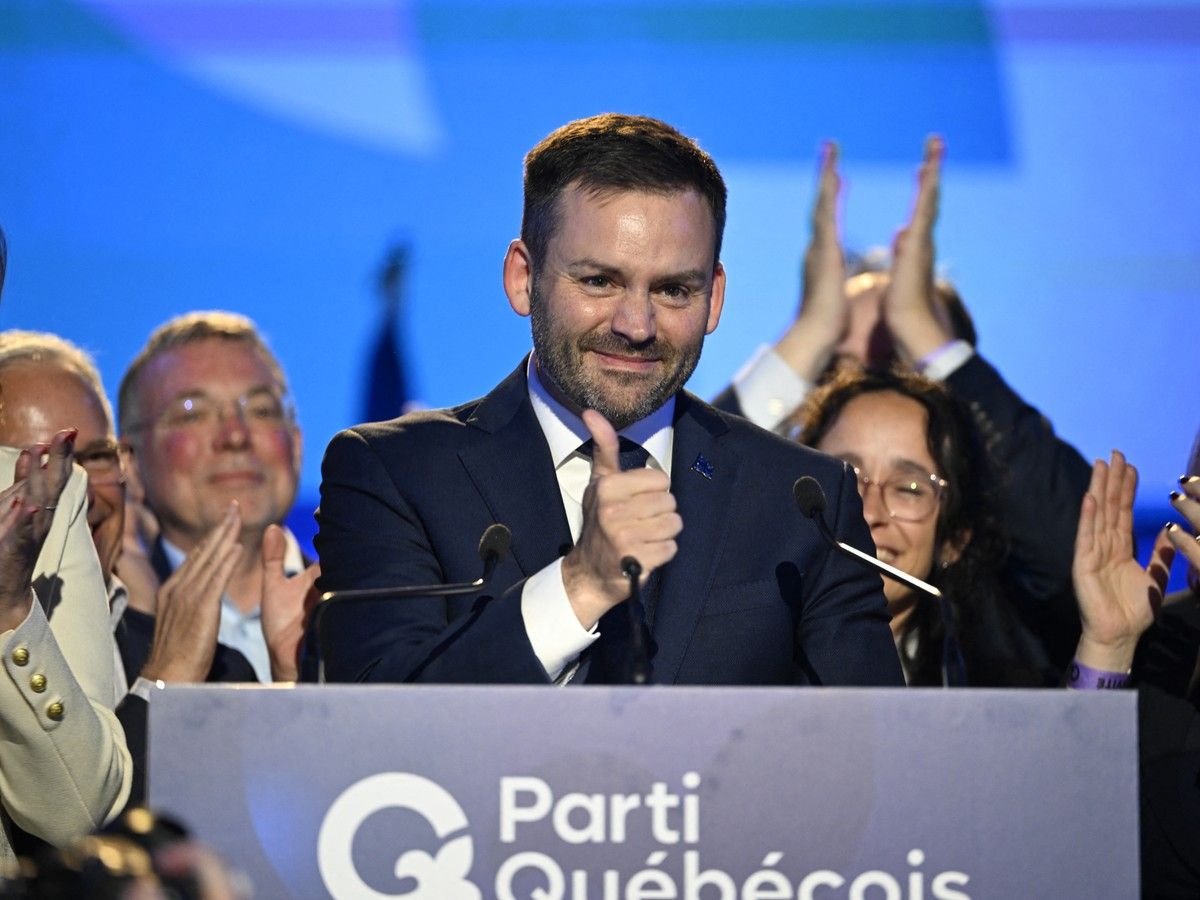
In recent elections, Quebec’s Parti Québécois won the largest share of votes for the first time in 12 years but fell short of an outright majority with only 59 out of 127 seats. The PQ leader Paul St-Pierre Plamondon cautiously hinted at a possible future referendum on independence, emphasizing democratic rights. However, the movement faces significant challenges due to recent demographic shifts caused by mass immigration; areas with higher immigrant populations leaned against independence in this election.
Written locally by qwen2.5:14b on 2026-10-06,
using this article's own text rather than the other coverage of the
same event (that is the story summary below).
Quebec’s independence party, Parti Québécois, won the largest share of the vote for the first time in 12 years, paving the way for another possible referendum in the near future.
asserted
party → win → future
PQ is projected to win 59 of 127 seats, falling five short of the 64 needed to obtain a majority in the National Assembly of Quebec, significantly constraining its ability to govern.
asserted
PQ → project → ability
The party’s larger share of the vote is also believed to have been brought about through a surge of protest votes, dissatisfied with the governing Coalition Avenir Québec.
asserted
share → believe → Québec
The coalition enjoyed massive support for two terms, winning reelection in a landslide just four years ago, but saw a catastrophic collapse in support this time around.
asserted
coalition → enjoy → support
It is now poised to win zero seats.
asserted
It → poise → seats
The governing Coalition Avenir Québec, an autonomist party that held power for two terms and was reelected in a landslide four years ago, suffered a total collapse in its support.
asserted
that → govern → support
It is poised to win zero seats, compared to 71% of seats in 2022.
asserted
It → poise → 2022
PQ leader Paul St-Pierre Plamondon voiced cautious optimism in his victory speech, implicitly acknowledging his weak position by avoiding talks of outright independence, instead arguing for the democratic righteousness of a referendum.
asserted
Plamondon → voice → referendum
“A referendum is an opportunity to decide for yourself,” he said.
asserted
he → decide → yourself
“It’s an act of democracy.
asserted
It → ’ → democracy
It’s up to no one but us, as a people, to determine our national future.”
asserted
It → ’ → future
On actually calling a referendum, he said one would be called, “hopefully, with the help of other pro-independence lawmakers from other parties.”
asserted
one → call → parties
The issue of independence took a backseat role in the National Assembly election, with the main issues being cost-of-living increases, the trade war with the United States, and healthcare.
asserted
issues → take → States
In a display of President Donald Trump’s continued dominance of Canadian politics, St-Pierre Plamondon pledged during the campaign that an independence referendum would only be called after Trump exited office.
asserted
Trump → continue → office
The Quebecois independence movement currently stands as a shadow of its former self, a far cry from the nail-biting results of the last referendum in 1995, which saw the pro-independence cause defeated by just 54,288 votes with a 93.54% voter turnout.
asserted
cause → stand → turnout
As with the 1980 referendum, the 1995 referendum was called by the PQ.
asserted
referendum → call → PQ
Dedicated Quebecois separatists see their cause as a fading possibility.
asserted
separatists → see → possibility
While the growing affluence of French Canadians has played a role in independence’s dampening appeal, the biggest factor is the massive changes brought about by unparalleled mass immigration.
asserted
factor → grow → immigration
Canada’s new arrivals are far less likely to favor independence than native French Canadians, something borne out on Monday, when areas with higher immigrant populations favored parties against independence, such as the federalist Quebec Liberal Party, which came in second overall.
asserted
which → favor → Party
Many Quebecois independence activists view the demographic tide as increasingly against them, and believe a near-future referendum may be their last shot at separation from Canada, according to the New York Times.
uncertain
referendum → view → Times
St-Pierre Plamondon also has to contend with Canadian Prime Minister Mark Carney’s popularity in Quebec.
asserted
Plamondon → have → Quebec
He pledged to “collaborate” with Carney in debates, and a welcoming message from the premier indicated he isn’t too worried.
asserted
he → pledge → premier
“Building a stronger Québec is core to our mission of building a stronger Canada,” Carney said in a post on social media, after congratulating St-Pierre Plamondon on his victory.
asserted
Carney → build → victory
“I look forward to working with you to support Québec’s businesses and workers impacted by tariffs, create more good jobs, work to end homelessness, and get more homes built across Québec.
asserted
homes → look → Québec
While outright independence isn’t likely, the presence of a pro-independence party in power could create further strain within Canada as it grapples with a difficult international position.
uncertain
it → create → position
The results came just weeks before Alberta is set to hold its own independence referendum.
asserted
Alberta → come → referendum
 The Aporia